
Betta Fish Care
Few fish carry as much myth as the Betta — sold for years as a bowl fish that "doesn't need much." In reality, Betta splendens is an intelligent, territorial labyrinth fish that does best in a proper heated, filtered tank of its own, and rewards good care with real personality and some of the most spectacular finnage in the hobby.
Origin
Betta splendens originates from the shallow, warm, often stagnant waters of rice paddies, floodplains and slow-moving streams across Thailand, Cambodia and neighbouring countries. Those waters are frequently low in oxygen, which is exactly why the species evolved a labyrinth organ — an accessory breathing structure that lets it gulp air directly from the surface and survive conditions that would suffocate most fish.
The name "Siamese fighting fish" comes from centuries of selective breeding in Thailand for increased aggression and fin size for organised fighting contests, entirely separate from today's ornamental breeding for colour and finnage. That fighting heritage is still very much present in the modern fish: males are intensely territorial toward other male Bettas and will fight, often fatally, if housed together.
The wild form is a modest olive-brown fish with short fins — every long-finned, vividly coloured variety in the hobby today is the product of generations of deliberate selective breeding, much of it originating from dedicated Thai and Indonesian breeding farms.
Water Parameters
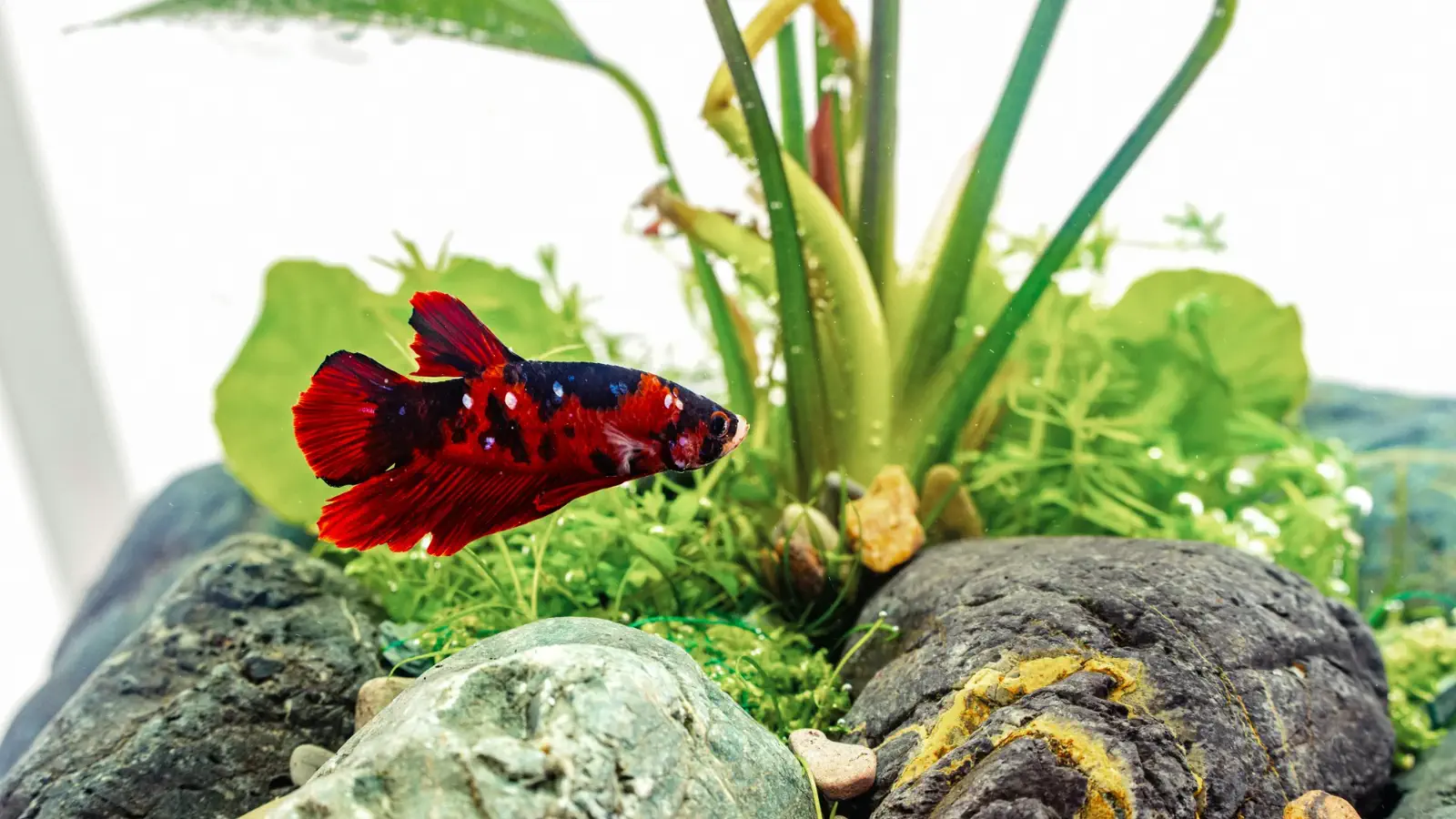
The single biggest myth in the hobby is that Bettas can live in a small unheated bowl because they "breathe air." The labyrinth organ is a backup, not a substitute for good water — Bettas are tropical fish that need a stable 24–28 °C and suffer in cold, unfiltered water. A cycled tank of at least 19 litres with a heater and gentle filtration (Bettas dislike strong current, which can shred delicate fins) is the realistic minimum for a healthy fish, not an occasional treat.
Did You Know
They Recognise Their Keeper
Bettas are widely reported to learn to recognise the person who feeds them, swimming to the front of the glass and even following a moving finger — genuine behavioural learning, not just a feeding reflex.
Males Build Bubble Nests
A healthy, content male will often construct a raft of mucus-coated bubbles at the surface, an instinctive nest-building behaviour even when no female is present — a good sign of overall wellbeing.
They Must Breathe Air to Survive
Unlike most fish, an adult Betta relying purely on gills will eventually drown — the labyrinth organ isn't optional, which is why a tank lid with an air gap at the surface, not a sealed lid, is important.
Colour Can Shift With Mood and Age
Betta colour intensity changes with stress, health, breeding condition and simple maturity — a young fish's adult colours often only fully develop after several months.
Females Fight Too
Female Bettas are less consistently aggressive than males but can still fight seriously, especially in a small space — "sorority" tanks of multiple females need a large, heavily planted tank with many visual breaks, and even then can fail.
Fin Size Trades Off Against Speed
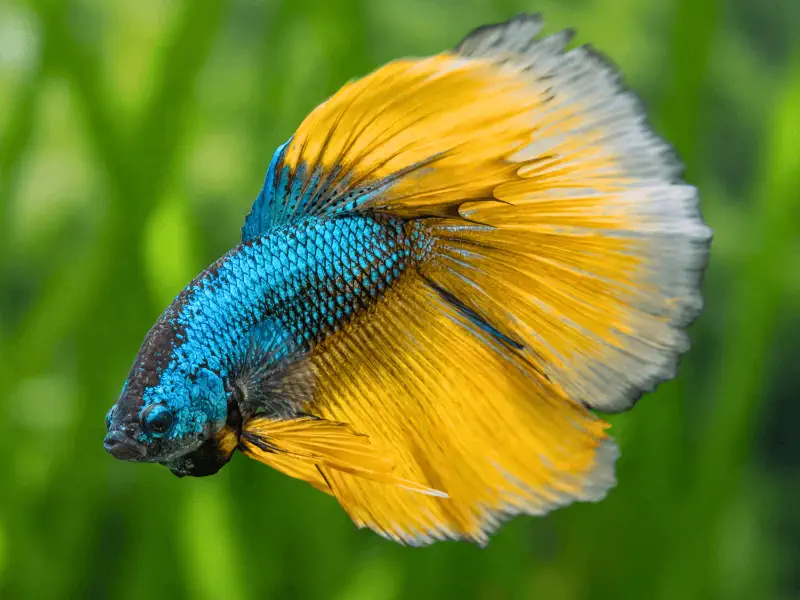
Long-finned show varieties like the Halfmoon are far less agile swimmers than the short-finned Plakat, which is closer to the wild form — a real functional cost behind the spectacular finnage.
Variety Spotlight
Alien Betta
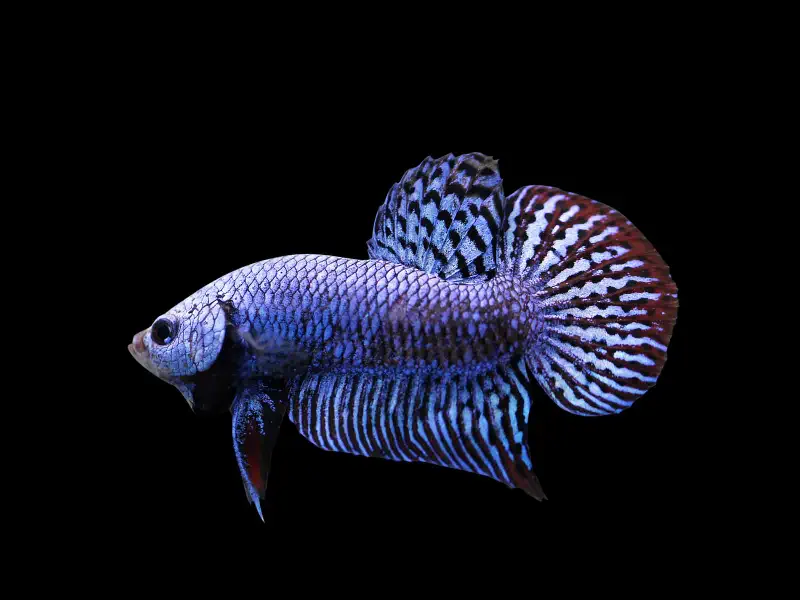
Betta splendensAn informal hobby name for Bettas bred with an unusually large, blocky head and heavy-set face compared to a standard fish. Not a formally recognised show category, but a distinctive novelty look some breeders pursue deliberately.
Elephant Ear Betta
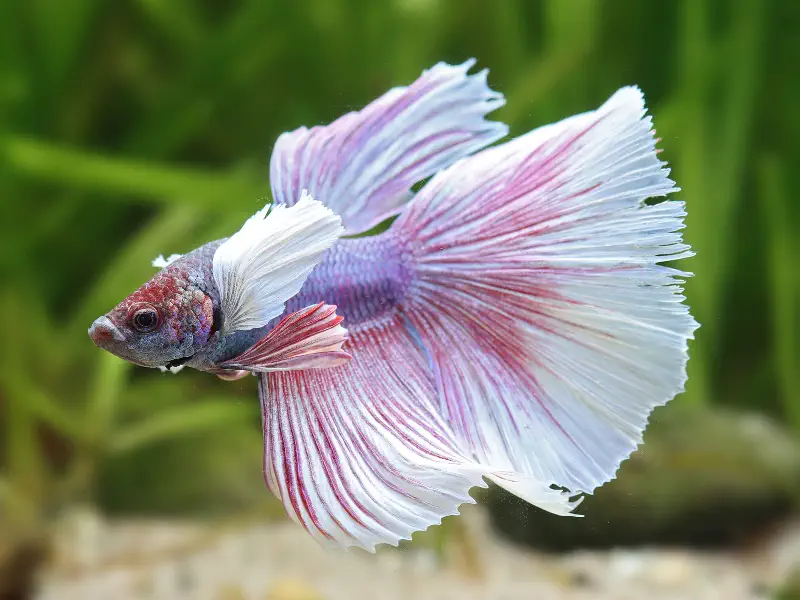
Betta splendensNamed for oversized, wing-like pectoral fins that flare out like ears when the fish is active — also known as Dumbo. Can be combined with any tail type, adding an extra dimension of movement.
Veiltail Betta
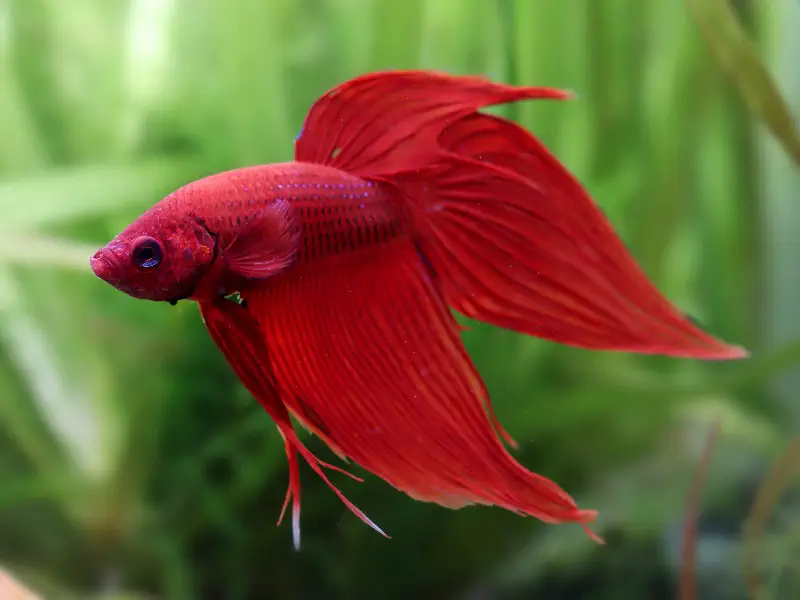
Betta splendensThe original pet-shop Betta tail type — a long, flowing, single-drooping caudal fin. Widely available, inexpensive, and the form most people picture when they hear the word Betta.
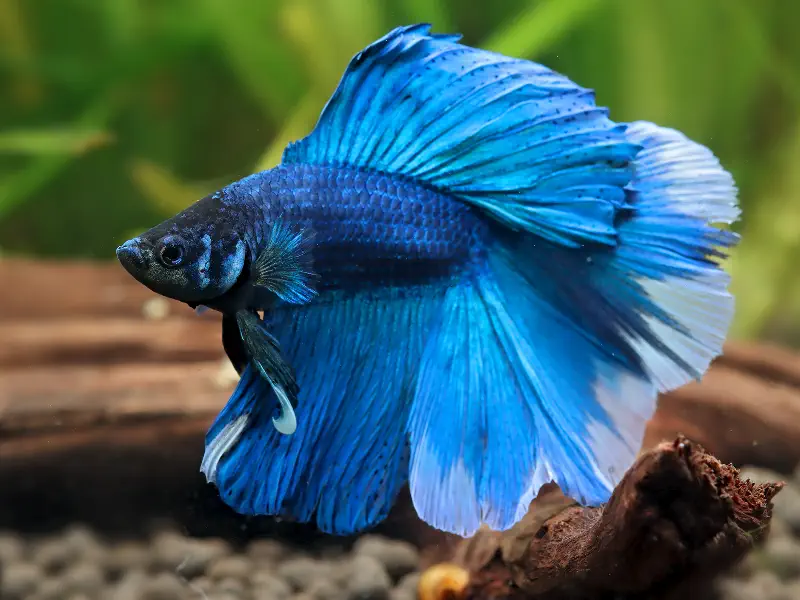
Doubletail Betta
Betta splendensA genetic mutation that splits the caudal fin into two separate lobes, often paired with a broader dorsal fin. Strikingly different in silhouette from every other Betta form, though the mutation can affect swim-bladder function in some lines.
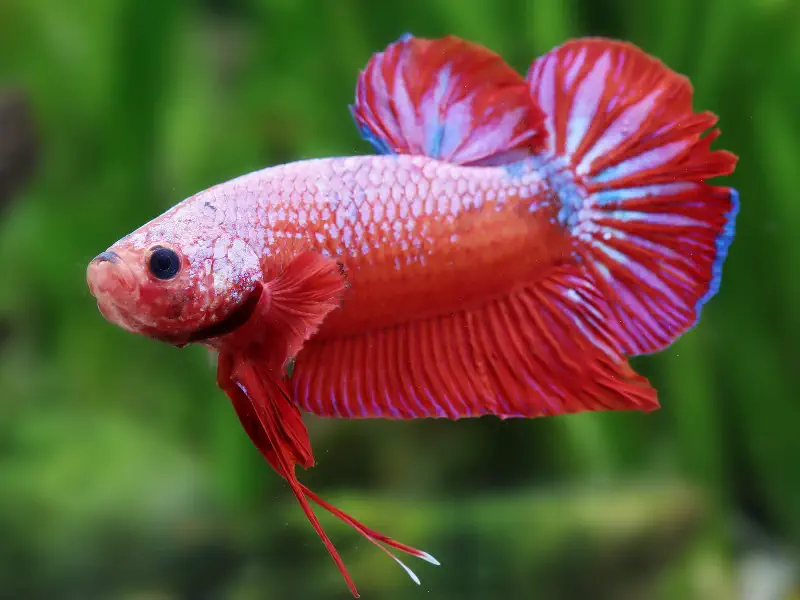
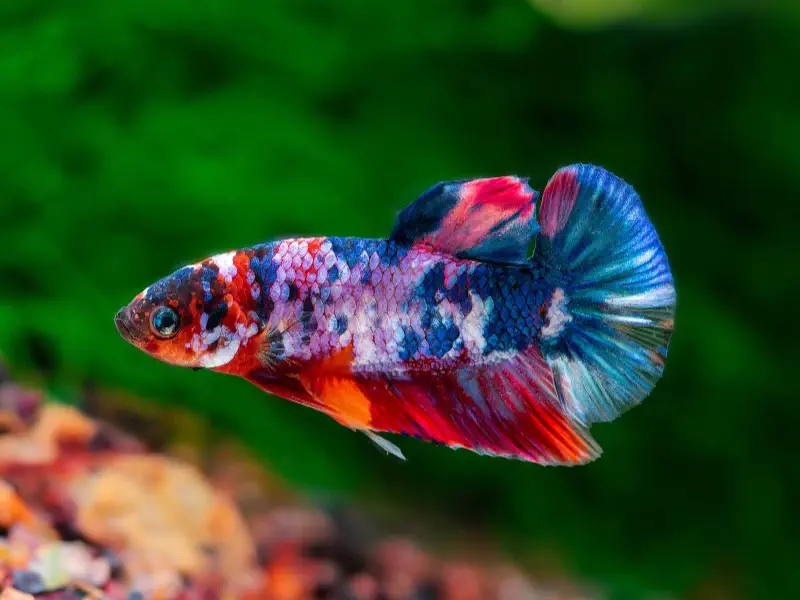
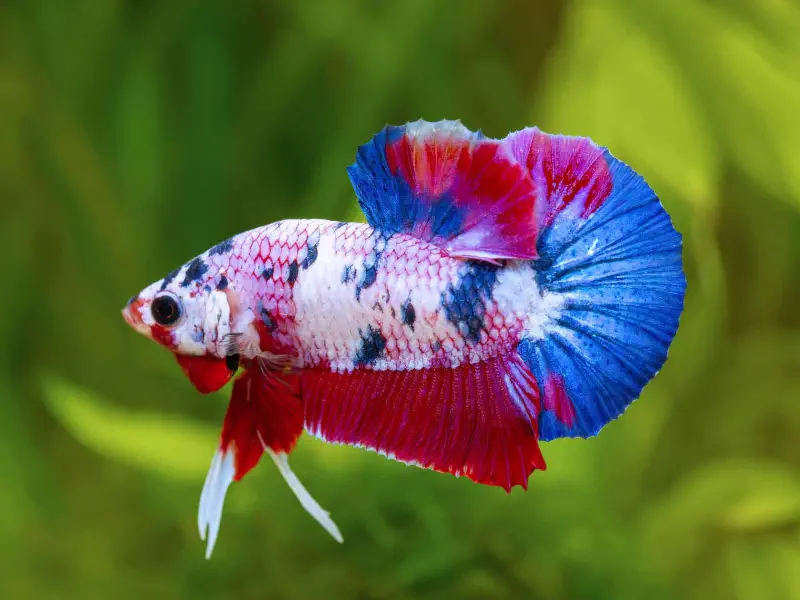
Plakat Betta
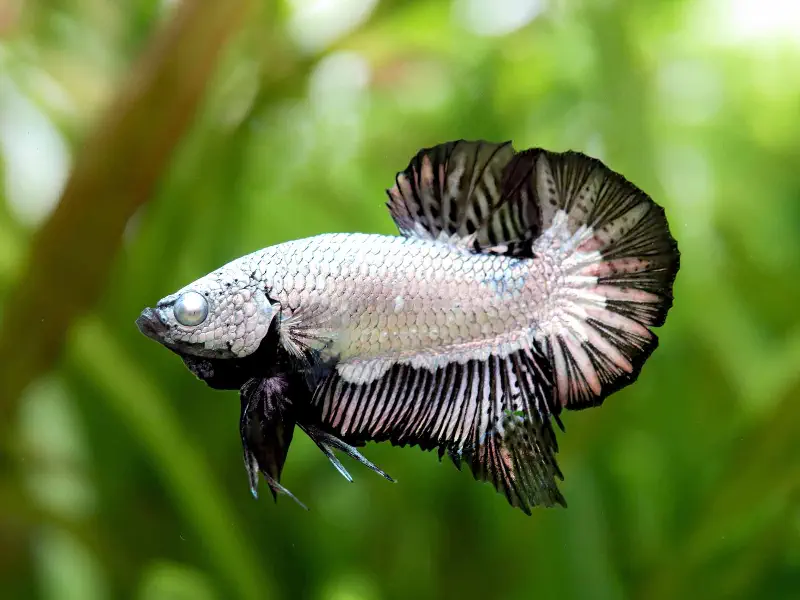
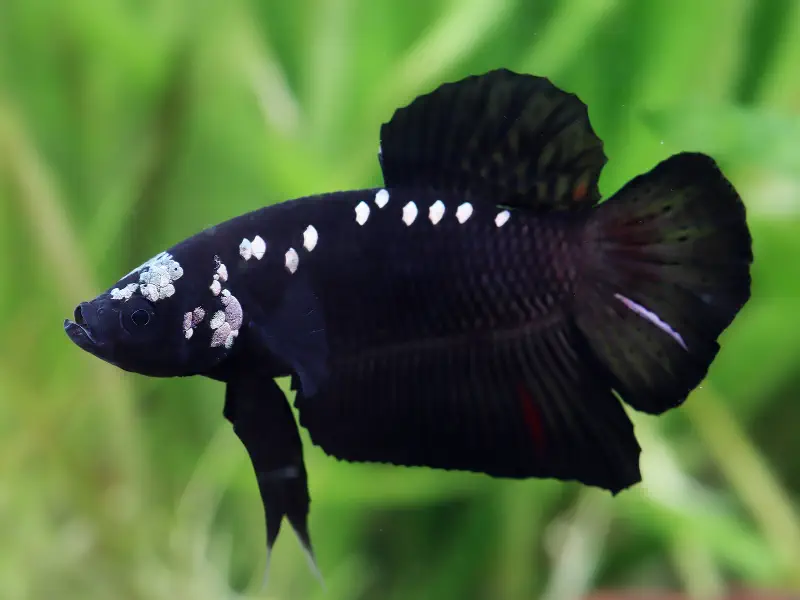
Betta splendensA short-finned form closest in shape to the wild fighting fish the species is bred from. Generally hardier and more agile than long-finned show varieties, and increasingly popular for its athletic look.
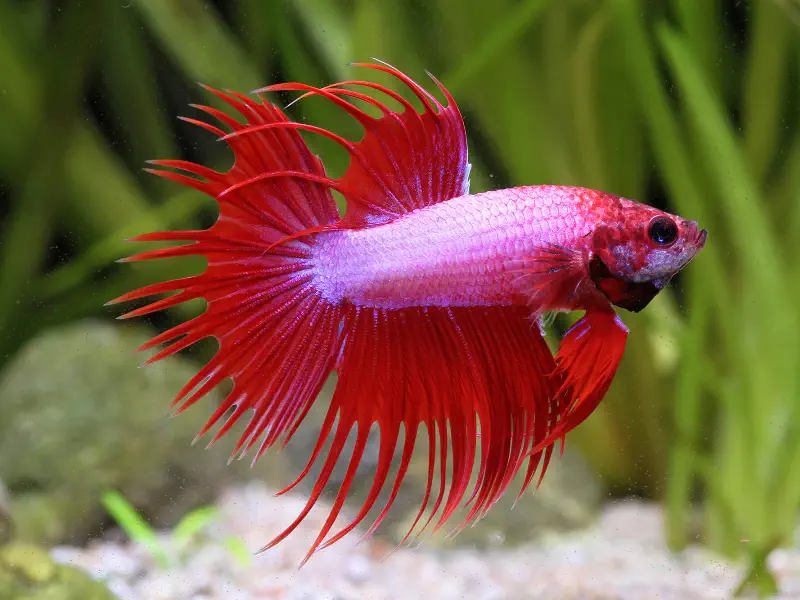
Crowntail Betta
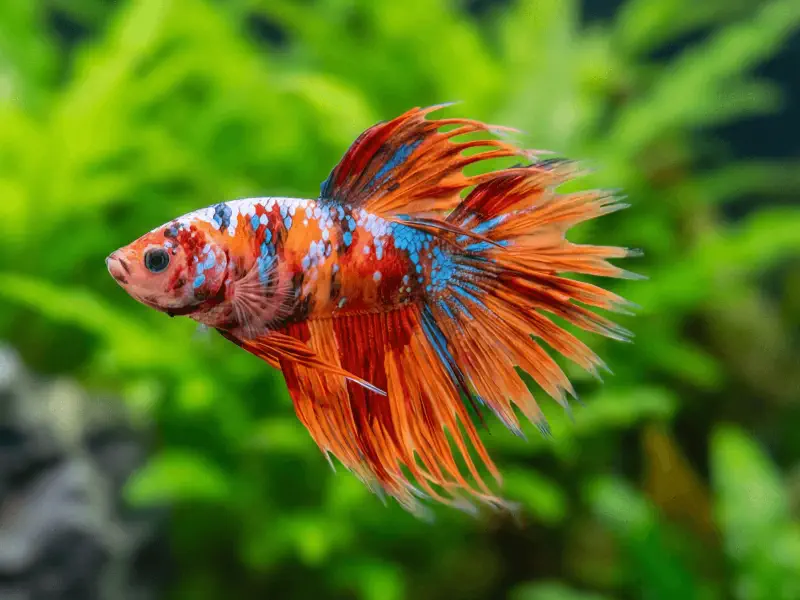
Betta splendensInstantly recognisable for its spiked, crown-like fin rays caused by reduced webbing between the rays. Hardy and widely bred, with rays that can be long and dramatic or short and subtle depending on the line.
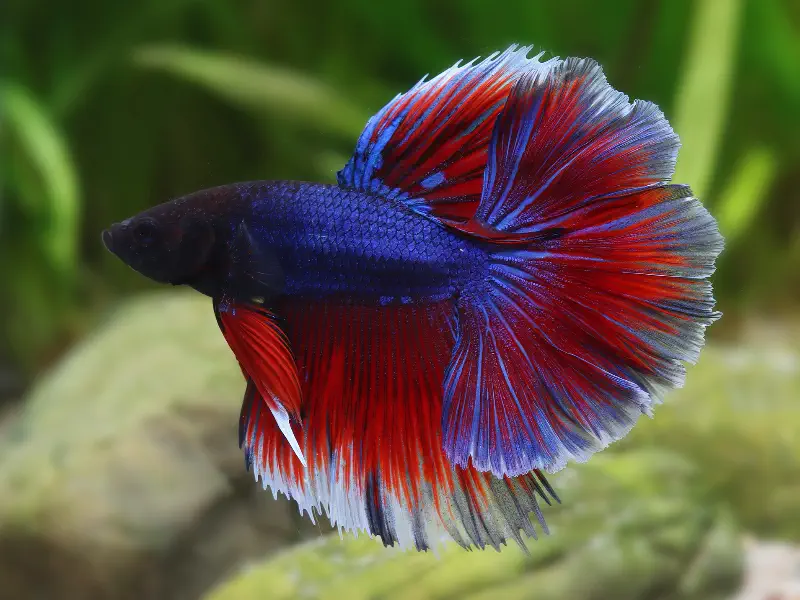
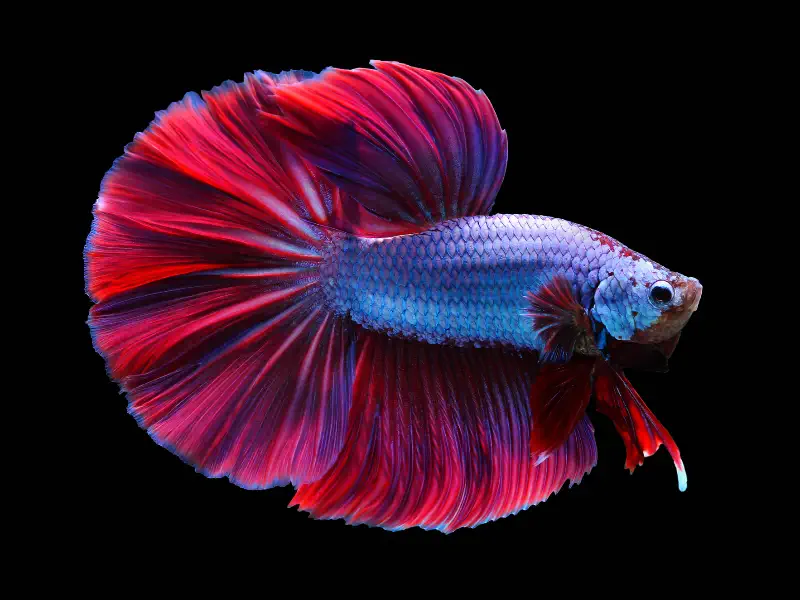
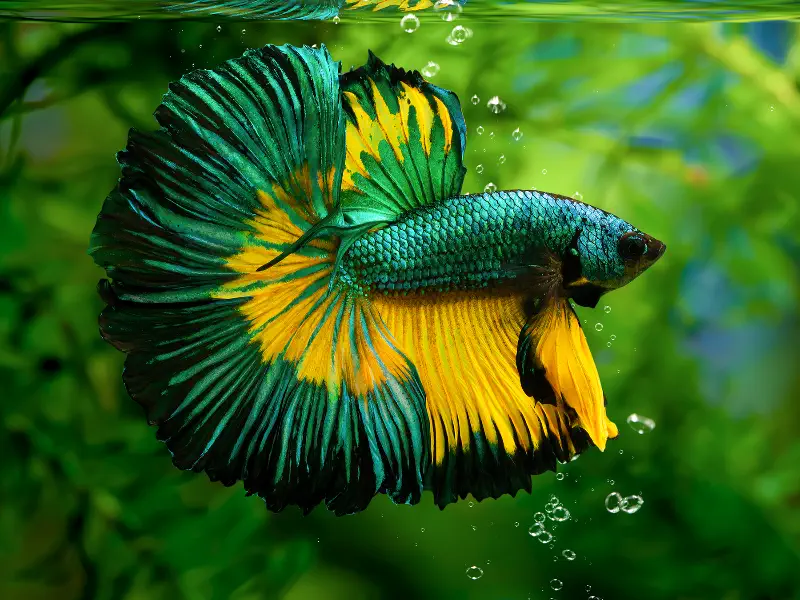
Halfmoon Betta
Betta splendensBred for a caudal fin that spreads a full 180 degrees, forming a perfect flat ‘D’ shape when flared. A benchmark show variety and one of the most demanding tail types to breed to standard.
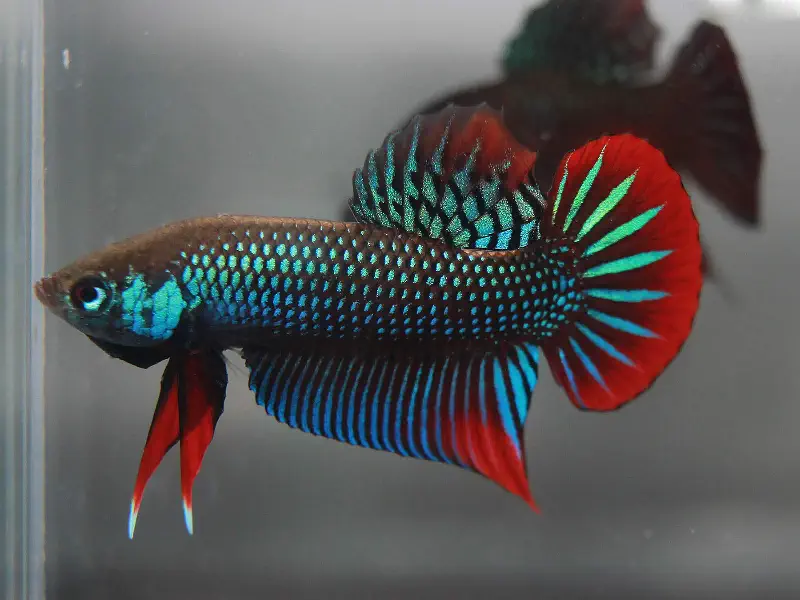
Wild Type (Betta imbellis)
Betta imbellisNot a Betta splendens variety at all, but a related wild species — smaller, shorter-finned, and far less aggressive than its domesticated cousin, sometimes even tolerated in same-sex groups. A niche but growing corner of the hobby for keepers wanting the genuinely wild form.
Temperament & Tankmates
Never Two Males Together
Two male Bettas housed in the same tank will fight, often to the death, regardless of tank size — this is the one absolute rule of Betta keeping. A single male in his own tank, or as the sole Betta in a larger community, is the standard and safest approach.
Choosing Community Tankmates
A Betta can work in a community tank, but the list of safe tankmates is shorter than many beginners expect. Avoid fin-nippers (Tiger Barbs, some Serpae Tetras), other long-finned or brightly coloured fish that can trigger territorial aggression, and anything small enough to be mistaken for food. Peaceful bottom-dwellers like Corydoras, and calm mid-water schoolers like Harlequin Rasboras or Ember Tetras, are among the more reliable choices — though every individual Betta's temperament varies, and some never tolerate tankmates at all.
Betta and Shrimp
Adult Cherry Shrimp can work with a calm individual Betta in a heavily planted tank with plenty of cover, but many Bettas will hunt and eat shrimp, especially shrimplets, on sight. Treat any Betta-and-shrimp combination as an experiment to watch closely, not a guaranteed pairing.
Setting Up a Betta Tank
Tank & Equipment
- Minimum 19 litres, heated and thermostat-controlled to a stable 24–28 °C — a bowl or unheated vase is not adequate care
- Gentle filtration only; baffle a hang-on-back outflow or use a sponge filter to avoid shredding long fins in strong current
- Keep the lid on with an air gap at the surface — the labyrinth organ needs access to atmospheric air
- Smooth, rounded decor and silk (not plastic) plants protect delicate fins from tears
- Floating plants and a resting leaf near the surface give a Betta a natural place to rest without swimming constantly
Feeding & Maintenance
- Feed a high-quality Betta-specific pellet as a staple, with occasional frozen or live bloodworm and brine shrimp for conditioning
- Bettas are prone to overfeeding and bloating — small portions, once or twice a day, with an occasional fasting day, work well
- Weekly 25–30% water changes keep a small heated tank stable; test parameters regularly since small volumes shift faster
- Watch for fin clamping, lethargy or colour loss — often early signs of poor water quality or stress before disease sets in
- A varied, enriching environment (occasional rearranging, mirror flare sessions in moderation) keeps an intelligent, active fish stimulated
Bettas in South Africa
Bettas are one of the most widely available fish in South African pet shops, which is unfortunately also why they are one of the most commonly mis-sold — still frequently kept in tiny unheated cups or bowls on shop shelves. A well-informed buyer moving a Betta straight into a proper heated, filtered tank at home makes a real difference to that individual fish's welfare.
Show-quality Halfmoon, Dumbo and Rosetail varieties are increasingly available through specialist local breeders and importers, alongside the standard Veiltails and Crowntails found in general shops. South Africa's generally moderate water chemistry suits Bettas well without special treatment.
ECAAC members keep and occasionally breed a range of Betta varieties, and breeding a documented spawn is a strong entry for the club's Breeding Awards Program. As always, never release unwanted fish into local waterways — rehome them through the club or a fellow keeper instead.
Thinking About Keeping a Betta?
ECAAC members can help you choose a healthy fish, set up a proper heated tank, and pick tankmates that actually work — not just what the shop label says.