
Blackwater Aquariums
Step into one of the most extreme freshwater habitats on Earth — rivers so stained with dissolved tannins that sunlight barely penetrates a few centimetres below the surface, yet teeming with some of the aquarium hobby's most iconic fish.
Where in the World
Blackwater rivers are one of three major water types found in the Amazon Basin — alongside the sediment-rich "whitewater" rivers and the clearer "clearwater" rivers. The most famous is the Rio Negro, the largest blackwater river in the world, which stretches roughly 1,700 km before joining the muddy Amazon (Rio Solimões) near Manaus, Brazil, in a dramatic phenomenon known as the "Meeting of Waters" — two rivers of totally different colour and chemistry that flow side by side for kilometres before finally mixing.
The dark colour isn't sediment or pollution — it comes from tannins and humic acids leached out of decomposing leaves, wood, and organic litter that falls from the surrounding rainforest canopy. As this material breaks down slowly in the warm, oxygen-poor water, it steeps the river the way tea leaves steep in a cup, staining it the colour of strong rooibos or black tea.
Blackwater habitats also form in igapó forests — seasonally flooded forest zones where the river rises metres during the wet season, submerging tree roots, leaf litter and fallen branches for months at a time. Fish move directly into this flooded forest floor to feed and spawn, which is why leaf litter, wood, and root structures are such a defining feature of the biotope.
Beyond South America, similar tannin-stained blackwater habitats also occur in Southeast Asia's peat swamp forests (home to many small Betta and Rasbora species) and in Central Africa — but the Amazon Rio Negro system remains the archetype the aquarium hobby refers to as "the" blackwater biotope.
Field Notes
- River system: Rio Negro, a major tributary of the Amazon River, Brazil
- Catchment: Drains ancient, nutrient-poor soils covered in dense rainforest
- Landmark: The "Meeting of Waters" near Manaus, where black and white water run side by side
- Habitat type: Main river channel, flooded igapó forest, and slow blackwater tributaries (igarapés)
- Climate: Tropical, with a pronounced wet season that floods the forest floor for months
- Light: Heavy rainforest canopy overhead; tannin-stained water below — a genuinely dim, low-light world
Water Chemistry
Did You Know
Almost No Bacteria
The tannins and low pH act as a natural antimicrobial, which is part of why blackwater is so clear and low in pathogens — despite looking murky, it's remarkably clean, sterile water.
Two Rivers, No Mixing
At the Meeting of Waters, the dark Rio Negro and pale, sediment-rich Rio Solimões flow side-by-side for up to 6 km without blending, due to differences in temperature, density and current speed.
A Nutrient-Poor World
Because the water carries so few dissolved minerals, blackwater rivers are surprisingly unproductive — most of the food web depends on leaf litter and fruit falling from the forest above, not on algae or plankton.
Home of the Neon Tetra
The Cardinal and Neon Tetra — two of the best-known fish in the entire aquarium hobby — both evolved their vivid blue-red stripe as a way to stay visible to each other in this dim, tea-stained water.
Flooded Forest Floor
For up to six months a year the water level in igapó forest can rise more than 10 metres, turning the forest floor into fish habitat and forcing many species to feed on fallen fruit and insects among submerged trees.
Loved in the Hobby
Blackwater biotope tanks have become a favourite aquascaping style worldwide — dark tannin-stained water, leaf litter, and driftwood create a moody, naturalistic look that also happens to suit many popular species' needs perfectly.
Life in the Blackwater
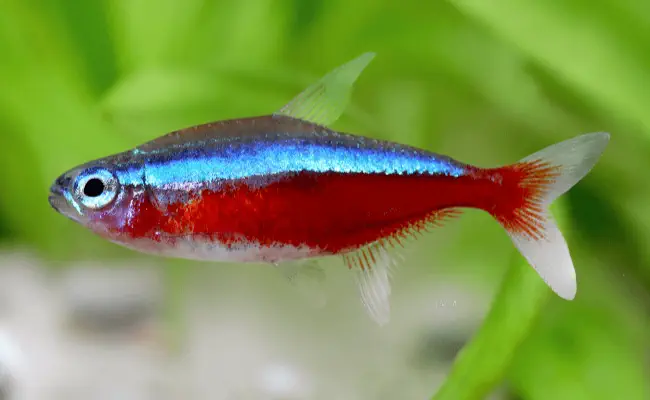
Cardinal Tetra
Paracheirodon axelrodiThe signature fish of the Rio Negro itself. A brilliant iridescent blue line runs the full length of the body above an unbroken red stripe — a colour pattern that stays vivid even in the darkest tannin water.
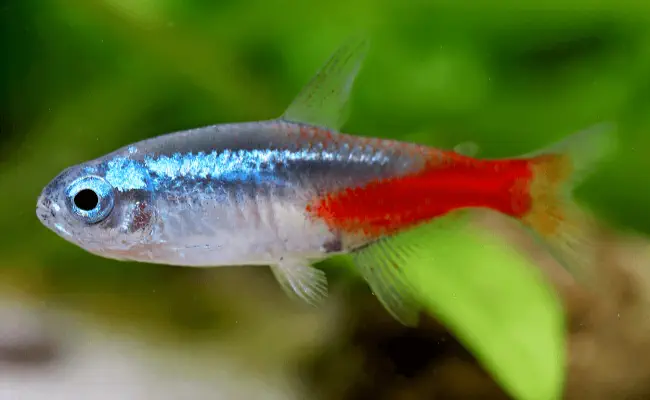
Neon Tetra
Paracheirodon innesiThe Cardinal's smaller, more northerly cousin, found in clearwater and blackwater tributaries alike. A hardy, easy-to-source schooling fish that still carries the same electric-blue biotope signature.
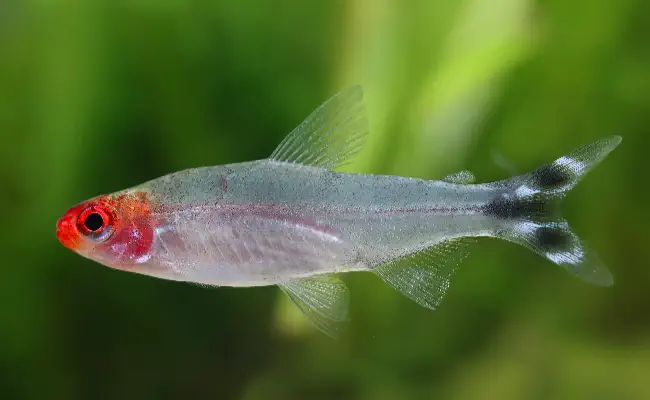
Rummy-Nose Tetra
Hemigrammus rhodostomusKnown for its bright red nose and tight, disciplined schooling behaviour — considered a strong indicator of good, stable blackwater conditions in a home aquarium.
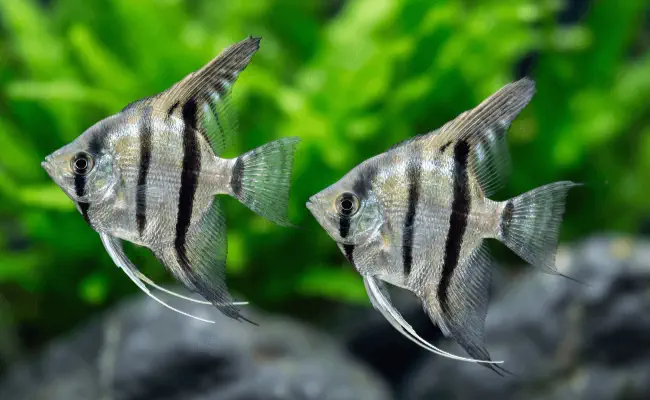
Angelfish
Pterophyllum scalareA tall, elegant Amazon native found throughout blackwater and whitewater tributaries alike, gliding gracefully between root tangles and submerged branches in the wild.
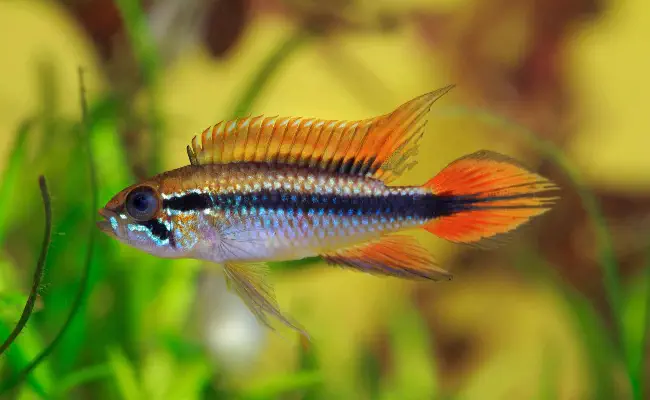
Apistogramma (Dwarf Cichlid)
Apistogramma cacatuoides & othersSouth America's answer to a reef fish — small, jewel-coloured cichlids that pair off and guard broods among leaf litter and root tangles in soft, acidic water.
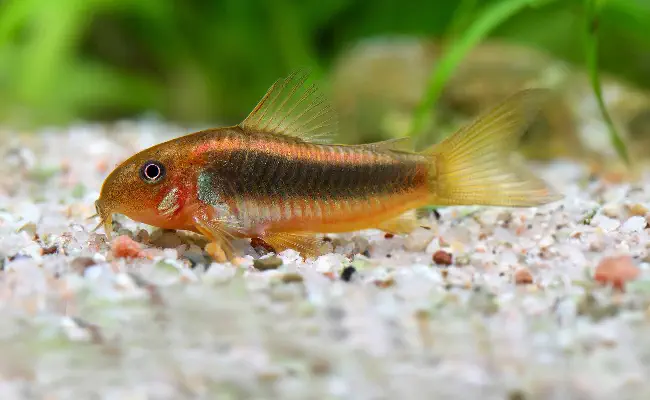
Corydoras Catfish
Corydoras spp.Armoured bottom-dwellers that sift through leaf litter and sand for food. Several species, including the classic Bronze and Peppered Cory, hail from soft blackwater tributaries.
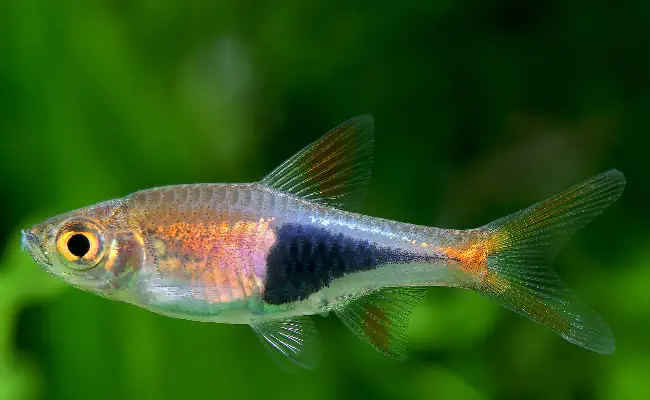
Harlequin Rasbora
Trigonostigma heteromorphaTechnically a Southeast Asian peat-swamp native rather than Amazonian, but a perennial favourite for hobbyist blackwater tanks thanks to its love of soft, acidic, tannin-stained water.
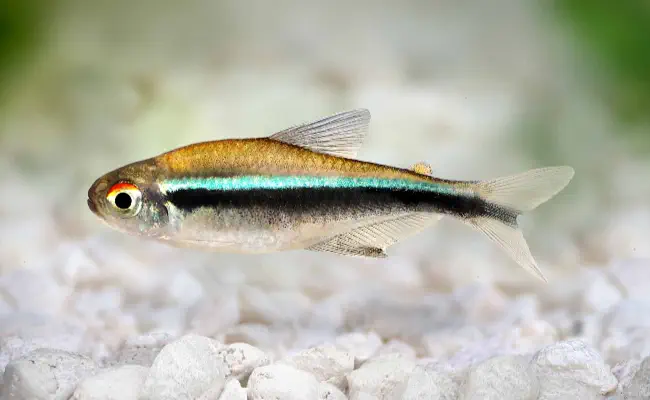
Black Neon Tetra
Hyphessobrycon herbertaxelrodiA hardy, subtly striking tetra with a bold black-and-silver horizontal stripe, native to slow, acidic tributary systems similar to those of its more famous cousins.
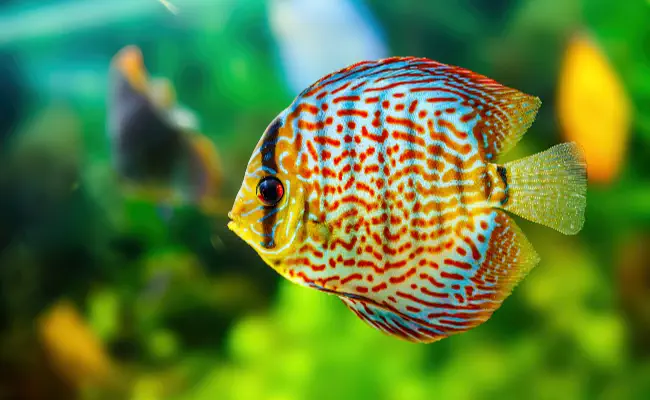
Discus
Symphysodon spp.The undisputed king of the blackwater aquarium — a tall, disc-shaped cichlid native to soft, acidic, tannin-stained Amazon tributaries, prized for its dazzling colour strains and gentle temperament.
Recreating the Biotope
Hardscape & Substrate
Blackwater layouts favour a dark, fine sand substrate and generous amounts of tangled driftwood or root-like branches, echoing the submerged trees of an igapó forest. A scattering of dried leaf litter across the substrate isn't just decorative — it's a functional part of the ecosystem, releasing tannins and offering grazing and hiding cover for fish and shrimp.
Lighting is typically kept low and warm-toned, since the natural habitat sits beneath a dense rainforest canopy filtering most direct sun before it ever reaches the water.
Getting the Water Right
- Start from soft, low-mineral source water (RO or rainwater blended with tap water) rather than trying to force hard tap water down with chemicals alone.
- Add catappa leaves, alder cones, or peat to steep tannins into the water gradually and naturally lower pH.
- Keep filtration gentle — many blackwater fish evolved in slow-moving tributaries, not fast currents.
- Introduce fish gradually once parameters are stable; most blackwater species are sensitive to sudden pH or hardness swings.
Curious About Building Your Own Biotope?
ECAAC members regularly build and show blackwater and other biotope aquariums as part of our Aquascaping Awards Program. Come along to a meeting, ask questions, and get hands-on guidance from members who've done it before.