
Invertebrates for Freshwater Tanks
Snails, crayfish and crabs bring a different kind of interest to a tank — constant grazing, substrate work, and a personality all their own. Some are the hardest-working clean-up crew you can buy; others are best kept in a dedicated setup of their own. This guide covers both.
Why Keep Freshwater Invertebrates
Beyond shrimp, freshwater aquariums support a huge range of other invertebrates — snails, crayfish, and even a handful of genuinely aquatic crabs. Many earn their keep as a working clean-up crew, grazing algae, biofilm and leftover food that would otherwise fuel poor water quality. Others, particularly crayfish and larger crabs, are kept purely for their own sake as the centrepiece of a species-specific tank.
The single most important thing to get right with any freshwater invertebrate is compatibility. Some, like Nerite and Assassin Snails, are almost universally safe additions to a community tank. Others, like crayfish and vampire crabs, are opportunistic predators or plant-eaters that need a tank built specifically around them — mixing the two groups without checking first is the most common invertebrate-keeping mistake.
Copper sensitivity applies here just as it does to shrimp: snails, crayfish and crabs are all invertebrates and all vulnerable to copper-based medications and fertilisers, so treat any tank containing them with the same caution as a dedicated shrimp tank.
Water Parameters
Snails and crayfish build their shells and exoskeletons from calcium carbonate, so moderate to hard, well-buffered water is generally more important than a precise pH or temperature figure. In very soft or poorly buffered water, shells can pit, crack or fail to regrow properly after moulting — a crushed cuttlebone or a calcium supplement is a cheap insurance policy in softer South African water supplies.
Did You Know
Some Snails Clone Themselves
Ramshorn and Bladder Snails are hermaphrodites capable of self-fertilising, which is exactly why a single hitchhiker on a new plant can turn into a population explosion within weeks.
Crayfish Regrow Lost Limbs
A crayfish that loses a claw or leg in a fight or an incomplete moult can regenerate it over several successive moults — a smaller replacement limb grows back each time until it's roughly full size again.
Nerite Eggs Are Everywhere, But Harmless
Nerite Snails lay eggs constantly on glass, wood and hardscape, but the eggs simply never hatch in freshwater — the larvae need brackish water to develop, so the dots are permanent decoration, not a coming population boom.
Crabs Breathe Air and Water
Many semi-terrestrial crabs like Vampire and Thai Devil Crabs have modified gill chambers that let them breathe atmospheric air for extended periods — part of why they need far more land than a standard aquarium provides.
An Assassin With a Slow Fuse
Assassin Snails hunt other snails one at a time, burying themselves in substrate to ambush prey — effective pest control, but slow enough that a serious bladder snail bloom can take weeks to bring under control.
Crayfish Are Escape Artists
Crayfish routinely climb filter intakes, cords and even glass silicone seams to escape a tank, and can survive out of water for surprisingly long periods — a secure, gap-free lid is non-negotiable.
Species Spotlight
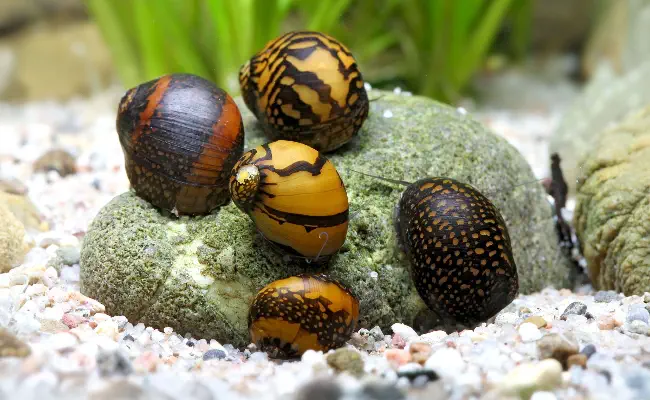
Nerite Snail
Neritina spp.The best algae-cleaning snail in the hobby — a relentless grazer of stubborn green spot algae, and it cannot reproduce in freshwater, so there is no snail-plague risk. The small white egg dots left on hardscape are the only cosmetic downside.
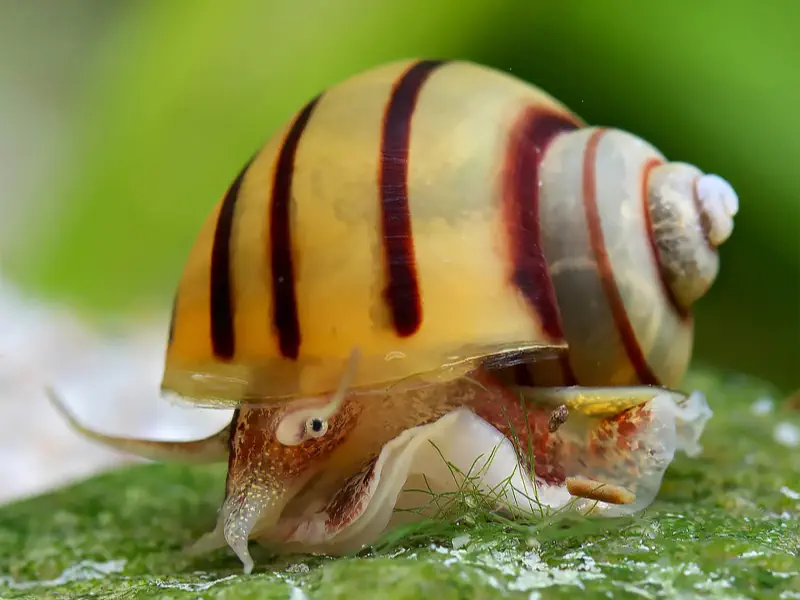
Mystery Snail
Pomacea bridgesiiA large, colourful, peaceful apple snail that grazes algae and leftover food and is a favourite for its curious, active personality. Needs a tight-fitting lid or a covered air gap — it periodically climbs out to breathe and will crawl over open water edges.
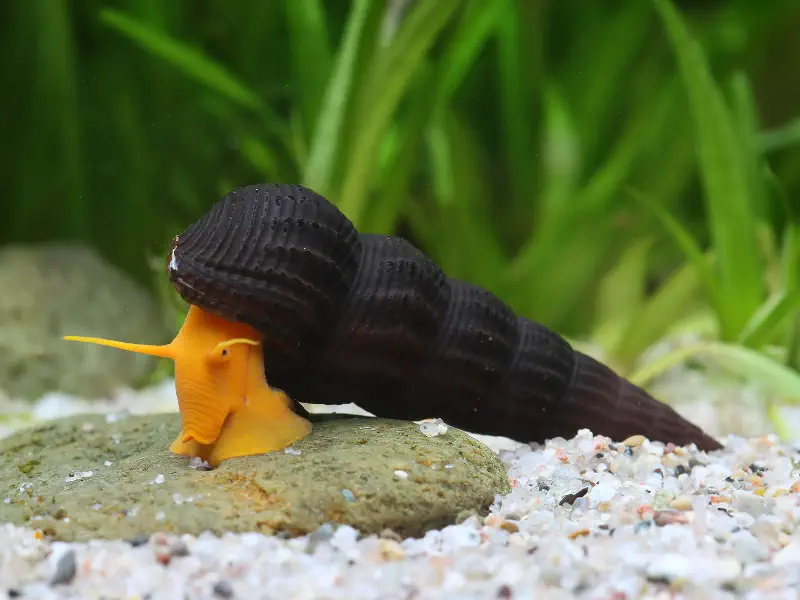
Rabbit Snail
Tylomelania spp.A striking, long-bodied snail from Sulawesi's ancient lakes, with an elongated shell and a rabbit-like face. Slow-breeding and genuinely useful as a substrate-sifter, but it wants warmer, harder water than most other freshwater snails.
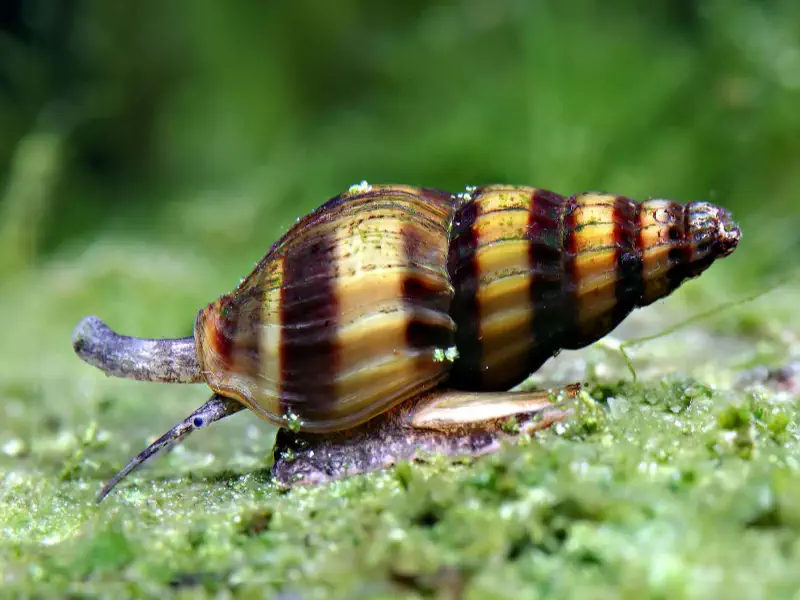
Assassin Snail
Clea helenaKept specifically to control unwanted pest snail (bladder and pond snail) population booms — it hunts and eats other snails rather than plants. Breeds slowly, so it won't itself become the next pest problem.
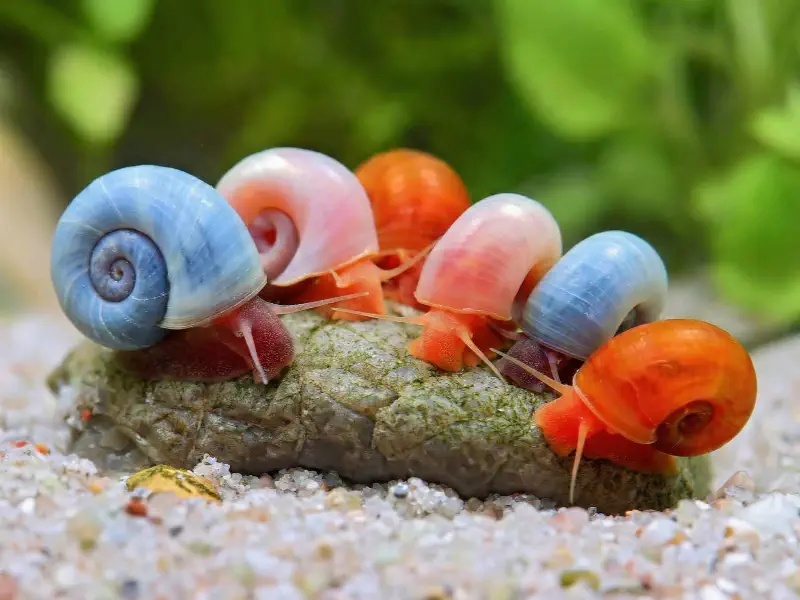
Ramshorn Snail
Planorbidae (Planorbella / Helisoma spp.)A small, prolific, flat-coiled snail that grazes algae and biofilm constantly. Colourful red and blue lines are deliberately kept for looks, though the species self-fertilises and can quickly overpopulate a tank if food is abundant — an Assassin Snail is the standard fix if numbers get out of hand.
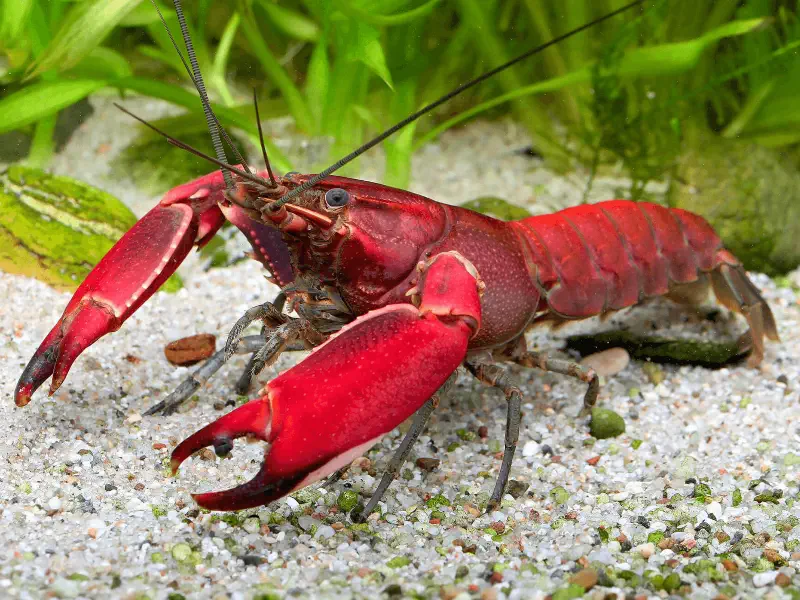
Cherry / Red Claw Crayfish
Cherax spp.Colourful, personable freshwater crayfish that will rearrange hardscape, dig, and eat almost anything — plants included. Best kept alone or with tough, fast tankmates in a species-focused setup rather than a planted community tank.
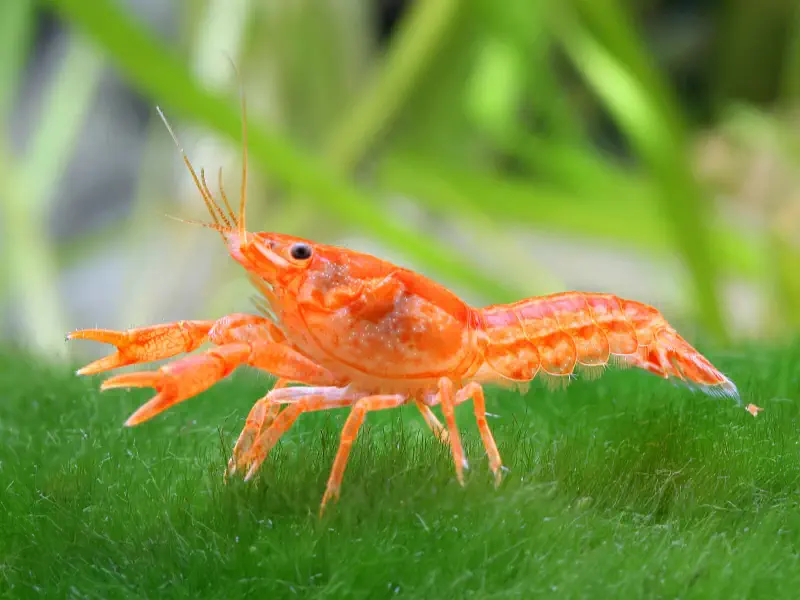
Dwarf Mexican Crayfish
Cambarellus patzcuarensisAt barely 3–4 cm, the one crayfish genuinely compatible with a planted community tank of larger peaceful fish. Still opportunistic with very small tankmates and shrimplets, but far gentler on plants than full-size crayfish.
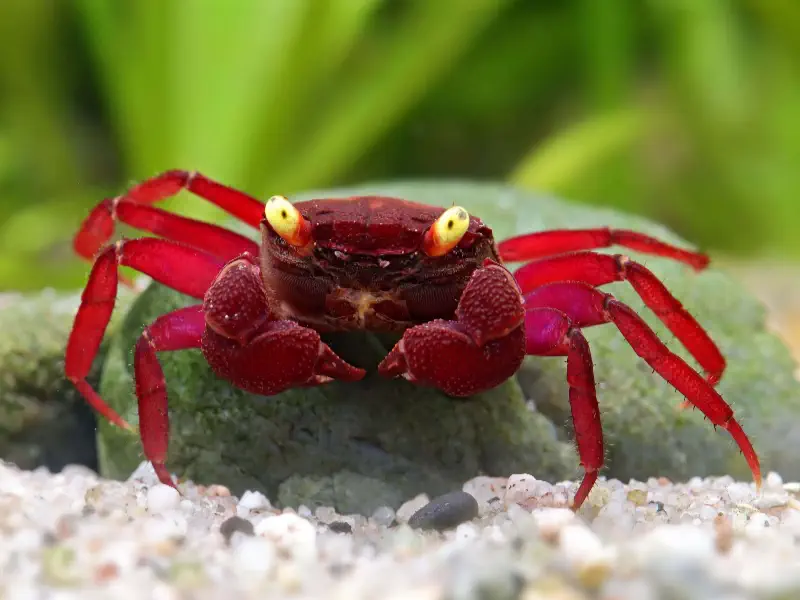
Vampire Crab
Geosesarma spp.A vividly coloured, semi-terrestrial crab that needs far more land than water — not a true aquarium species. Suited to a paludarium or vivarium setup with a shallow pool rather than a conventional fish tank.
Compatibility & Common Mistakes
Snails: Mostly Safe, With Exceptions
Nerite, Mystery and Rabbit Snails are broadly safe in a planted community tank, grazing algae and biofilm without troubling healthy plants. Larger apple snail species can eat soft plant leaves given the chance, so choose species carefully if plant preservation matters. Assassin Snails are predatory toward other snails specifically, not fish or shrimp, making them the standard fix for an unwanted pest snail bloom.
Crayfish Need Their Own Tank
Full-size crayfish are opportunistic omnivores that will eat plants, slow fish, shrimp and even each other given the chance, and are notorious for rearranging hardscape and uprooting a carefully planted layout overnight. Outside of the genuinely tiny Dwarf Mexican Crayfish, they are best kept solo or in a species-only tank built around their behaviour rather than added to an existing community.
Most "Aquarium" Crabs Aren't Fully Aquatic
This is the single biggest invertebrate-buying mistake: species like Vampire and Rainbow Crabs are sold in pet shops as aquarium animals but are actually semi-terrestrial and need far more land than water, kept properly in a paludarium or vivarium rather than a conventional fish tank.
Setting Up for Invertebrates
General Setup
- A tight, gap-free lid is essential for crayfish and many crabs — they are determined, capable climbers
- Add crushed coral, cuttlebone, or a mineral-rich substrate to buffer GH/KH for shell and exoskeleton health
- Avoid copper-based medications and fertilisers entirely in any tank housing invertebrates
- Provide varied hiding spots — caves, wood and dense planting — especially important for shy or moulting animals
- For semi-terrestrial crabs, build a paludarium with more land/emergent area than open water, not a standard fish tank
Feeding & Maintenance
- Most snails and crayfish are opportunistic omnivores — algae wafers, blanched vegetables and sinking pellets cover most needs
- Supplement calcium regularly, particularly in soft or RO-supplemented water, to support healthy shell and exoskeleton growth
- Leave a shed crayfish exoskeleton in the tank for a day or two — like shrimp, they eat it to reclaim calcium
- Quarantine new snails carefully; they are one of the most common accidental hitchhikers on new plants
- Research a specific species before buying — "will it eat my plants," "will it eat my fish," and "is it actually aquatic" are the three questions to ask every time
Invertebrates in South Africa
Nerite, Mystery and Ramshorn Snails are widely available through South African fish shops and are a reliable, low-risk clean-up crew addition for local tanks. Specialist species — Rabbit Snails, Dwarf Mexican Crayfish — move mostly through club members, specialist breeders and expos rather than general shelves.
South Africa's generally moderate-to-hard tap water suits most freshwater invertebrates well without extra buffering, which is a genuine local advantage over softer-water regions.
A serious biosecurity note: several crayfish species are established invasive pests in South African waterways already, causing real ecological damage. Never release crayfish, crabs or snails into local rivers, dams or wetlands under any circumstances — check local regulations before acquiring crayfish specifically, and always rehome surplus stock through the club rather than into the wild.

The Eastern Cape Aquarium & Aquascaping Club is proudly sponsored by Judy's Planted Tank — a specialist snail breeder stocking a range of Nerite, Mystery and Ramshorn Snail lines. Visit www.judysplantedtanks.co.za for all your snail needs.
Curious About Keeping Invertebrates?
ECAAC members keep everything from Nerite Snail clean-up crews to dedicated crayfish tanks, and can help you choose species that genuinely suit your setup.