
Freshwater Shrimp Keeping
From the bulletproof Cherry Shrimp to the exacting, high-grade Taiwan Bee, Neocaridina and Caridina shrimp have become one of the fastest-growing corners of the freshwater hobby — prized for colour, algae control, and a breeding hobby built almost entirely around selective genetics.
Origin & the Two Genera
Almost every colour-bred dwarf shrimp in the hobby belongs to one of two genera. Neocaridina davidi, native to streams and ponds across Taiwan and parts of China, is the forgiving all-rounder behind Cherry, Blue Dream and Yellow shrimp — tolerant of a wide pH and hardness range, and the shrimp almost every keeper starts with.
Caridina cf. cantonensis, source of Crystal Red, Crystal Black, Tiger and the prized Taiwan Bee lines, comes from softer, more acidic hill streams in southern China and Taiwan. These shrimp are noticeably fussier about stability, and are generally considered a step up once a keeper has mastered Neocaridina. The high-grade end of this hobby — grading, culling and the pursuit of ever-purer colour lines — is very much a Taiwanese breeding tradition, which is where the Taiwan Bee family of lines takes its name.
Crucially, the two genera can crossbreed within themselves but not with each other — Neocaridina colour lines interbreed freely (a tank of Cherry and Blue Dream will muddy toward brown over generations), and the same is true within Caridina, but a Neocaridina and a Caridina cannot produce offspring together.
Water Parameters
Neocaridina
Neocaridina are genuinely tolerant of ordinary tap water in most of South Africa — moderate hardness and a neutral-to-alkaline pH suit them well, and most keepers get a thriving colony without any special water treatment at all.
Caridina 🇹🇼
Caridina want soft, acidic, mineral-light water — usually reached with RO water and a shrimp-specific remineraliser rather than tap water, since calcium and magnesium ratios affect moulting success as much as the raw GH number. Stability matters more than any single figure: a smaller swing held constant beats a "better" number that drifts.
Both genera are extremely sensitive to copper and other heavy metals, which are lethal even in trace amounts — always check fertilisers, medications and tap water treatment for copper before dosing a shrimp tank of either genus. Ammonia and nitrite must read zero in both cases; unlike fish, shrimp give very little warning before a spike becomes fatal.
Did You Know
Grading Is a Science
Crystal Shrimp are graded on a formal scale (S, SS, SSS and beyond) based purely on how much of the body is covered in solid white — a system precise enough that breeders trade shrimp by grade the way jewellers trade diamonds by clarity.
They Moult to Grow
Shrimp shed their entire exoskeleton every few weeks throughout their lives, leaving behind a perfect, ghostly copy of themselves. Leave the shed shell in the tank — shrimp eat it to reclaim the calcium.
No Larval Stage
Unlike Amano Shrimp, Neocaridina and Caridina hatch as fully-formed miniature shrimp rather than free-swimming larvae — which is exactly why they can complete their whole life cycle in ordinary freshwater.
Colour Reacts to Mood and Health
Shrimp colour intensity shifts with stress, health and even the tank substrate colour — a stressed or unwell shrimp often turns pale or cloudy well before other symptoms appear, making colour a useful early warning sign.
Selective Breeding Moves Fast
Because shrimp breed young and often, new colour and pattern lines can be fixed in a shrimp-only tank within a couple of years — a pace of selective breeding few other ornamental animals can match.
Berried, Not Pregnant
A female carrying eggs under her tail is described as "berried," from the cluster's resemblance to a bunch of tiny berries — she fans and cleans them with her swimmerets until they hatch.
Variety Spotlight
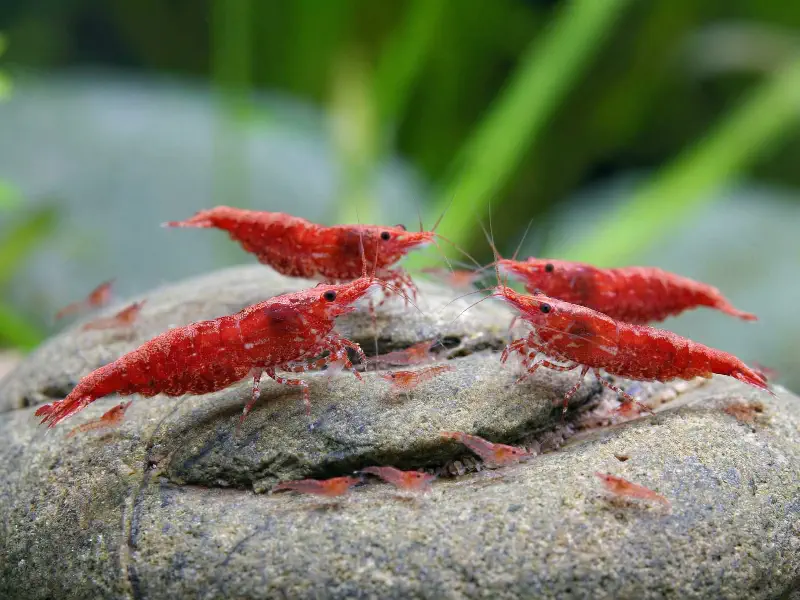
Red Cherry
Neocaridina davidiThe gateway shrimp for the whole hobby — a tough, prolific line bred from wild brown stock into a saturated cherry red. Tolerant of a wide range of parameters and breeds readily without any special intervention.
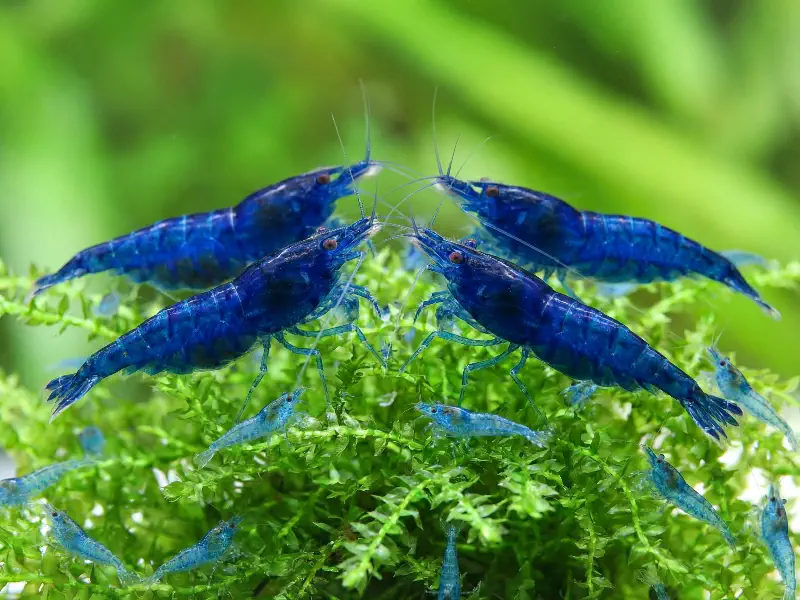
Blue Dream
Neocaridina davidiA solid, opaque sky-to-royal blue colour morph sharing the same hardy genetics as Cherry Shrimp. Breeds true when kept alone, but crosses with other Neocaridina colours and muddies quickly if mixed.
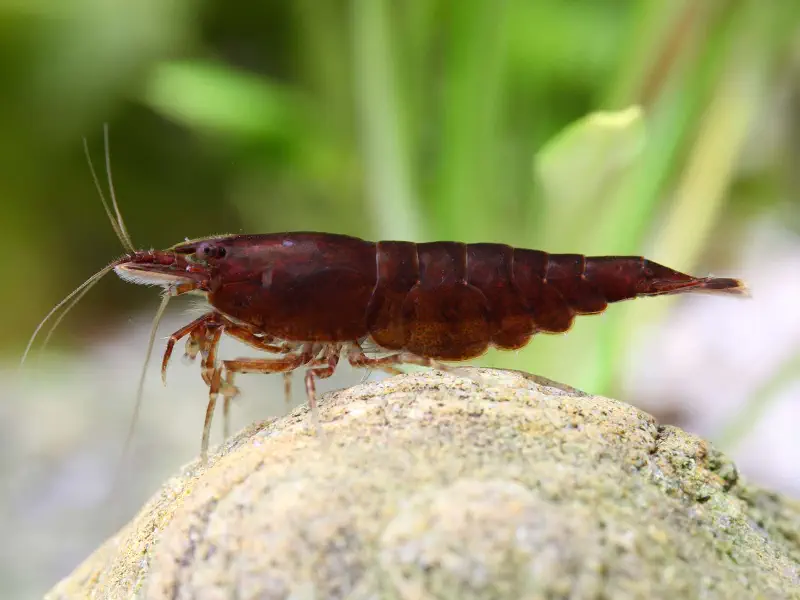
Chocolate
Neocaridina davidiA rich, solid milk-to-dark-brown line prized for contrast against green plants — understated next to the brighter colours, but just as hardy and easy to breed.
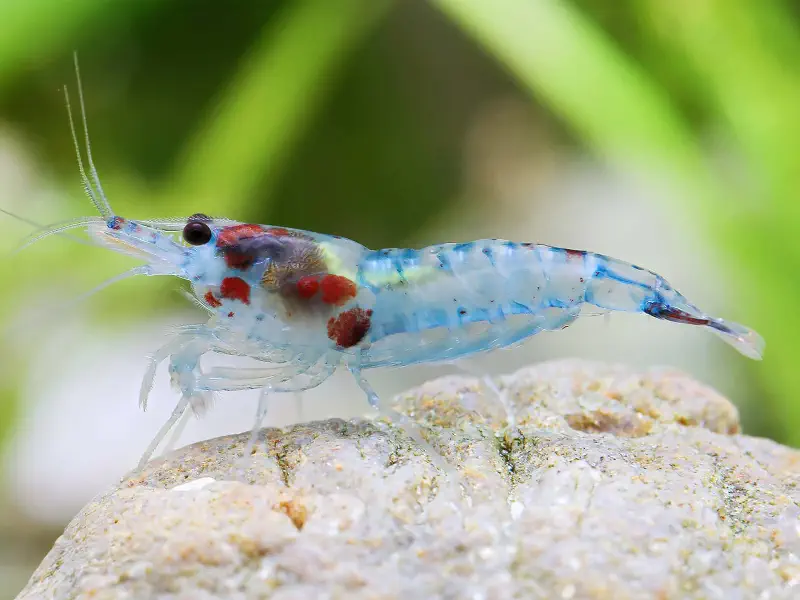
Blue Rili
Neocaridina davidiA pattern rather than a solid colour — deep blue body colour broken by clear, translucent bands. The patchy pattern varies between individuals, giving every shrimp in the colony a slightly different look.
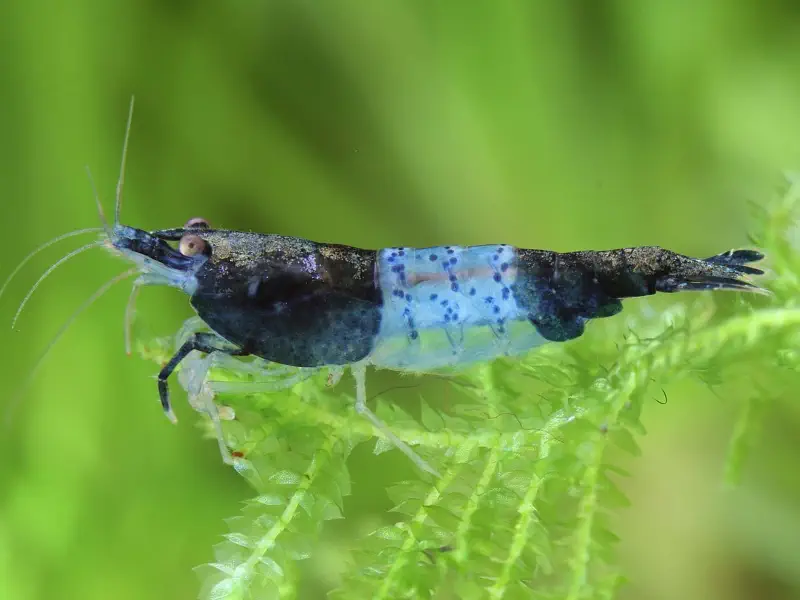
Carbon Rili
Neocaridina davidiA near-black body broken by the same clear Rili banding, giving a bold, high-contrast pattern against light substrate. One of the most striking Rili forms in low light.
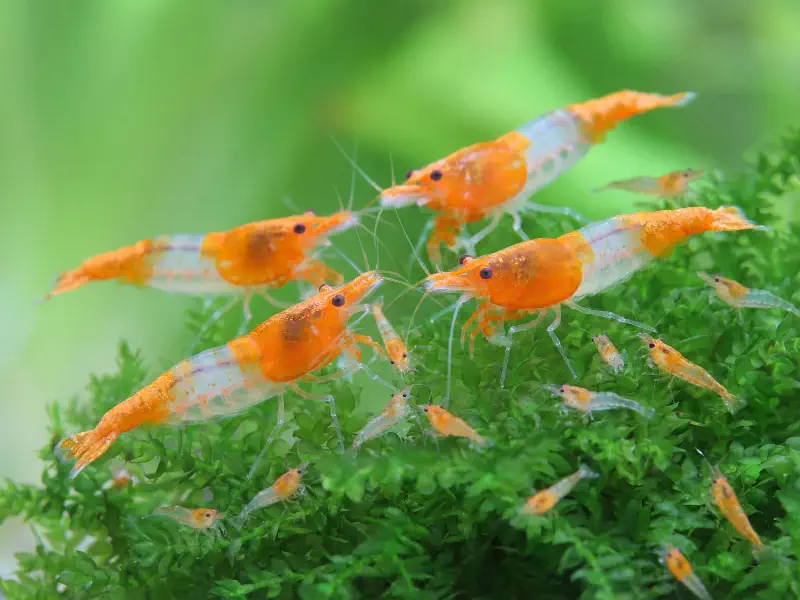
Orange Rili
Neocaridina davidiA vivid orange body carrying the translucent Rili banding, splitting the difference between the solid Orange Fire line and a patterned Rili look.
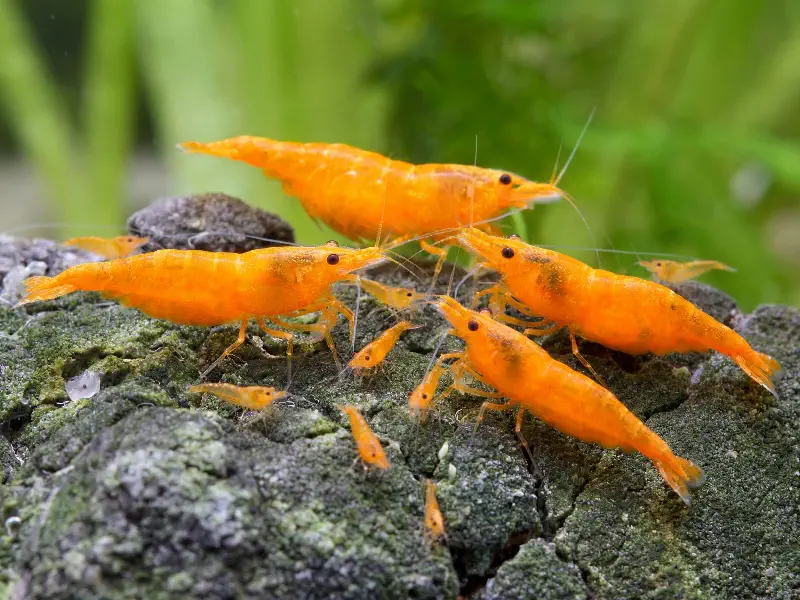
Orange Fire
Neocaridina davidiA solid, intensely saturated orange line bred for maximum colour depth with no clear patches. One of the brightest single-colour Neocaridina forms available.
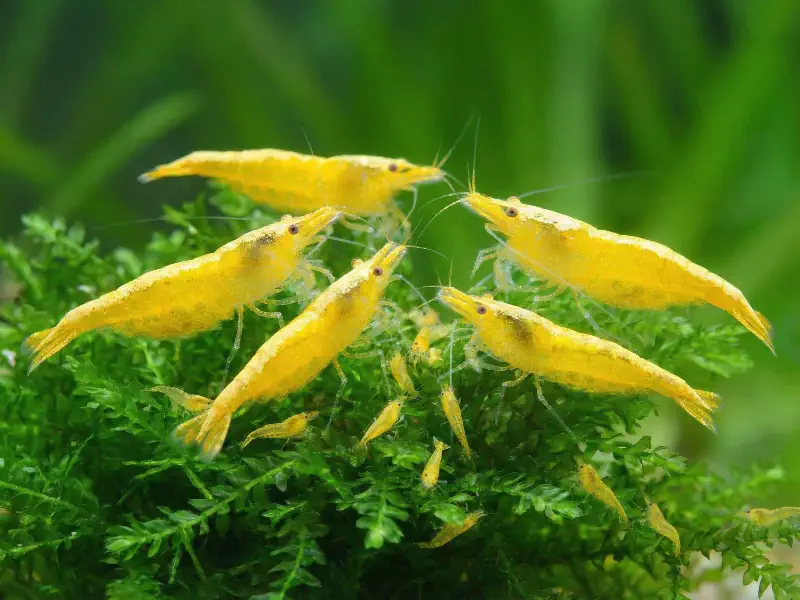
Yellow Fire
Neocaridina davidiThe yellow counterpart to Orange Fire — a fully solid, saturated yellow body bred out to remove any translucent patching. Striking against dark substrate and dense green planting.
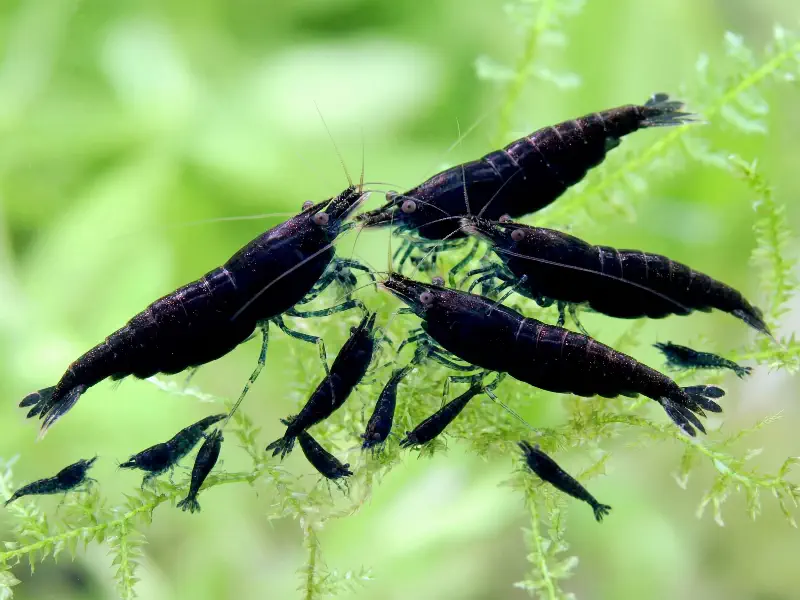
Black Sakura
Neocaridina davidiA deep, glossy solid black line, selectively bred from Carbon lines for full-body opacity rather than the banded Carbon Rili pattern. Reads almost jet black under good light.
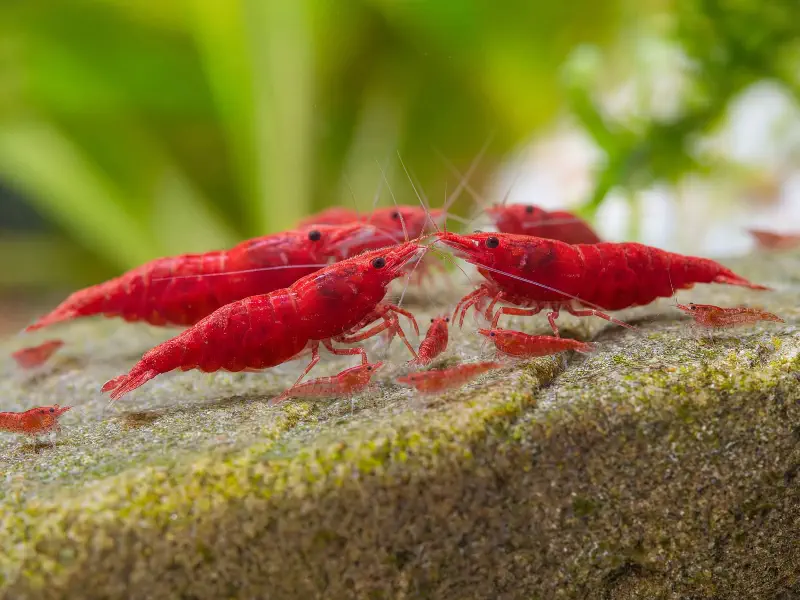
Red Sakura
Neocaridina davidiA premium-grade Cherry Shrimp line bred for maximum, full-body red saturation beyond the standard Red Cherry grade — the deep end of the Cherry Shrimp colour spectrum.
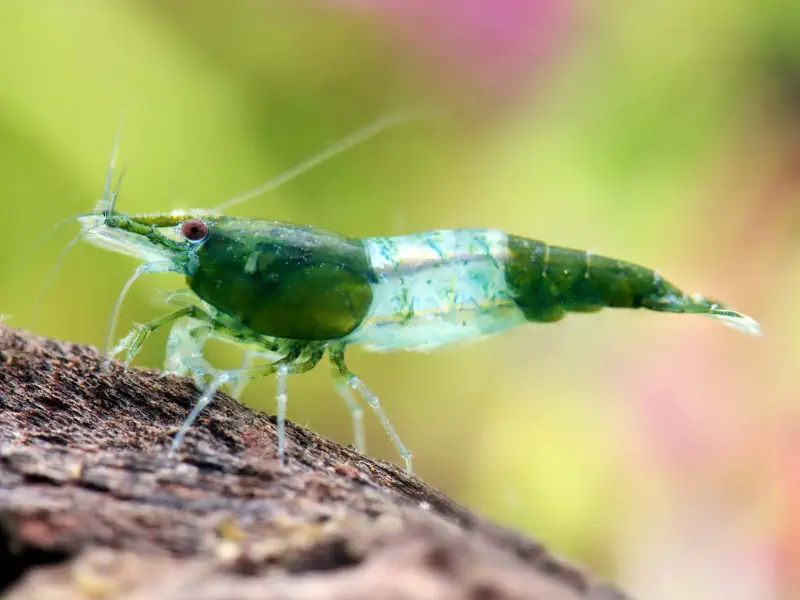
Green Rili
Neocaridina davidiA translucent green-bodied line carrying the clear Rili banding, giving a softer, more subtle look than the bolder red and orange Rili forms.
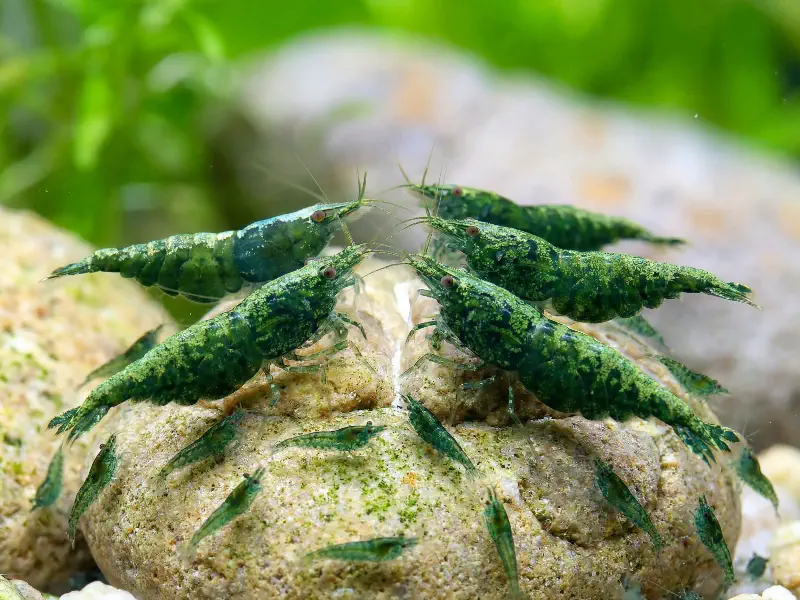
Green Jade
Neocaridina davidiA solid, opaque jade-green line, one of the less common Neocaridina colours and a good way to add contrast to a mixed-colour display without duplicating red or blue tones.
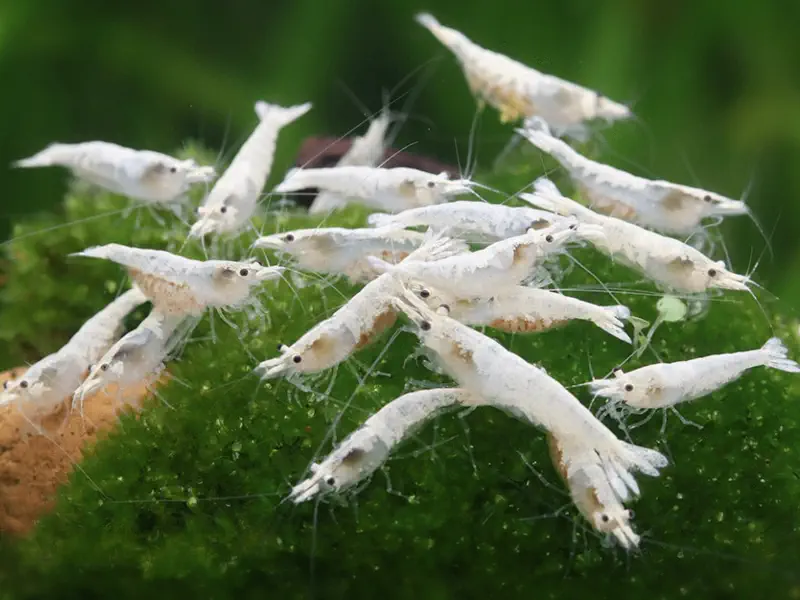
Snowhite / Whitepearl
Neocaridina davidiA clean, opaque white to pearl-white line that shows up beautifully against dark tank backgrounds and green plants — simple, elegant, and an excellent contrast shrimp.
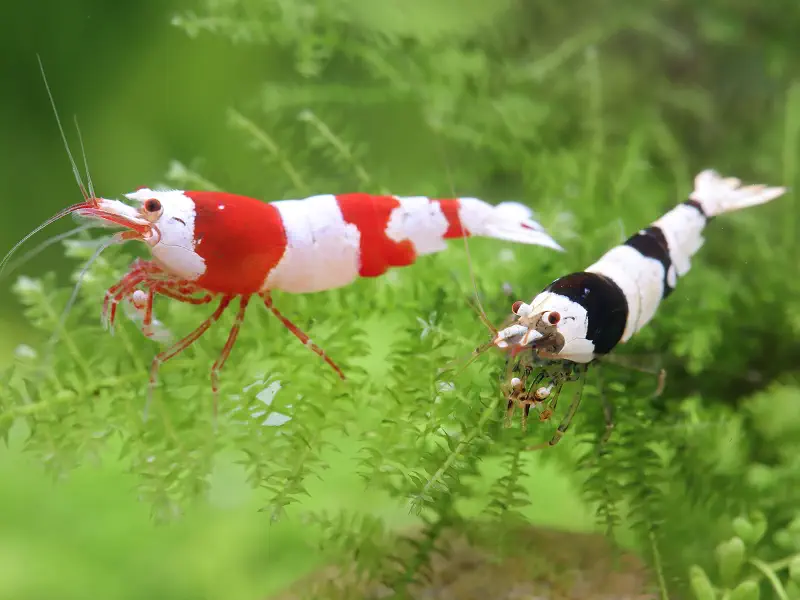
Crystal Red
Caridina cf. cantonensisThe founding Caridina grade line — bold red-and-white banding, graded S to SSS+ by how much white covers the body. Needs soft, stable, acidic water and is far less forgiving than any Neocaridina.
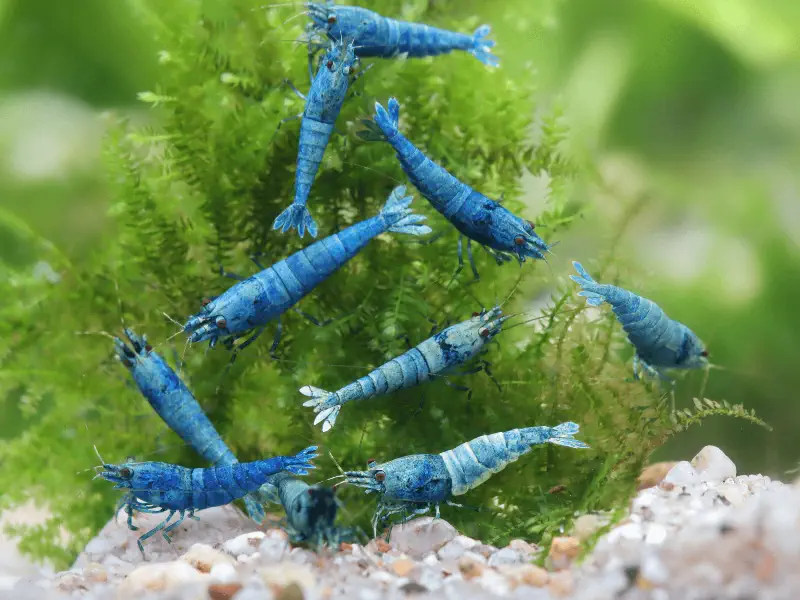
Blue Bolt
Caridina cf. cantonensisA high-grade Taiwan Bee variant prized for an intense, near-fluorescent solid blue-white body. Bred to exacting soft-water standards, with colour quality varying widely by line.
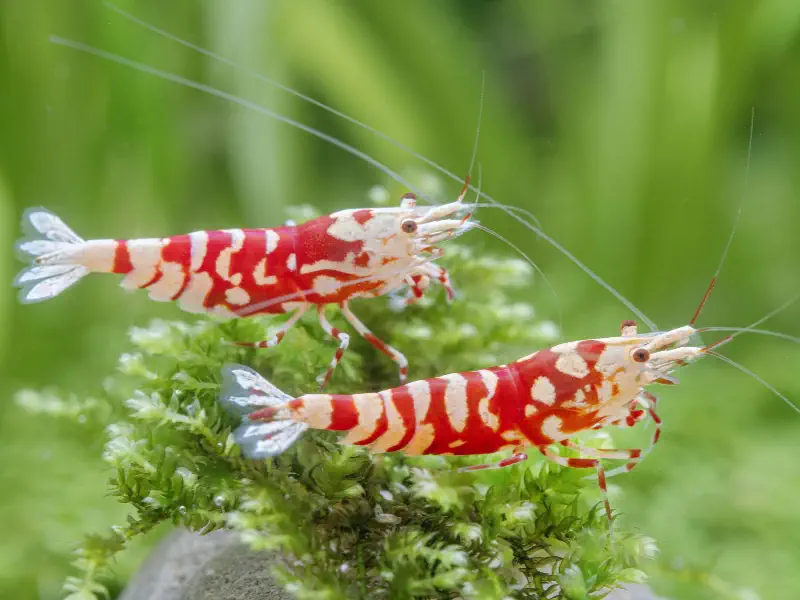
Red Fancy Tiger
Caridina cf. cantonensisA patterned Tiger Shrimp variant combining red base colour with irregular fancy markings, rather than the even striping of a standard Tiger. A more selectively refined, pricier line than the base Tiger form.
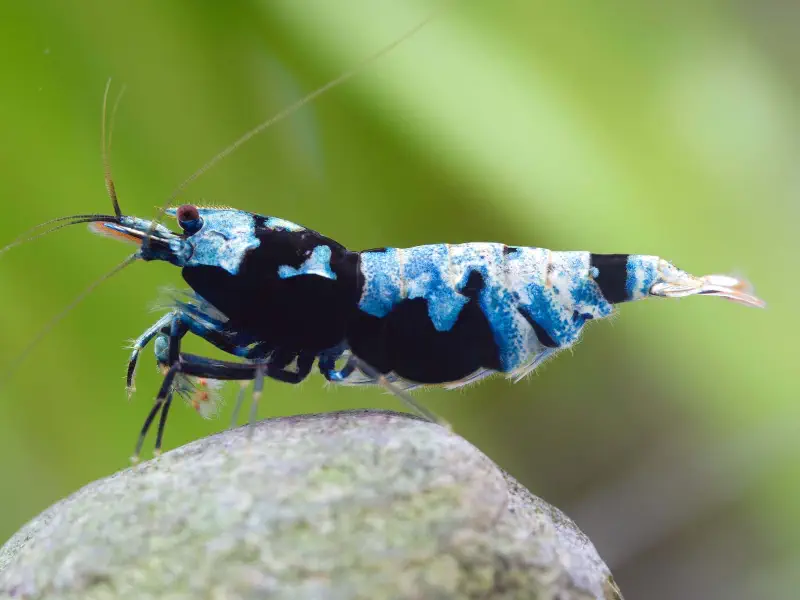
Blue Shadow Mosura
Caridina cf. cantonensisA Mosura-line Taiwan Bee variant with a solid blue body broken by dark 'shadow' patches. Mosura lines are bred for a distinctive patchy opacity pattern rather than the even banding of Crystal Shrimp.
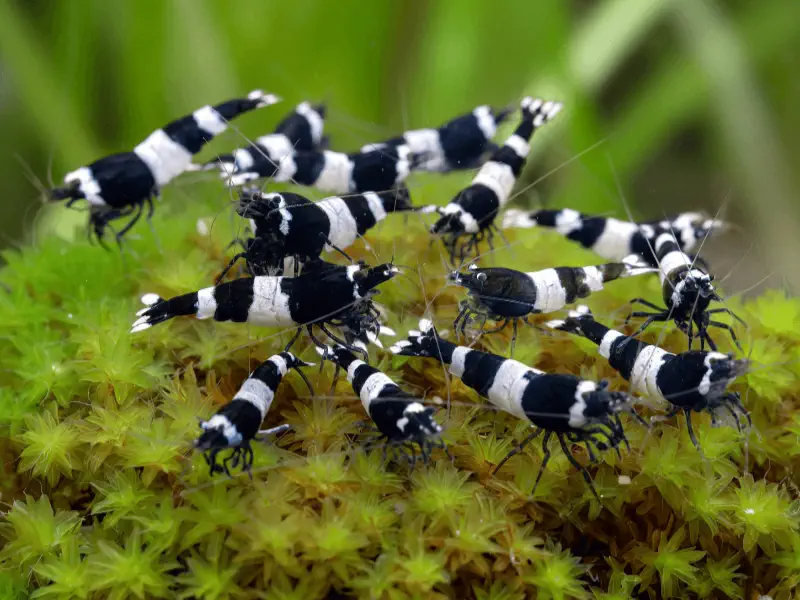
Black Panda
Caridina cf. cantonensisA high-grade Taiwan Bee pattern with bold black-and-white patches reminiscent of a panda's colouring — among the most recognisable of the patterned high-grade lines.
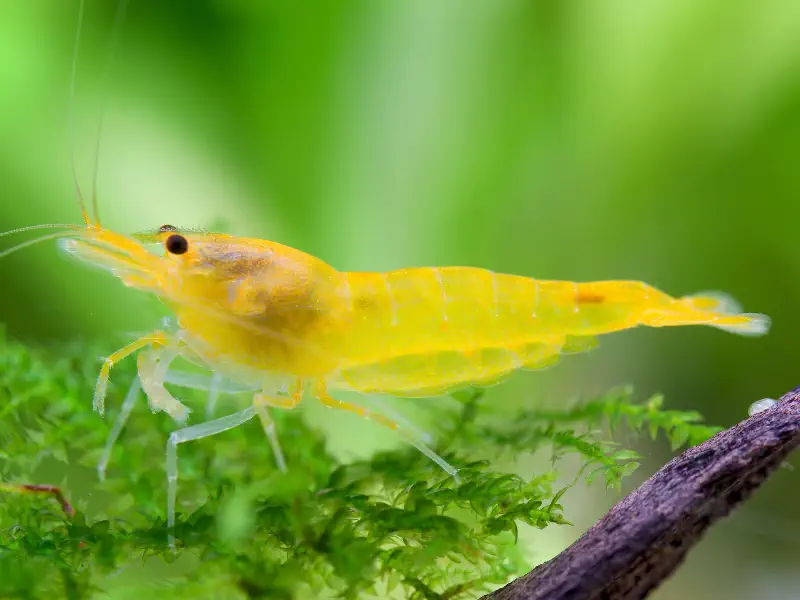
Yellow King Kong
Caridina cf. cantonensisA King Kong-line Taiwan Bee bred for an intensely solid, saturated yellow body. King Kong lines are prized specifically for maximum colour opacity and depth.
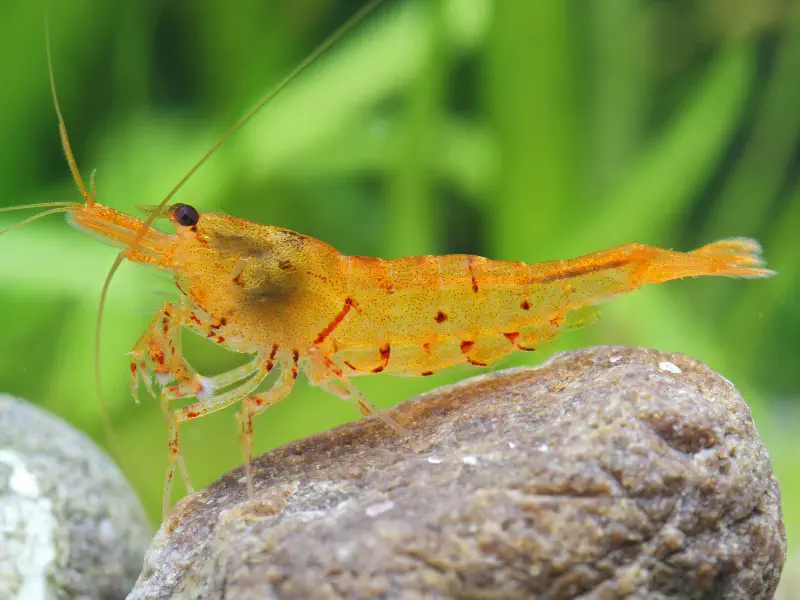
Tangerine Tiger
Caridina cf. cantonensisA Tiger Shrimp line bred for a warm orange-tangerine base colour rather than the typical clear or green tiger body, combined with the classic dark tiger striping.
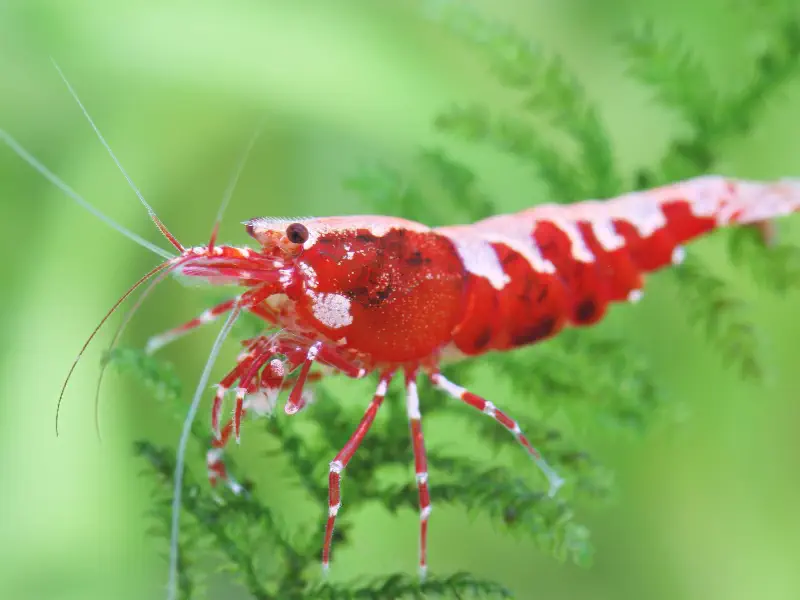
Red Galaxy
Caridina cf. cantonensisA patterned high-grade line combining a red base with scattered white 'galaxy' speckling across the body and carapace, distinct from the even banding of standard Crystal Red.
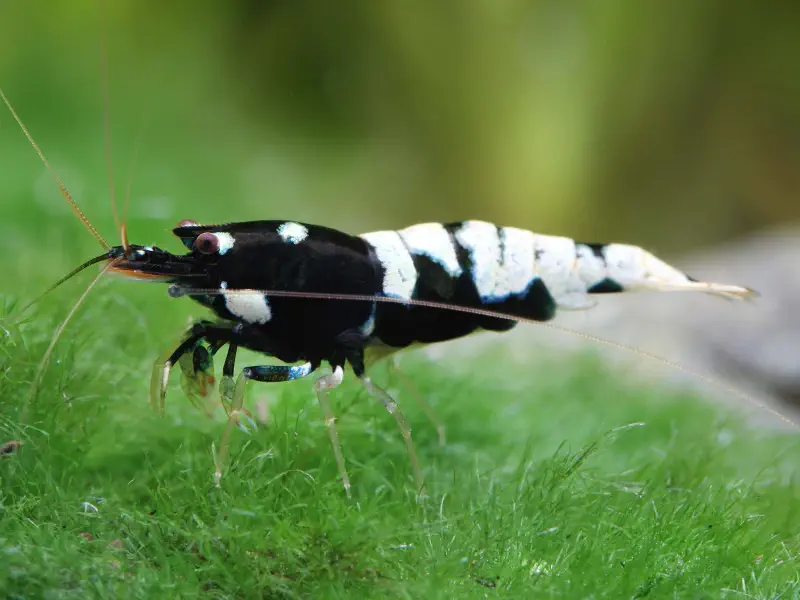
Taiwan Bee 🇹🇼
Caridina cf. cantonensisThe broad family of high-grade lines developed from Crystal Shrimp, prized for solid, opaque colour patterns. Demands very soft, very stable water and represents the most exacting end of the hobby.
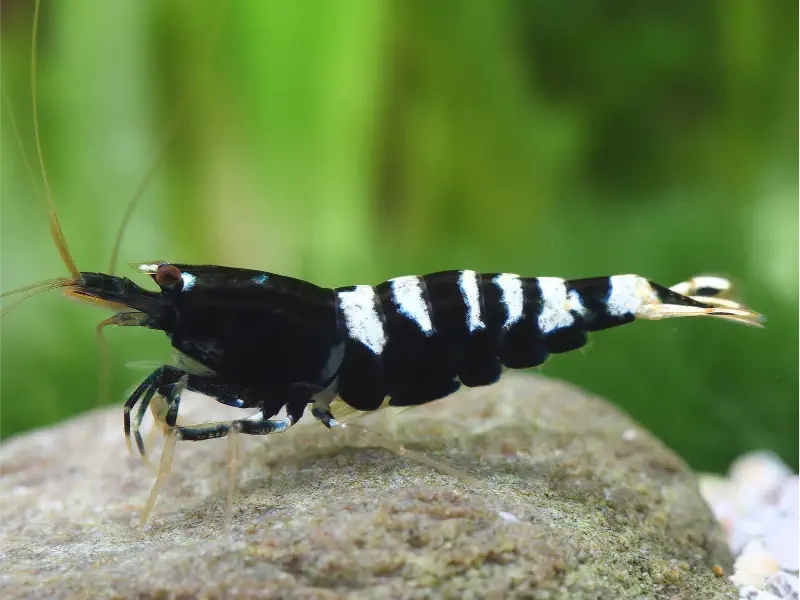
Zebra Pinto
Caridina cf. cantonensisA Pinto-line Taiwan Bee variant with bold, irregular zebra-like striping rather than the patchy blotches of a standard Pinto. Highly sought after and priced to match its rarity.
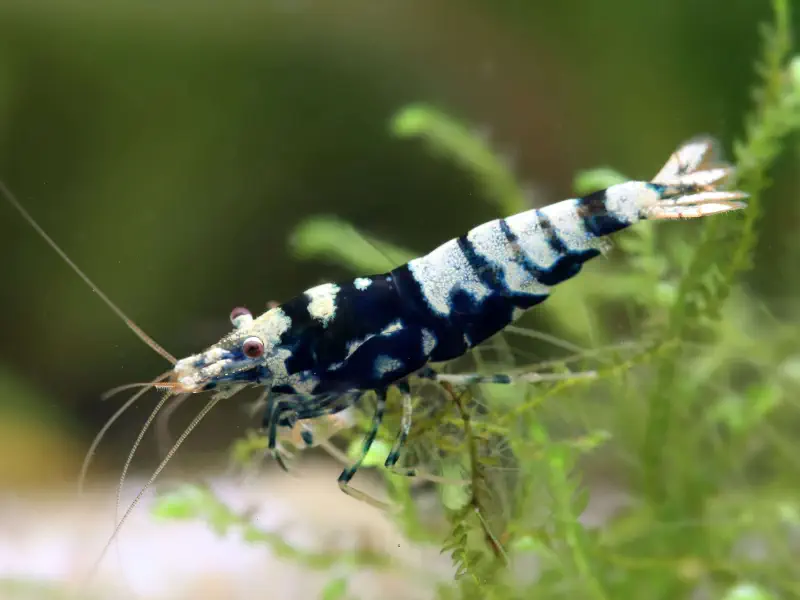
Black Galaxy Tiger
Caridina cf. cantonensisA black-based Tiger Shrimp line marked with scattered white galaxy-style speckling, combining the Tiger's striping instinct with a galaxy pattern overlay.
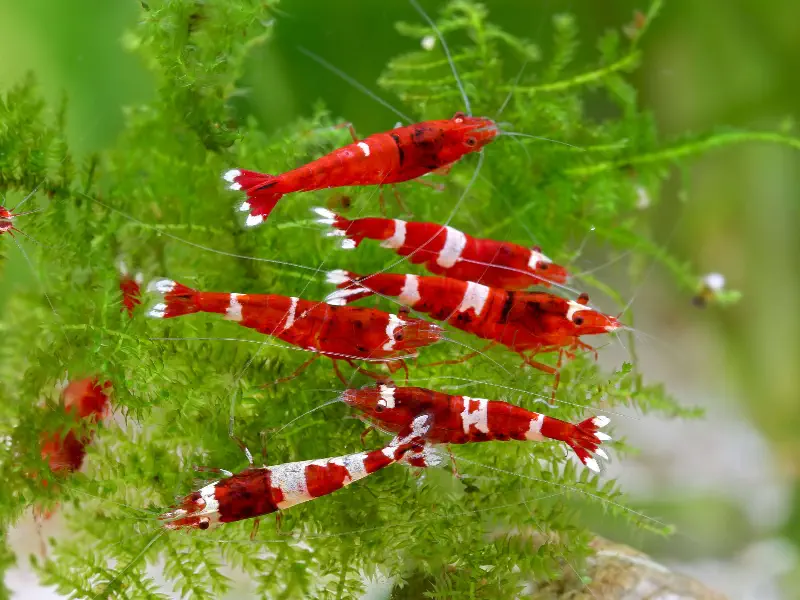
Red Wine Taiwan Bee
Caridina cf. cantonensisA deep, dark burgundy-red Taiwan Bee colour form, sitting between standard Red and Black lines in tone — a rich, wine-dark colour prized by high-grade collectors.
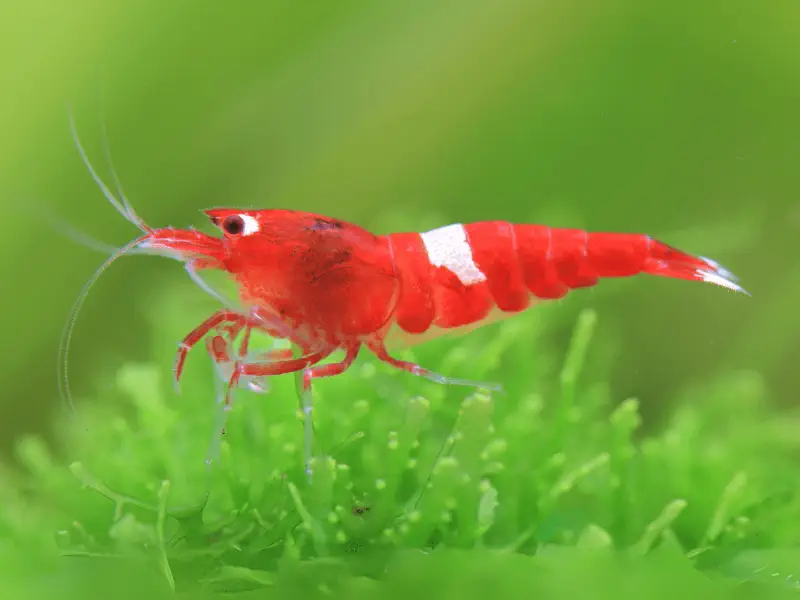
Red King Kong
Caridina cf. cantonensisThe red counterpart to Yellow King Kong — bred for maximum solid red opacity with no clear patching, representing the deep end of red Taiwan Bee colour development.
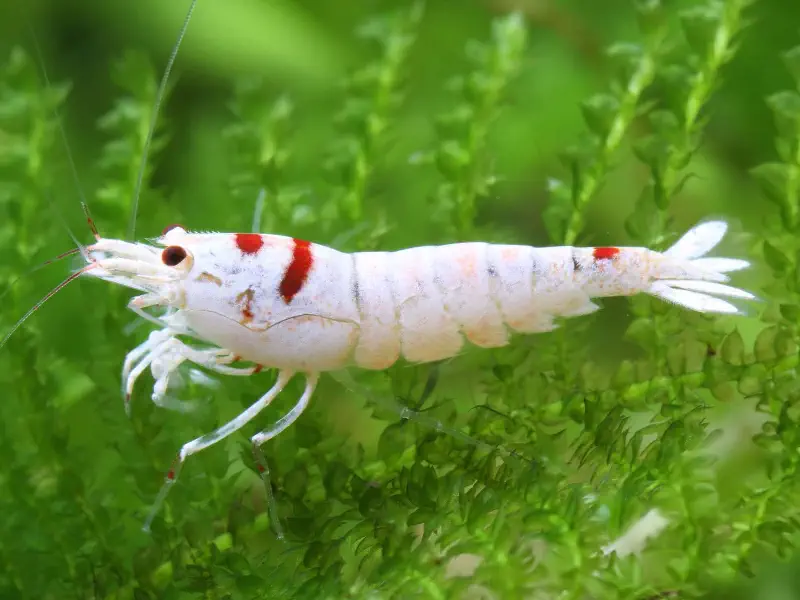
Red Bee Grade SSSS
Caridina cf. cantonensisThe very top of the Crystal Red grading scale, referring to a body covered almost entirely in solid red with only minimal white banding. Exceptionally difficult to breed true and priced accordingly.
Shrimp variety photography courtesy of Garnelio.de
Colour Genetics & Breeding
Colour Is (Mostly) Recessive
Most Neocaridina and Caridina colour morphs trace back to recessive mutations isolated from wild brown stock. Breed two solid-colour shrimp of the same line together and the offspring stay true; breed different colour lines together and recessive genetics quickly muddy the result back toward the wild brown — which is why serious breeders keep every colour line in its own tank.
The Berry Cycle
A mature, mated female carries 20–30 eggs under her abdomen for roughly 3–4 weeks, fanning them constantly for oxygen. She releases fully-formed miniature shrimp directly — there is no free-swimming larval stage to feed or protect, which is a major reason Neocaridina and Caridina are so much easier to breed than Amano Shrimp.
Grading and Culling
In high-grade Caridina lines, breeders regularly remove ("cull") lower-grade or off-pattern offspring from the breeding population to keep quality climbing generation after generation. This is standard, deliberate line management — not a sign of a problem — and is how a founder population of ordinary Crystal Shrimp is gradually refined into a Taiwan Bee-grade line over several years.
Stability Beats Perfection
More Caridina breeding attempts fail from parameter swings than from genetics. A smaller, older, established tank with rock-stable pH, GH and temperature will consistently out-breed a larger, newer tank with "better" numbers on paper but more fluctuation.
Setting Up a Shrimp Tank
Tank & Filtration
- Nano tanks from 10–20 litres suit a starting colony well; more water volume generally means more stability
- Use a sponge filter or fine mesh over any intake — shrimplets are drawn straight into standard filter intakes
- Mature the tank fully (4–6 weeks) before adding shrimp; they are far less tolerant of a fresh cycle than most fish
- For Caridina, an active soil substrate that buffers pH downward is standard practice; Neocaridina do fine on inert substrate
- Dense moss (Java Moss, Christmas Moss) and floating plants give shrimplets cover and constant grazing surface
Feeding & Maintenance
- Shrimp graze biofilm and algae constantly; supplement lightly with dedicated shrimp pellets or blanched vegetables 2–3 times a week
- Overfeeding is the most common beginner mistake — remove uneaten food within a few hours to protect water quality
- Small, frequent water changes (10–15% weekly) beat large infrequent ones, which can crash a sensitive Caridina colony
- Keep fish out, or choose only genuinely shrimp-safe species (small peaceful nano fish) — most fish will eat shrimplets on sight
- Calcium-rich supplements or cuttlebone help support successful moulting, especially for high-grade Caridina lines
Shrimp Keeping in South Africa
Neocaridina lines like Cherry, Blue Dream and Yellow Shrimp are now well established in the local hobby and turn up regularly at shops, expos and club auctions — a great entry point, since local tap water in many areas already sits comfortably within their range. High-grade Caridina (Crystal, Tiger, Taiwan Bee) remain more specialist, moving mostly through dedicated breeders and club circles rather than general fish shops.
Because most municipal water in South Africa is moderate-to-hard and alkaline, Caridina keepers here typically rely on RO water remineralised specifically for shrimp, alongside an active soil substrate, to bring parameters down into range — a bigger setup investment than a Neocaridina tank, which often thrives on treated tap water alone.
ECAAC members regularly trade and auction shrimp colonies, and a well-documented colour line makes a strong entry for the Breeding Awards Program. As with any livestock, never release surplus shrimp into local waterways — rehome them through the club instead.
The Eastern Cape Aquarium & Aquascaping Club is proudly sponsored by ShrimpNation — South Africa’s dedicated shrimp specialist, stocking a wide range of Neocaridina and Caridina lines, foods and supplies. Visit www.shrimpnation.co.za for all your shrimp needs.
Ready to Start a Shrimp Colony?
ECAAC members keep and breed a wide range of Neocaridina and Caridina lines, and are always happy to help with water prep, line selection and troubleshooting a stalled colony.