West African River Aquariums
One of the hobby's most underrated biotopes — a region of brilliantly coloured cichlids, iridescent shoaling tetras and the toughest, most beautiful true aquatic plants on Earth, where slow, plant-choked deltas give way to some of the most powerful river rapids on the planet.
Where in the World
The West African river biotope spans the vast river systems of West and Central Africa — from the Niger River and its sprawling delta in Nigeria, through the coastal rivers of Cameroon, to the mighty Congo (Zaire) River Basin that straddles the equator. It's a region the hobby has strangely overlooked, despite offering some of the most colourful fish and genuinely striking aquascapes available to the freshwater aquarist.
What makes this biotope so distinctive is its split personality. In the shallow, sun-warmed and densely vegetated margins of the Niger Delta, dwarf cichlids like the Kribensis slip between roots and leaf cover. Meanwhile the Congo River — the world's deepest river and second only to the Amazon in the sheer volume of water it discharges — tears through stretches of thundering rapids where specialised, rock-clinging fish thrive in fast, oxygen-rich water.
Unlike the Amazon's tea-dark blackwater, most West African river habitats run clearer and closer to neutral pH, with soft to moderately soft water. Forest streams and side-creeks can still carry a light tannin tint from leaf litter, but the water is generally far more transparent — which is exactly why this region supports lush growths of true submerged aquatic plants.
That botanical richness is the region's secret weapon. The Congo Basin and its neighbours are the natural home of the hobby's toughest, best-loved plants — Anubias, Bolbitis (African water fern) and Crinum — giving the West African biotope a green, planted, jungle-river look that a leaf-litter blackwater tank simply can't match.
Field Notes
- River systems: Congo (Zaire) Basin, the Niger River & Delta, and coastal rivers of Nigeria & Cameroon
- Countries: DR Congo, Republic of the Congo, Nigeria and Cameroon, among others
- Landmark: Pool Malebo (Stanley Pool) and the Livingstone Falls rapids on the lower Congo
- Habitat types: shaded forest creeks, plant-choked deltas, open river channels and rocky rapids
- Climate: Equatorial — warm year-round with heavy, reliable rainfall
- Vegetation: true rooted & epiphytic aquatic plants (Anubias, Bolbitis, Crinum) rather than leaf litter alone
Water Chemistry
Did You Know
The Mighty Congo
The Congo is the deepest river on Earth, plunging beyond 220 m in places, and second only to the Amazon in the volume of water it discharges into the sea — a genuinely colossal river system.
Rainbow in the Shoal
The Congo Tetra only reveals its full iridescent blue-gold-red shimmer and flowing fins when kept in a proper shoal — kept alone or in a bare tank, it stays a stressed, dull grey and never colours up.
Devoted Cave Parents
Kribensis pair off for life-like bonds, spawn inside a chosen cave, and both parents fiercely guard the fry — the courting female flashes a brilliant cherry-red belly to seduce her mate. It's one of the easiest cichlids to breed at home.
A Living-Fossil Predator
The African Butterfly Fish is the sole survivor of an ancient lineage that has changed remarkably little for millions of years. It hangs motionless at the surface, wing-like fins spread, then explodes upward to snatch insects — sometimes leaping clear of the water.
Upside-Down by Design
West Africa's Synodontis catfish famously swim and feed belly-up. They're one of the few animals with reversed countershading — a dark belly and paler back — camouflage that only makes sense because they spend so much time inverted beneath overhangs and leaves.
Home of the Toughest Plants
Anubias and Bolbitis heudelotii — two of the most bulletproof plants in the whole hobby — are West African natives. They evolved to cling by their roots to rock and wood in fast, shaded current, which is exactly why they shrug off low light and rough handling in our tanks.
Life in the Rivers
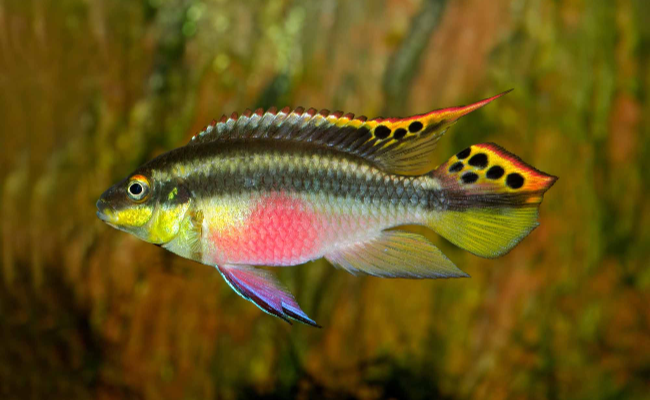
Kribensis
Pelvicachromis pulcherThe signature fish of the Niger Delta and the reason to build this biotope. A small, peaceful dwarf cichlid with a rosy-purple belly and gold-edged fins that intensify at breeding time. Hardy, characterful and famously easy to spawn in a cave.
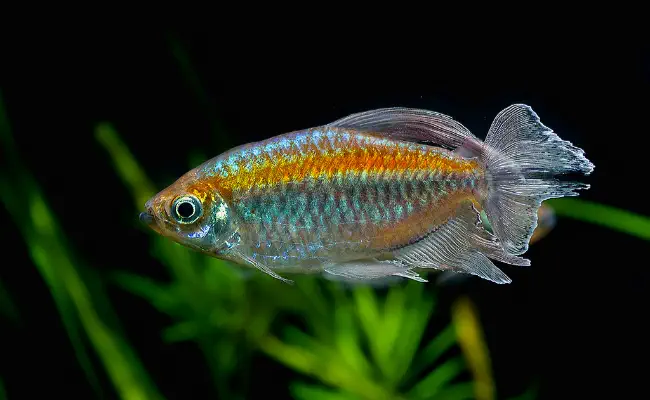
Congo Tetra
Phenacogrammus interruptusA large, iridescent shoaling tetra from the Congo Basin. Mature males shimmer blue, gold and red and trail long, flowing grey fin extensions. Keep a proper group in soft, slightly acidic water to see them at their spectacular best.
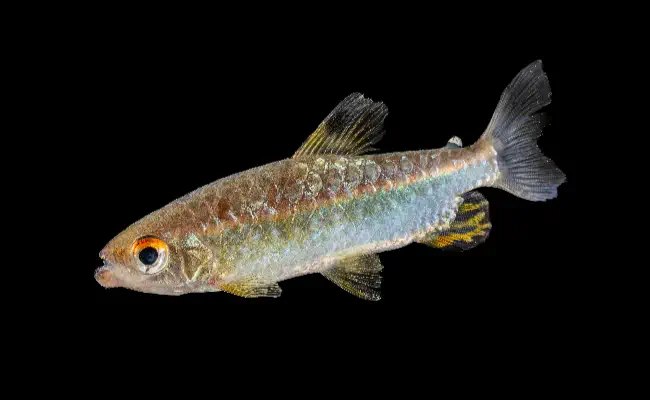
African Red-Eyed Tetra
Arnoldichthys spilopterusA robust, active schooling characin from the rivers of Nigeria, sporting a vivid red eye and a bold black-and-gold spot on each flank. An underrated West African alternative to the usual community tetras.
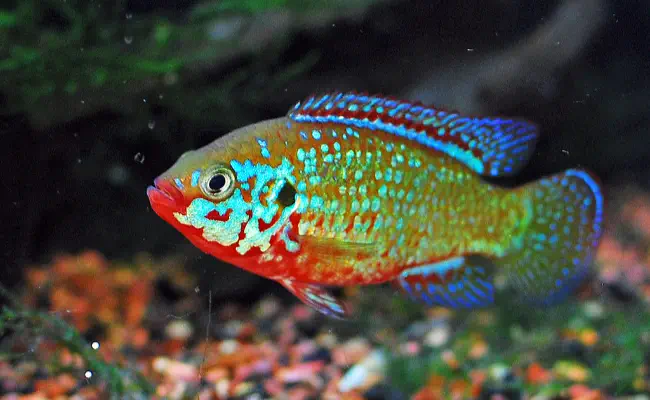
Jewel Cichlid
Hemichromis bimaculatusOne of West Africa's most striking cichlids — a blaze of deep red speckled with electric-blue spangles, especially when in breeding colour. Feisty and territorial, best given space and kept as a bonded pair.
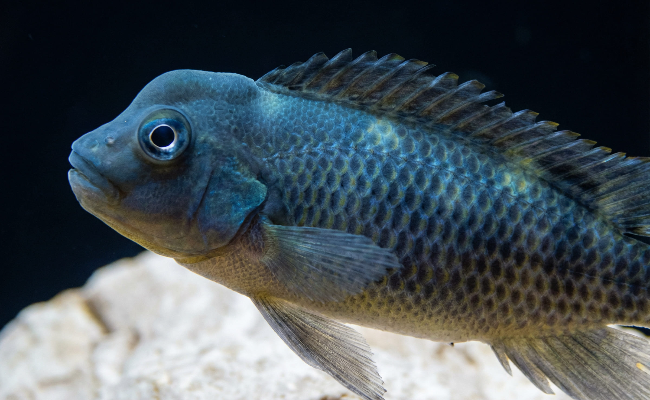
Buffalohead Cichlid
Steatocranus casuariusA quirky, rheophilic cichlid built for the Congo rapids — reduced swim bladder, powerful pectoral fins and a bulbous forehead let it hop and cling among rocks in strong current. A brilliant hardscape-tank centrepiece.
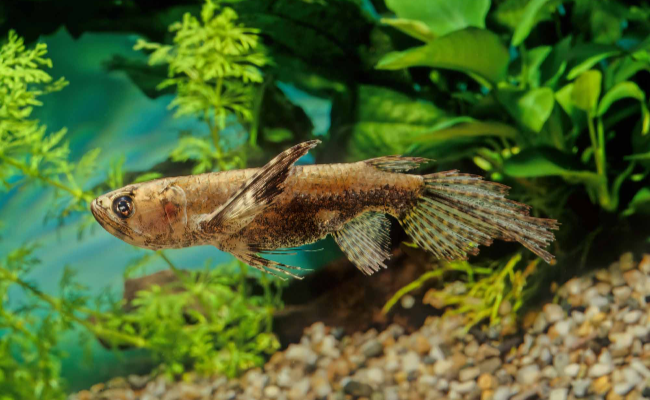
African Butterfly Fish
Pantodon buchholziA living-fossil surface predator with wing-like pectoral fins that lurks motionless at the top of the water before striking insects. An ancient, specialised oddball that needs a tight-fitting lid — it can leap.
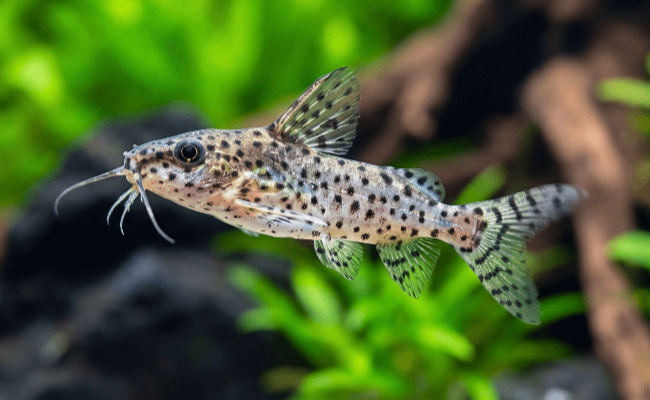
Upside-Down Catfish
Synodontis nigriventrisThe classic West African novelty catfish, which genuinely swims and grazes belly-up. Small, sociable and peaceful, with reversed countershading camouflage suited to feeding beneath overhangs and submerged wood.
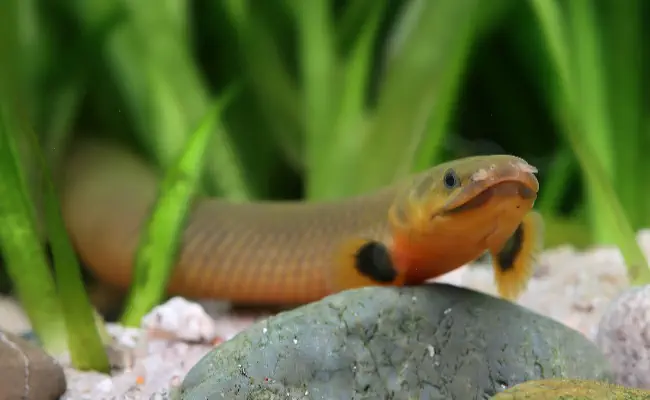
Reedfish (Ropefish)
Erpetoichthys calabaricusA slender, eel-like relative of the bichirs from the slow coastal waters of Nigeria and Cameroon. Gentle, nocturnal and endlessly curious, it explores the tank floor at dusk. A secure lid is essential — it's a notorious escape artist.
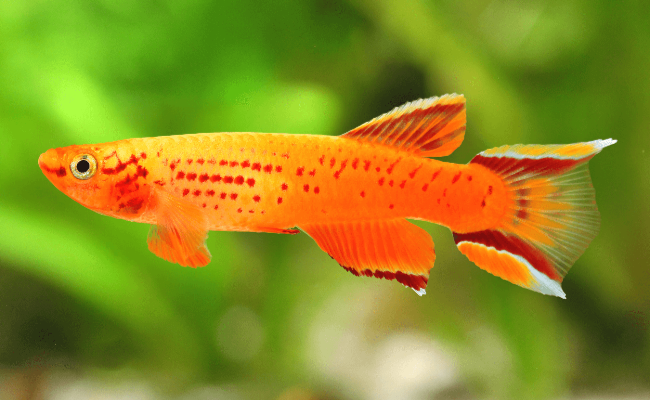
West African Killifish
Fundulopanchax gardneriA jewel-like little killifish from Nigeria and Cameroon, the males splashed with metallic blue, red and gold. Peaceful, compact and a superb species-tank fish — a genuine hidden gem of the West African hobby.
Recreating the Biotope
Hardscape & Substrate
A fine sand or fine gravel substrate suits this biotope, with smooth, water-worn river stones and pieces of driftwood arranged to suggest a submerged riverbank. Decide up front which face of the biotope you're recreating: a calm, plant-choked delta for kribs and killies, or a rockier, faster reach for Congo tetras and rapids cichlids like the Buffalohead.
The defining feature is living greenery. Tie Anubias and Bolbitis heudelotii onto the wood and stone rather than burying their rhizomes, and use taller Crinum and Anubias congensis to build a lush, jungle-river backdrop. A light scatter of leaf litter is still welcome for cover and gentle tannins, but here the plants do the heavy lifting.
Getting the Water Right
- Aim for soft-to-neutral water around pH 6.5–7.2 — far less extreme than an Amazon blackwater tank, so most SA tap water needs only light softening, if any.
- Provide moderate flow and good oxygenation, especially for Congo tetras and rapids species; the shy delta fish still appreciate calmer, planted corners to retreat to.
- Keep the lighting fairly dim, or shade the surface, to mimic the forested banks — but note that floating plants like water lettuce, salvinia and water hyacinth are regulated invasive species in South Africa, so rely on subdued lighting and tall marginal growth instead.
- Give Kribensis at least one cave to claim, and keep Congo tetras in a shoal of six or more so the males colour up and settle.
Curious About Building Your Own Biotope?
ECAAC members regularly build and show West African and other biotope aquariums as part of our Aquascaping Awards Program. Come along to a meeting, ask questions, and get hands-on guidance from members who've done it before.