
Algae Identification & Control
Almost every aquarist deals with an algae outbreak sooner or later — it's one of the most common questions ECAAC gets from new members. The good news: nearly every type of algae is a symptom of an imbalance, not bad luck, and once you know what you're looking at, it's usually straightforward to fix.
Why Algae Actually Happens
Algae are simple, opportunistic organisms that need only three things to thrive: light, nutrients, and time. Your aquarium already has all three — the question is always whether your plants (or lack of them) are winning the competition for those same resources, or whether algae is finding an opening to take over instead.
An outbreak is almost always a sign that something in that balance has shifted — too much light for the CO2 and nutrients on hand, a new tank with no plants yet established to compete, overfeeding adding excess nutrients, or a burst of direct sunlight hitting the glass. Treating the visible algae is only half the job; finding and correcting the underlying imbalance is what actually stops it coming back.
Light
Too many hours, too much intensity, or direct sunlight hitting the tank gives algae the energy it needs to outcompete plants.
Nutrients
Overfeeding, overstocking, and infrequent water changes all raise nitrate and phosphate levels that algae feed on directly.
Time
New tanks, recently disturbed substrate, or a tank left unmaintained for weeks all give algae the window it needs to establish.
Identify Your Algae
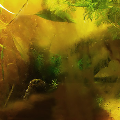
Brown / Diatom Algae
BacillariophytaA dusty, brown-tan film that coats glass, substrate, and slow-growing plant leaves. This is by far the most common algae new aquarists encounter, and in the vast majority of cases it's completely normal, temporary, and nothing to worry about.
What Causes It
- Silicates released from new substrate, sand, and glass in a freshly set-up tank
- Low light combined with an immature or still-cycling tank
- Almost always appears in the first weeks of a new aquarium's life
How to Treat It
- Wipe glass and gently rinse affected décor during routine maintenance.
- Add algae-eating livestock like Otocinclus or nerite snails to graze it down.
- Be patient — it typically clears on its own within 2–6 weeks as the tank matures and plants establish.
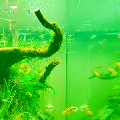
Green Water
Free-floating unicellular algaeNot a surface film but the entire water column turning pea-soup green, sometimes within a day or two. Caused by a population explosion of free-floating single-celled algae rather than anything growing on a surface.
What Causes It
- Direct sunlight hitting the tank, especially common near a bright window
- Excess nutrients from overfeeding or a heavily overstocked tank
- A sudden light schedule change or unusually long photoperiod
How to Treat It
- Run a blackout — cover the tank completely for 3–4 days to starve the algae of light.
- Use a UV steriliser if available; it's highly effective against free-floating algae specifically.
- Move the tank out of direct sunlight and reduce photoperiod going forward to prevent recurrence.
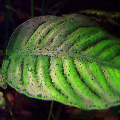
Green Spot Algae (GSA)
Coleochaete / related generaSmall, hard, circular green dots that stubbornly adhere to glass, slow-growing leaves (like Anubias), and hardscape. Notoriously difficult to remove by wiping alone due to how firmly it attaches.
What Causes It
- Excess light relative to available CO2 and nutrients
- Low phosphate levels specifically, which GSA tolerates better than most plants
- Old bulbs or lighting left on too long each day
How to Treat It
- Scrape glass with a blade-style algae scraper rather than a pad — GSA won't budge with a soft wipe.
- Reduce photoperiod and check that lighting isn't excessive for the tank's CO2/fertiliser level.
- Ensure phosphate isn't being under-dosed if running a lean, low-nutrient dosing method.
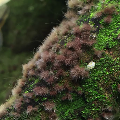
Black Beard Algae (BBA)
Audouinella / Rhodochorton spp.Dark grey-black tufts resembling a stubbly beard, usually anchored to slow-flow spots like leaf edges, driftwood, and filter outlets. Widely considered one of the most stubborn algae types to eliminate in a planted tank.
What Causes It
- Unstable or fluctuating CO2 levels — far more often the trigger than excess nutrients
- Poor water flow in specific low-circulation spots within the tank
- Organic buildup on slow-growing hardscape and driftwood
How to Treat It
- Stabilise CO2 injection — consistent, adequate CO2 is the single most effective long-term fix.
- Improve water flow and circulation, especially around affected hardscape.
- Manually remove badly affected leaves or spot-treat with hydrogen peroxide or a liquid carbon product.
- Add Amano shrimp or Siamese Algae Eaters, both known to graze on BBA specifically.
Staghorn Algae
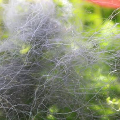
Compsopogon spp.Grey-green, branching tufts that resemble tiny deer antlers, usually growing from leaf edges or hardscape. Related to black beard algae in cause and treatment, though visually distinct in its branching structure.
What Causes It
- Fluctuating or insufficient CO2, very similar to BBA's underlying trigger
- Excess ammonia, often from overfeeding or overstocking
- Poor circulation in specific pockets of the tank
How to Treat It
- Manually remove affected leaves or hardscape sections where practical.
- Stabilise CO2 and check for any ammonia source such as overfeeding.
- Spot-treat stubborn patches with hydrogen peroxide, applied directly with the flow paused briefly.
Cyanobacteria (Blue-Green "Algae")
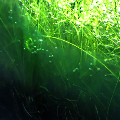
Not a true algae — photosynthetic bacteriaA slimy, dark blue-green to purplish film that sheets over substrate and plant leaves, often lifting off in a single piece. Despite the common name, this is technically a bacteria, not algae — and it typically has a distinctive musty, swampy smell that helps confirm identification.
What Causes It
- Poor water flow and stagnant, low-oxygen pockets in the substrate
- Excess organic waste combined with high nutrient levels
- Often follows a disrupted nitrogen cycle or a period of neglected maintenance
How to Treat It
- Manually siphon out as much as possible during water changes — it lifts off easily.
- Improve flow and circulation to eliminate stagnant, low-oxygen zones.
- Run a 3-day blackout combined with reduced feeding to starve the colony.
- In severe cases, an erythromycin-based or similar antibacterial treatment may be needed — use as directed and with caution around biological filtration.
Green Hair / Thread Algae
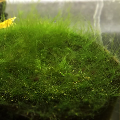
Various filamentous green algaeLong, thin, hair-like green strands that tangle around plant stems, leaf edges, and hardscape, sometimes growing several centimetres long if left unchecked. Grows fast and can smother slower plants if allowed to spread unchecked.
What Causes It
- Excess light paired with insufficient CO2 or nutrient uptake by plants
- Elevated nitrate or phosphate from overfeeding or infrequent water changes
- Often introduced accidentally on new plants from an outside source
How to Treat It
- Manually twirl strands out with a toothbrush or your fingers — physical removal works well since it doesn't attach as firmly as BBA.
- Add fast-growing stem plants to compete directly for the same nutrients.
- Introduce Amano shrimp, a particularly effective hair algae grazer.
- Reduce photoperiod slightly and review CO2/fertiliser dosing for balance.
Quick Cause Reference
| If You See... | Most Likely Cause | First Thing to Check |
|---|---|---|
| Brown dust on glass, new tank | Silicates, immature tank | Tank age — usually just needs time |
| Whole tank turns green overnight | Light exposure, nutrient spike | Sunlight hitting the tank, photoperiod length |
| Hard green dots on glass | Excess light, low phosphate | Light intensity and duration |
| Dark tufts on leaf edges | Unstable CO2 | CO2 consistency, not just nutrient levels |
| Slimy sheet lifting off substrate | Poor flow, stagnant zones | Circulation and filter output |
| Long green hair strands | Light/CO2/nutrient imbalance | Whether plants are actually out-competing it |
The Algae-Eating Clean-Up Crew
Otocinclus
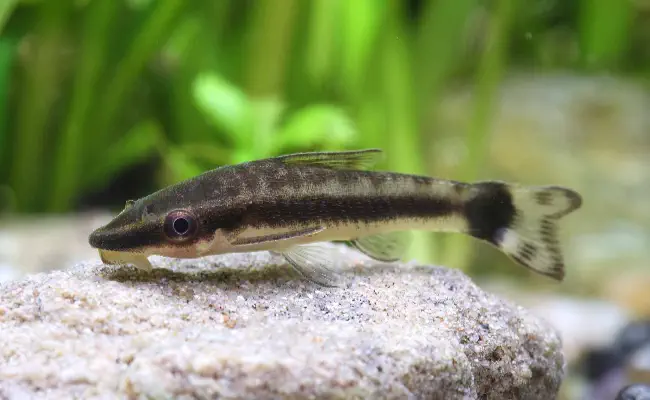
Otocinclus spp.A small, peaceful grazer that specialises in soft diatom and biofilm algae, ideally added once a tank has a little algae already established to feed on.
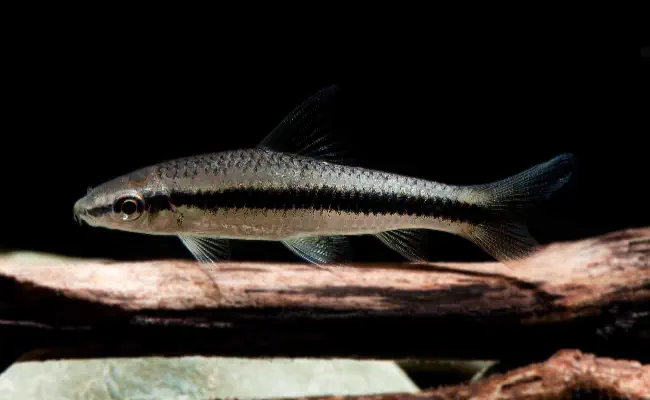
Siamese Algae Eater
Crossocheilus oblongusOne of the very few fish that reliably eats black beard and staghorn algae, making it especially valuable against these two stubborn types.
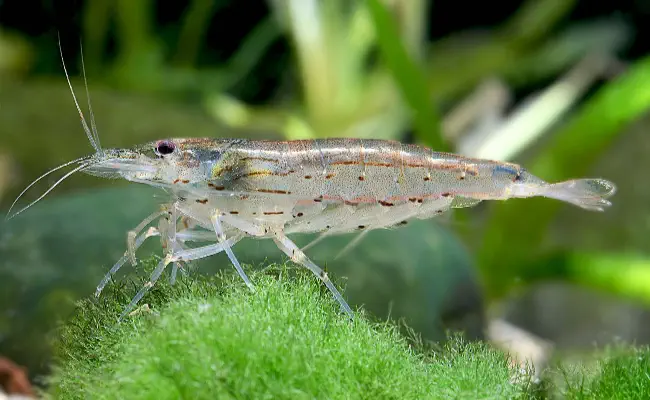
Amano Shrimp
Caridina multidentataA voracious, hardy grazer effective against hair algae and general film algae, and one of the most widely recommended clean-up crew animals in the hobby.
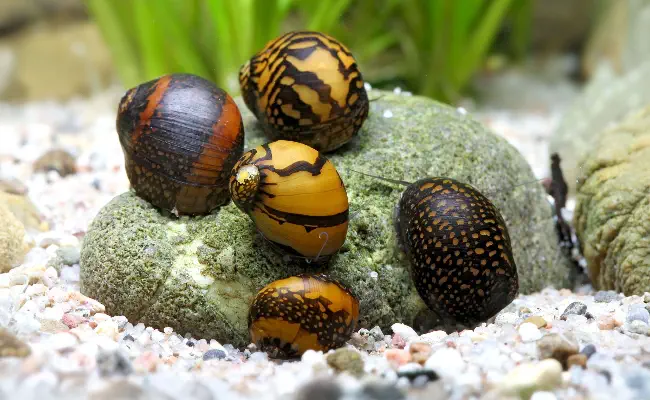
Nerite Snail
Neritina spp.An excellent scraper for green spot and diatom algae on glass and hardscape, and unable to breed in freshwater, so populations stay controlled.
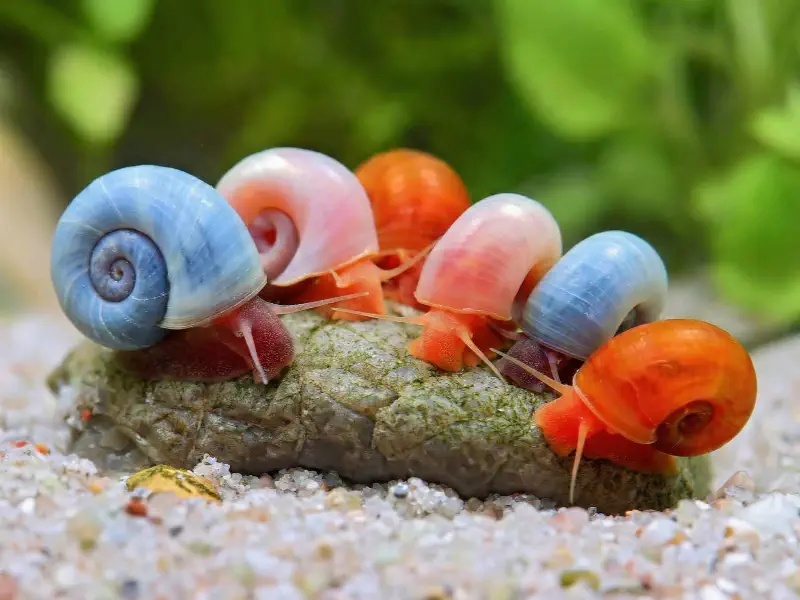
Ramshorn Snail
Planorbidae spp.A useful general algae and detritus grazer, though it breeds readily — a helpful worker in moderate numbers, a nuisance if left unchecked.
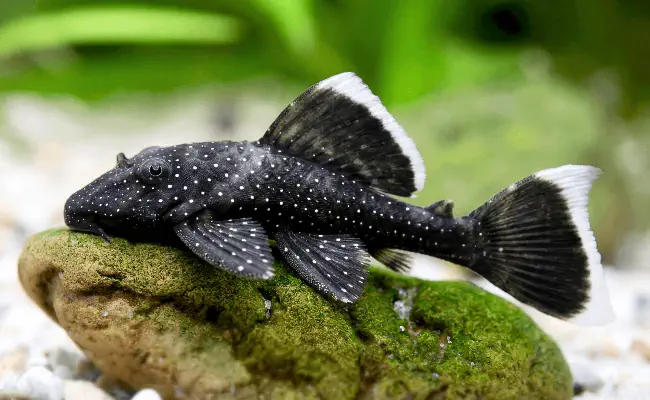
Bristlenose Pleco
Ancistrus spp.A compact, hardy algae grazer that stays far smaller than the Common Pleco, well suited to most home aquarium sizes in the SA hobby.
Preventing Algae Long-Term
Keep photoperiod consistent, 6–8 hours
Use a timer or smart plug so lighting duration never accidentally creeps up over time.
Match light intensity to CO2 and nutrients
Strong lighting without matching CO2 injection and fertiliser dosing is the single most common root cause of algae outbreaks.
Do regular partial water changes
Weekly 20–30% water changes keep nitrate and phosphate from accumulating to algae-feeding levels.
Avoid overfeeding
Feed only what fish can finish in a couple of minutes — uneaten food breaks down into exactly the nutrients algae thrives on.
Keep the tank out of direct sunlight
A tank positioned near a bright window is one of the most common causes of recurring green water in South African homes.
Quarantine or dip new plants
A quick dip (bleach, hydrogen peroxide, or alum solution, properly diluted) before adding new plants keeps hitchhiking algae from entering an established tank.
Grow healthy, fast plants
Thriving plants are algae's biggest competitor for light and nutrients — a well-planted tank is naturally more algae-resistant than a sparse one.
Algae in South African Conditions
South Africa's bright, sunny climate is a double-edged sword for aquarists — beautiful natural light for a home, but a common cause of green water and diatom outbreaks for tanks placed anywhere near an unshaded window, especially through summer months when day length and sun intensity both increase.
Municipal tap water quality and phosphate levels vary noticeably between South African regions, which can make some areas more prone to nuisance algae than others regardless of tank care — if outbreaks persist despite good maintenance, testing source tap water for phosphate and nitrate is worth doing before assuming the problem is entirely tank-side.
Locally available clean-up crew livestock (Otocinclus, Amano shrimp, nerite and ramshorn snails, bristlenose plecos) are all well-suited to South African tank conditions and readily available through local fish stores and club members — well worth adding proactively rather than only reaching for them once an outbreak is already underway.
Still Fighting an Outbreak?
ECAAC members deal with every type of algae covered here regularly and are always happy to help identify what you're looking at and talk through a treatment plan. Bring a photo along to a meeting, or ask in the club community.