
Top Freshwater Fish for Aquascapes
In an aquascape, fish are chosen the way a painter chooses a final brushstroke — to complete the composition, not compete with it. The best aquascape fish are small, peaceful, plant-safe, and school tightly enough to give a layout a sense of scale and motion. This guide covers the proven favourites, the hard-working cleanup crew, stocking rules, and the species best left out of a planted tank.
Choosing Fish for a Layout
The single most important idea in aquascape stocking is scale. A layout works by convincing the eye that a 60 cm glass box is a mountainside, forest, or river valley — and nothing breaks that illusion faster than a fish that's too large for the scene. A shoal of 2 cm Ember Tetras drifting over a carpet makes stones look like mountains; a single 10 cm gourami makes them look like the rocks they are. This is why competitive aquascapers overwhelmingly favour nano fish under 4 cm, stocked as one large school of a single species.
The second principle is plant safety. Aquascape fish must not eat, uproot, or dig around plants. That immediately rules out most large cichlids, goldfish, and silver dollars, and puts a question mark over habitual diggers like many loaches. Soft, fine-leaved carpets and freshly planted stems are especially vulnerable in a tank's first weeks.
Third comes temperament and water compatibility. Most classic aquascape species hail from soft, slightly acidic South American and Southeast Asian waters — which conveniently matches the conditions aquasoil and CO2 injection create. Peaceful mid-water schoolers also leave the cleanup crew (shrimp and small algae-eaters) unmolested, letting the whole system work as a team.
Finally, restraint. A planted tank looks best lightly stocked: fewer fish means lower nutrient load, less algae pressure, and a calmer, more natural scene. One generous school of a single species plus a modest cleanup crew is the classic formula — and it's the one that wins contests.
The Stocking Rulebook
The Top Species
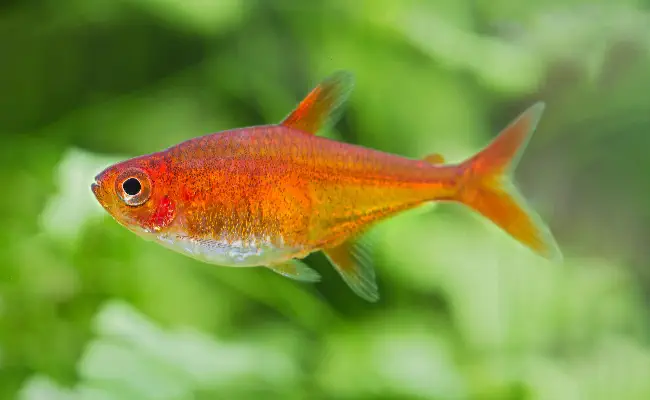
Ember Tetra
Hyphessobrycon amandaeA tiny (2 cm) glowing orange tetra that looks spectacular against green carpets and dark stone. Peaceful, hardy once settled, and happiest in groups of 15 or more, where it schools loosely through the midwater like drifting embers.
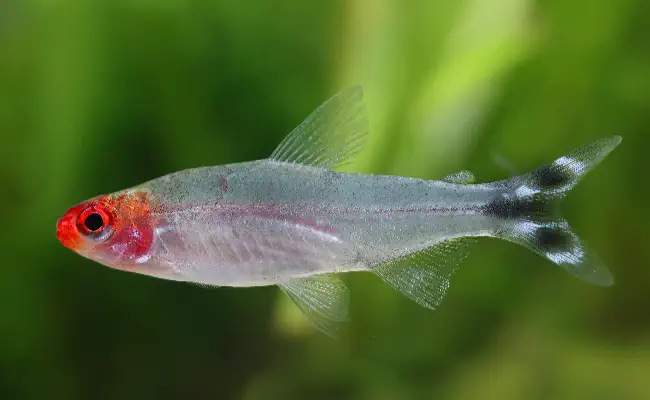
Rummynose Tetra
Hemigrammus rhodostomusThe gold standard for disciplined schooling — bright red noses and striped tails moving as a single organism. Their nose colour doubles as a water-quality gauge: it fades when conditions slip. Best in groups of 10+ in tanks of 90 cm or more.
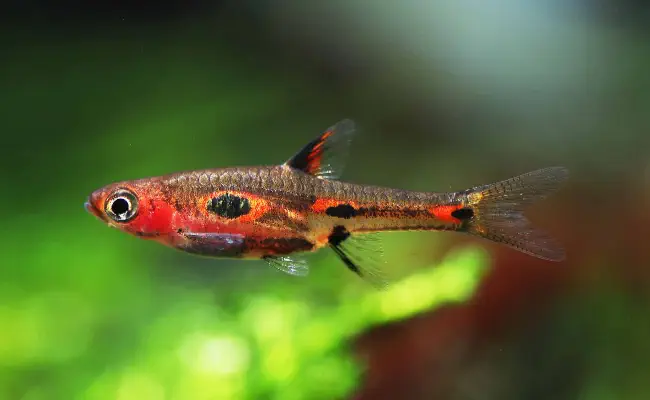
Chili Rasbora
Boraras brigittaeAt barely 2 cm, one of the smallest aquarium fish available — a vivid red jewel perfect for nano aquascapes from 30 cm up. Keep a group of 15–20 in a mature, gently filtered tank; they're shy at first but colour up beautifully among plants.
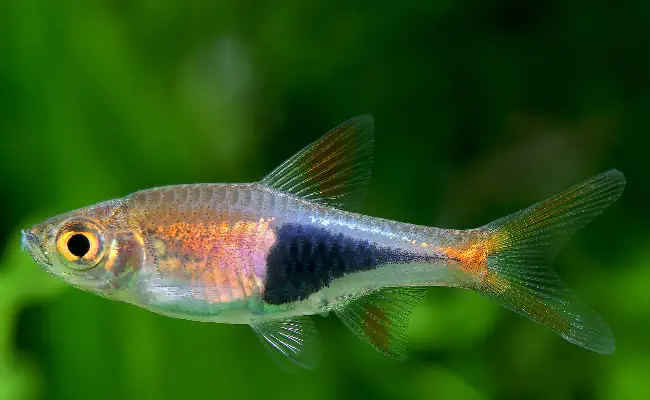
Harlequin Rasbora
Trigonostigma heteromorphaThe traditional Iwagumi school — copper-orange bodies with a bold black wedge, tough, forgiving, and widely available. Schools well in groups of 10+, tolerates a broad range of water parameters, and suits beginners perfectly.
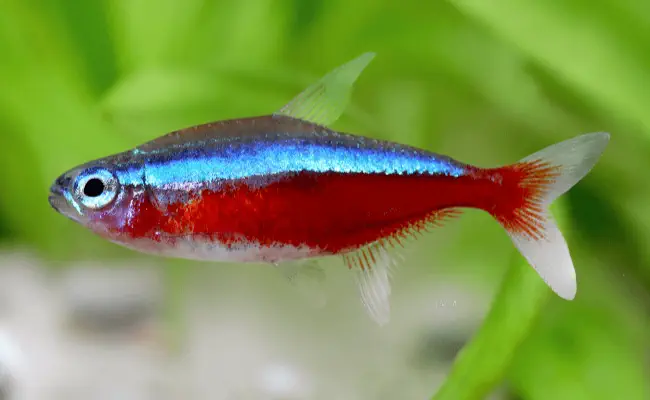
Cardinal Tetra
Paracheirodon axelrodiA full-length electric blue stripe over deep red that glows against dense green planting — the most iconic planted-tank fish of all. Prefers warm, soft, slightly acidic water, and only shows its best in a proper school of 10 or more.
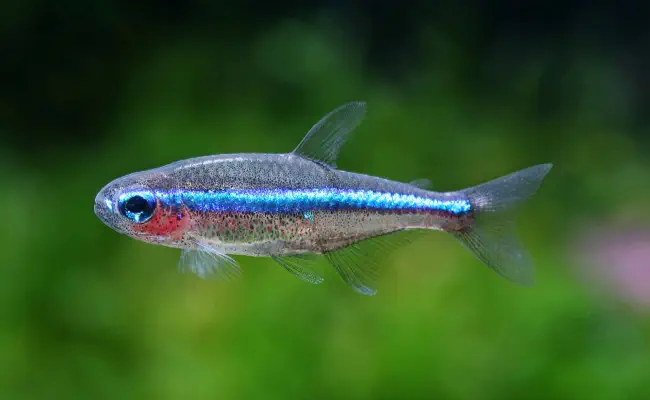
Green Neon Tetra
Paracheirodon simulansA smaller, subtler cousin of the cardinal with a full-length turquoise stripe and no heavy red — arguably better suited to minimalist layouts where a quieter palette lets the hardscape lead. Loves soft, warm water and dim, tannin-stained setups too.


Stocking by the Numbers
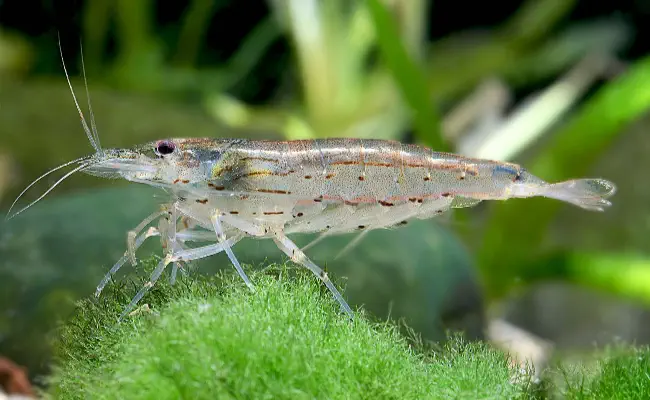
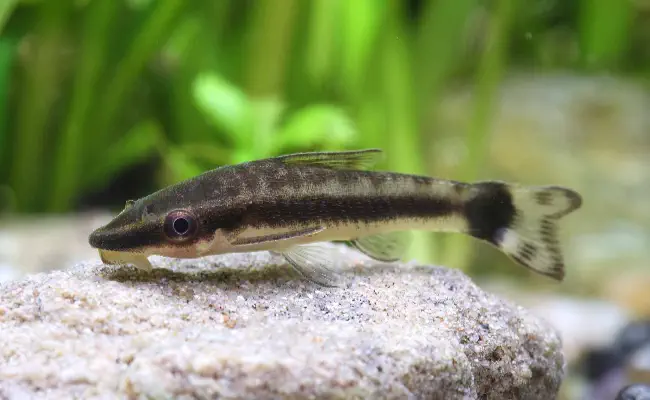
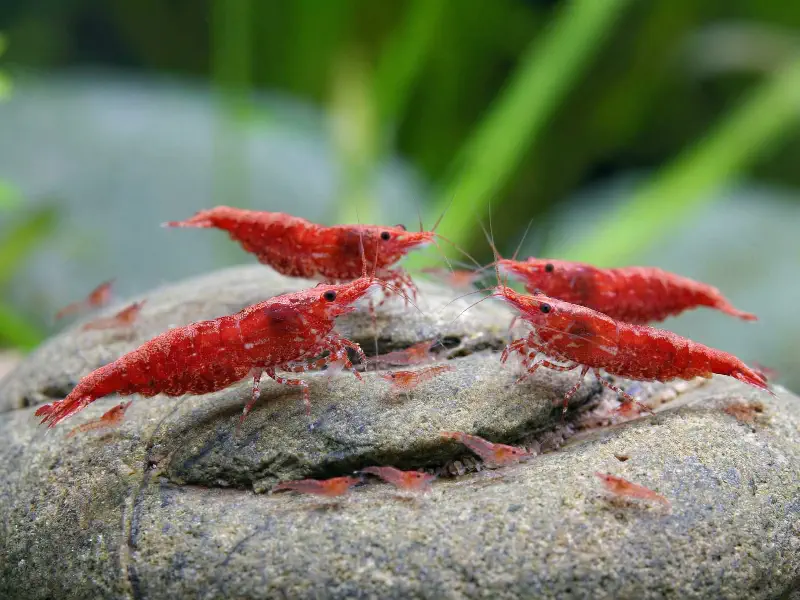
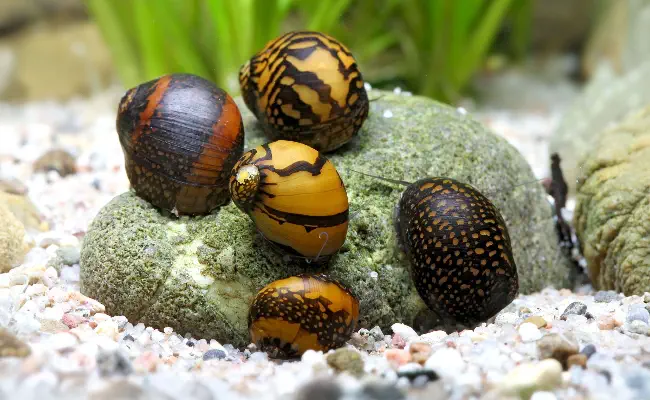
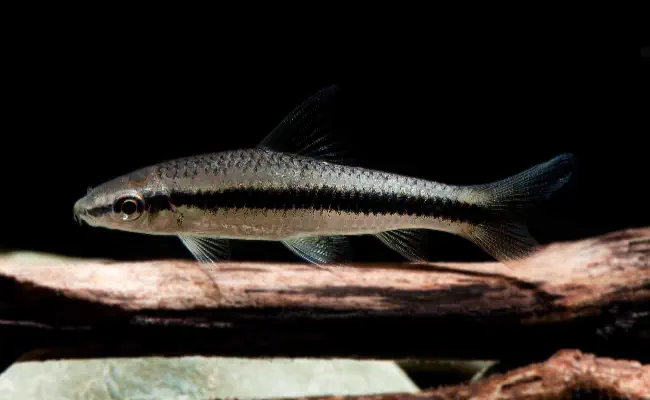
Order of introduction matters. A newly planted aquascape goes through an unstable "grow-in" phase where ammonia from fresh aquasoil and soft new growth invite algae. The proven sequence: plant densely from day one, run the tank fishless for 4–6 weeks with frequent water changes, add the cleanup crew (shrimp, snails, and later Otocinclus) as the first residents, and introduce the showpiece school only once parameters are stable and algae is under control.
Mind the CO2. If you run pressurised CO2, remember your livestock breathes the same water. Keep injection at or below ~30 mg/l, use a drop checker, and watch fish behaviour at "lights on" — gasping at the surface means too much gas. Shrimp are usually the first to show distress, making them a useful early-warning system as well as a cleanup crew.
Feed lightly. In a lightly stocked planted tank, small daily feedings that are consumed within a minute or two are plenty. Excess food is the fastest route to nutrient spikes and algae — and a hungry cleanup crew works harder.
Fish to Avoid
Goldfish & Silver Dollars
Both treat a planted aquascape as a salad bar. Goldfish also dig, produce heavy waste, and prefer cooler water than most aquascape plants; silver dollars can strip a tank of stems in days. Magnificent fish — in a different aquarium.
Large Cichlids & Common Plecos
Oscars, most Central American cichlids, and African mbuna re-landscape tanks to their own taste, uprooting plants and toppling stone. Common plecos grow enormous and bulldoze carpets. Stick to dwarf cichlids and dwarf plecos like Otocinclus instead.
Fin-Nippers & Bullies
Tiger Barbs, some Serpae Tetras, and under-stocked schooling species turn nippy in a calm layout, harassing slow fish and shrimp. If a species has a nipping reputation, either keep a genuinely large school in a big tank — or leave it out of the scape.
Matching Fish to Layout Style
Iwagumi
One tight, disciplined school and nothing else — Rummynose Tetras or Harlequin Rasboras are the classics. The shoal's coordinated movement over open carpet is the whole point; a mixed community would shatter the minimalism.
Nature Style & Jungle
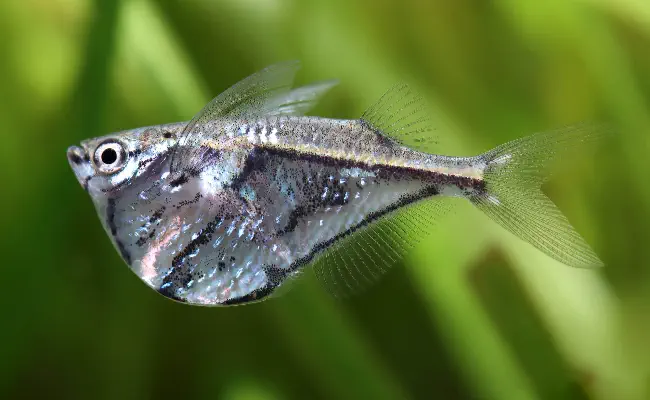
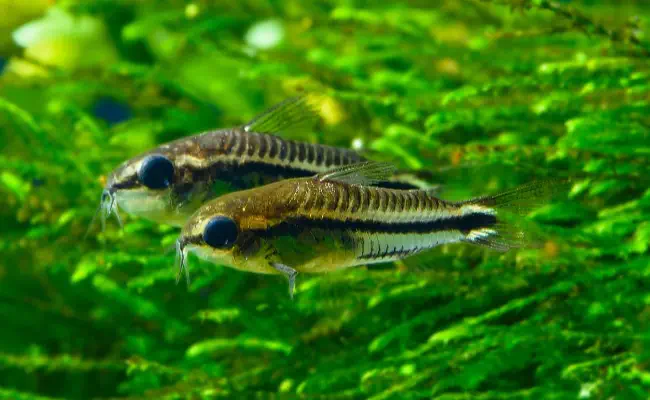
Layered scapes suit layered stocking: a main school of Cardinals or Embers in midwater, Hatchetfish at the surface, Pygmy Corydoras below, and a heavy shrimp crew working the wood and moss. Keep it to three or four species, generously stocked.
Nano & Blackwater Scapes
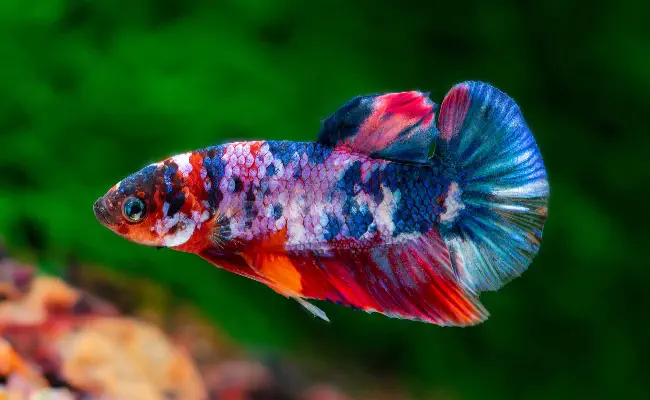
Small tanks demand true nano species — Chili Rasboras, Green Neons, or a lone Betta or Scarlet Badis. In tannin-stained blackwater layouts, soft-water dwarfs like Green Neons and Ember Tetras colour up more intensely than anywhere else.
Sourcing Fish in South Africa
Staples like Harlequin Rasboras, Neon and Cardinal Tetras, bettas, and Cherry Shrimp are readily available through South African fish shops, while some of the more specialised nano species — Chili Rasboras, Green Neons, Scarlet Badis — arrive irregularly with import shipments, so it pays to build a relationship with a good local retailer and ask to be notified when a shipment lands.
The club scene is the other great source. ECAAC auctions and member trades regularly move locally bred Cherry Shrimp, dwarf cichlids, and schooling fish — locally bred stock is typically hardier and better acclimatised to local water than freshly imported fish, and often costs less. Breeding your own school of rasboras or a shrimp colony also counts toward the club's Breeding Awards Program.
One responsibility note: never release aquarium fish or plants into local waterways — several invasive aquatic species already cause serious damage in South African river systems. Rehome unwanted livestock through the club, a fellow hobbyist, or a fish shop instead.
Ready to Stock Your Scape?
Bring your tank dimensions and layout photos to a club meeting and get stocking advice from members who've grown in dozens of planted tanks — or pick up locally bred fish and shrimp at the next club auction.