
Axolotl Care
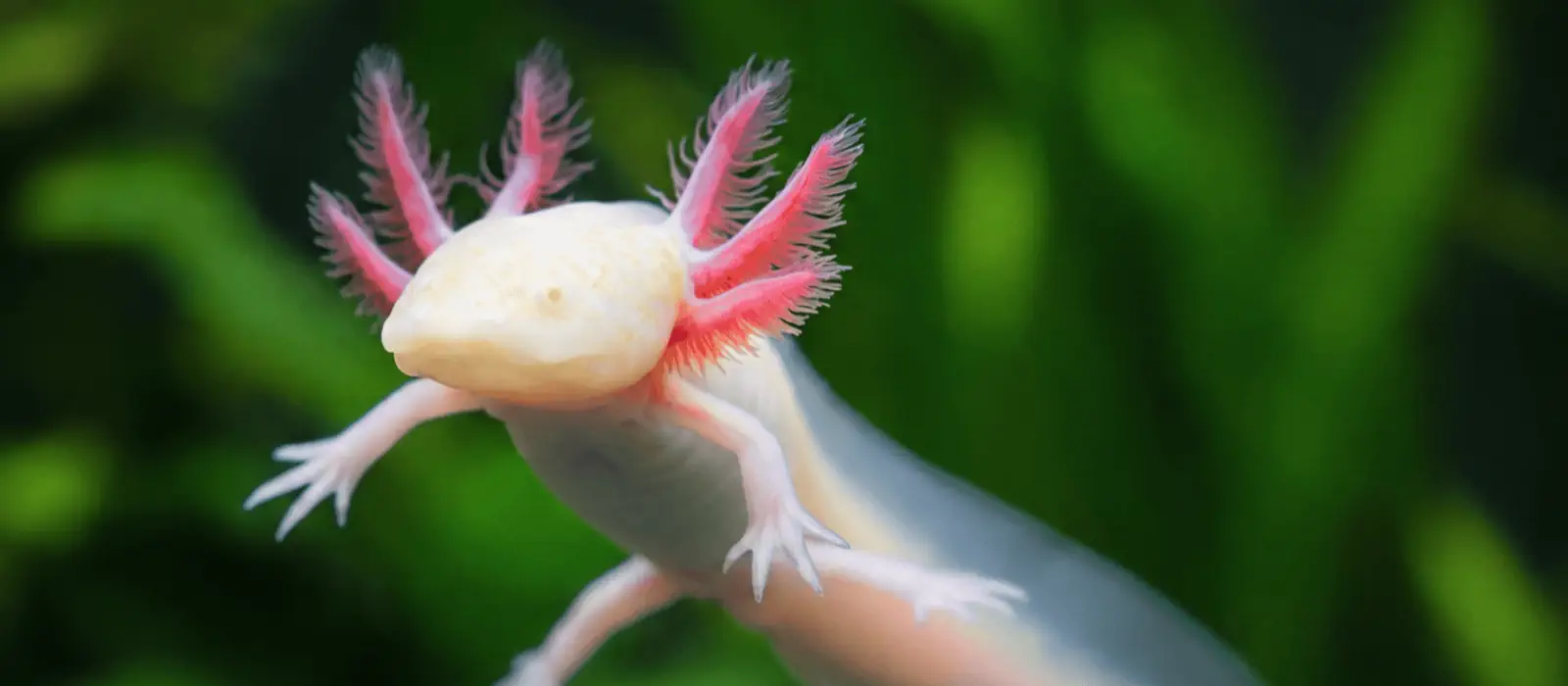
The axolotl is a fully aquatic salamander that never grows up — it keeps its gills and larval body shape for life, a trait called neoteny. Docile, easy to observe, and famous for its permanent smile, the axolotl has become one of the most popular cold-water alternatives to a tropical fish tank in the South African hobby.
Meet the Axolotl
Axolotls (Ambystoma mexicanum) are neotenic salamanders, native to a single shrinking network of lakes and canals near Mexico City — most notably Lake Xochimilco. Unlike most amphibians, an axolotl typically never metamorphoses into a land-dwelling adult. It keeps its external feathery gills, its aquatic body, and its underwater lifestyle for its entire life, which can span 10 to 15 years in captivity.
In the wild, axolotls are now critically endangered, with wild populations reduced to a small fraction of their historic range due to habitat loss and pollution. Ironically, the species is enormously abundant in captivity — bred by hobbyists and used extensively in scientific research thanks to a genuinely remarkable ability to regenerate lost limbs, spinal tissue, and even parts of major organs.
In the hobby, axolotls are prized for being unusually easy to observe — they're slow-moving, curious, active in daylight, and will often approach the glass or take food from tongs. That said, they are a cold-water species with specific care needs, and are not a beginner "starter pet" in the same way goldfish are sometimes assumed to be.
Because axolotls are fully aquatic and never leave the water, they're best kept in a bare-bottom or fine-sand tank rather than a heavily planted aquascape, with special attention paid to gentle filtration and cool, stable water.
Quick Facts
Tank Setup & Water Parameters
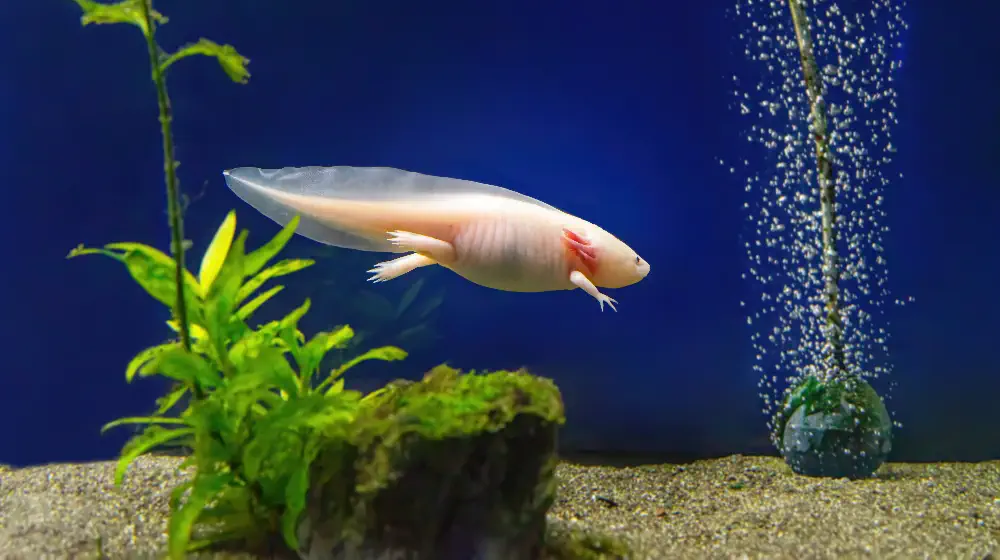
Keeping it cool: Unlike most South African tropical fish tanks, axolotls need to be kept cool rather than heated. In warmer inland or summer conditions this often means a chiller, fans over an open top, or simply siting the tank in the coolest room of the house — a heater is rarely needed except in genuinely cold winter conditions.
Substrate matters: Loose gravel is a serious hazard — axolotls will readily swallow it while hunting for food, which can cause a fatal impaction. Bare-bottom (glass or tile) or fine, well-rinsed sand are the two safe options; if using sand, particle size should be fine enough to pass through the gut without issue.
Gentle filtration: Axolotls dislike strong water flow and their delicate external gills can be damaged by it. A sponge filter or a canister filter with the outflow baffled down is the standard approach, giving good biological filtration without a turbulent current.
Diet
Juvenile Axolotls
Hatchling to roughly 15cmYoung axolotls are actively growing and should be fed once a day, with food sized appropriately for their small mouths. Juveniles are also more prone to nipping each other's gills and limbs if housed together, which is the main reason breeders typically separate them into individual containers once they start showing this behaviour.
Feeding Notes
- Feed once daily, removing uneaten food after 15–20 minutes
- Live or frozen baby brine shrimp for the smallest hatchlings
- Move to chopped bloodworm or small pellets as they grow
- House singly once nipping or gill damage is observed between siblings
Watch For
- Bloated, uneven growth between siblings — separate feeding may be needed
- Visible gill or limb damage from tankmates
- Refusal to eat, which can signal water quality issues
Adult Axolotls
Roughly 15cm and upAdult axolotls have a much slower metabolism than their growth-phase would suggest and are easily overfed. Feeding every two to three days, rather than daily, is the standard recommendation for a healthy adult — overfeeding is one of the most common husbandry mistakes in the hobby and can lead to obesity and poor water quality.
Feeding Notes
- Feed every 2–3 days, an amount roughly the size of the axolotl's head
- Remove uneaten food promptly to protect water quality
- Target-feed with tongs to keep track of exactly how much is eaten
Watch For
- A visibly rounded, "pot-bellied" body shape — sign of overfeeding
- A thin tail base — sign the axolotl may be underfed
- Reduced appetite in warmer water, a sign temperature needs attention
Good Food Options
Building a varied, safe dietAxolotls are carnivores and do best on a varied diet of whole, meaty foods rather than a single staple. Live and frozen bloodworm and earthworms form a reliable core diet for most South African keepers, supplemented occasionally with other suitable protein sources.
Reliable Staples
- Earthworms (unmedicated, from a trusted source) — an excellent staple
- Frozen bloodworm — widely available and readily accepted
- Sinking axolotl or salamander pellets, as a convenient supplement
Use Sparingly or Avoid
- Feeder fish — a risk of introducing parasites and disease
- Fatty foods like beef heart, only as an occasional treat if used at all
- Anything not sized appropriately for the axolotl's mouth
Colour Morphs
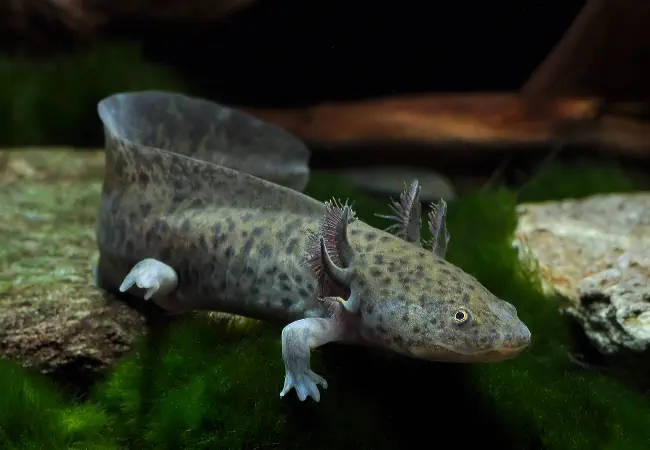
Wild Type
Olive-brown, mottledThe natural coloration closest to wild Xochimilco populations — olive to brown with dark mottling and gold flecking across the back.
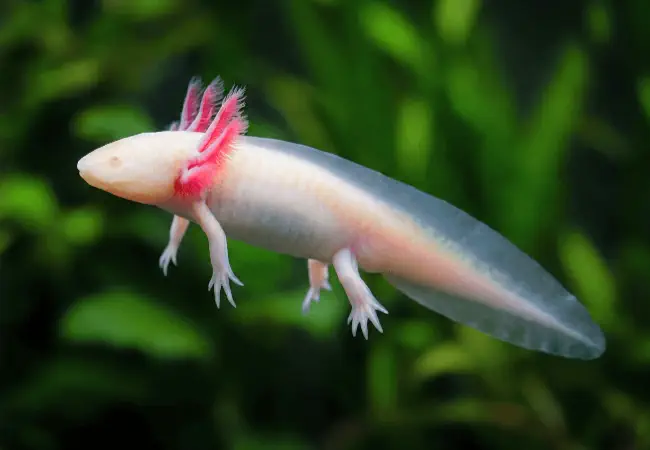
Leucistic
Pale pink-white, dark eyesThe classic "pet store axolotl" look — pale pink to white skin with visible dark eyes and pink external gills, one of the most recognisable morphs.

Melanoid
Uniform dark grey-blackA solid dark grey to near-black axolotl with no gold flecking or iridescence, giving a clean, uniform silhouette.
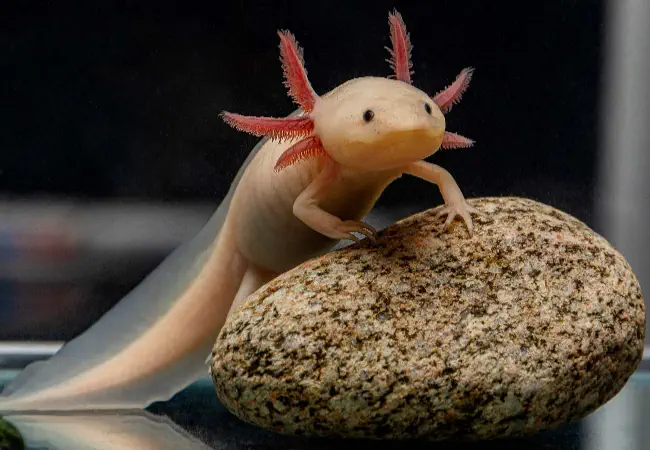
Golden Albino
Yellow-gold, pink-red eyesA striking golden-yellow morph with pink to red eyes, lacking dark pigment entirely — a popular choice for a standout display specimen.

Axanthic
Cool grey, no yellow pigmentA grey morph lacking the yellow pigment cells (xanthophores) present in most other varieties, giving a cooler, more silvery-grey tone.

Copper
Warm tan with darker specklingA warm tan-to-copper base colour with darker speckling, sitting between wild type and the paler morphs in overall tone.
Tankmates & Common Health Issues
Best Kept Alone
Adult axolotls will readily bite the limbs and gills of tankmates, including other axolotls, especially at feeding time. A solo axolotl in a species-only tank remains the safest, most widely recommended setup.
Fish Are Not Compatible
Fast fish will nip at an axolotl's delicate gills, while an axolotl will happily eat small, slow fish. Fish also raise the water temperature requirement above what axolotls tolerate well.
Impaction
Swallowed gravel or oversized food lodging in the gut is one of the most common and serious health issues — prevented almost entirely by using a safe bare-bottom or fine-sand substrate.
Ammonia & Nitrite Stress
Axolotls are highly sensitive to poor water quality, showing stress through redness at the gill base or gill edges. Regular testing and a fully cycled tank are essential, not optional.
Heat Stress
Water above roughly 24°C suppresses appetite and immune function and can be fatal if sustained. Watch for lethargy, gill curling, or floating during warm weather, and cool the tank promptly.
Regeneration Isn't a Free Pass
An axolotl's ability to regrow lost limbs or gill filaments is remarkable but not instant, and repeated injury from poor tankmate choices or handling still causes real, ongoing stress.
Did You Know
Named for an Aztec God
The name "axolotl" derives from Nahuatl, the Aztec language, and is often translated as referring to Xolotl, the Aztec god of fire, lightning, and deformities.
Rarer in the Wild Than in Homes
Wild axolotls are critically endangered, confined to a shrinking network of canals near Mexico City — yet the species is thought to number in the hundreds of thousands in captivity worldwide.
Neoteny Is the Whole Story
Given the right hormonal trigger, an axolotl can actually metamorphose into a land-dwelling adult salamander — but this is stressful, shortens lifespan, and is never done deliberately by responsible keepers.
A Regeneration Research Icon
Axolotls are one of the most studied animals in regenerative biology, capable of regrowing entire limbs, portions of the heart, and even parts of the brain without scarring.
Those "Feathers" Are Gills
The frilly external structures behind an axolotl's head are its gills. Their size and colour are a useful health indicator — pale, shrunken gills often signal poor water quality.
The "Smile" Is Just Anatomy
An axolotl's famous smiling expression comes from the natural shape of its wide mouth and eye placement, not from any actual facial muscle movement.
Axolotls in South Africa
Axolotls have grown into a well-established part of the South African cold-water hobby, offering an alternative to both tropical fish and traditional amphibians. Because they need to be kept cool rather than heated, they suit many inland and coastal South African climates well outside of the hottest summer months, when extra cooling measures may be needed.
Local specialist breeders and exotic pet suppliers have made a growing range of colour morphs available, though rarer varieties such as GFP or piebald lines remain uncommon and are usually sourced directly from hobbyist breeders rather than general pet shops.
As with any exotic species, prospective keepers should confirm current local requirements before acquiring an axolotl, and ECAAC members are always happy to share first-hand experience on cooling solutions, safe substrates, and sourcing captive-bred stock responsibly.
Thinking About Keeping an Axolotl?
ECAAC members are happy to talk through tank setup, cooling options, and sourcing captive-bred axolotls responsibly. Come along to a meeting or get in touch before you buy.