
Iwagumi Aquascaping
Iwagumi is the most disciplined and minimalist of all aquascaping styles: an odd-numbered arrangement of stones, a single low carpet of plants, and nothing else. Every rock has a name, a role, and a place governed by proportion — which is exactly why it's a favourite among competitive aquascapers, and why a great Iwagumi is so much harder than it looks.
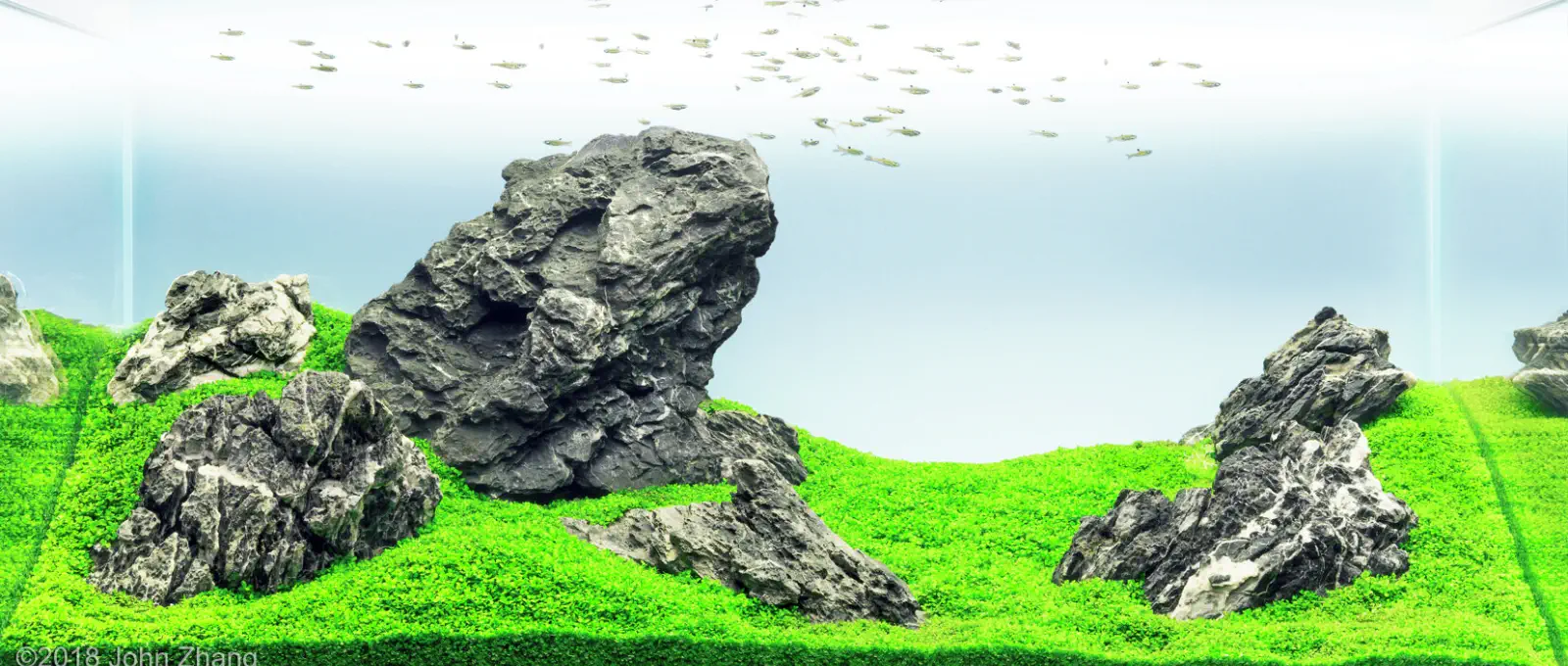
Origins & Philosophy
The word Iwagumi translates roughly as "rock formation," and its roots lie in centuries of Japanese garden design, where stones are set according to formal principles of asymmetry, proportion, and restraint. The aquarium version was popularised by Takashi Amano, who created his first stone-only layouts in the 1980s and refined the style through ADA (Aqua Design Amano) into the form competitive aquascapers know today.
At its heart, Iwagumi is an exercise in wabi-sabi — finding beauty in natural imperfection and simplicity. Where a Nature Style layout builds a whole landscape and a Dutch tank builds a garden, an Iwagumi strips everything back to a single idea: the relationship between a few well-chosen stones and the open space around them. The plants exist only to unify and soften the composition, never to compete with it.
That restraint is exactly what makes the style so demanding. With no driftwood, no plant variety, and no visual clutter to hide behind, every flaw is visible — an off-balance stone, a patchy carpet, or a stray strand of algae has nowhere to hide. This is why Iwagumi is often described as the style that teaches aquascapers the most, and why it features so heavily in contests like the IAPLC.
The classic form is the Sanzon Iwagumi ("three-pillar rock formation"), a three-stone arrangement drawn directly from Buddhist garden tradition, with one large central stone flanked by two smaller companions. Most modern layouts extend this to five, seven, or more stones — but always an odd number, and always with one clear protagonist.
The Iwagumi Rulebook
The Four Stone Roles
Oyaishi
"Father stone"The largest and most beautiful stone, ideally around two-thirds the height of the tank. Placed off-centre on a golden ratio point and tilted slightly in the direction of the water flow, it anchors the entire composition — choose this stone first, and choose it carefully.
Fukuishi
"Assistant stone"The second-largest stone, placed to the side of the Oyaishi to balance its visual weight. It should clearly resemble the main stone in colour and texture, and lean in sympathy with it rather than fighting its direction.
Soeishi
"Attending stone"Smaller stones placed alongside the first two to reinforce the arrangement and strengthen the sense of a natural outcrop. In a classic three-stone Sanzon layout, the Soeishi completes the triangle.
Suteishi
"Sacrificial stone"Small "throwaway" stones scattered with apparent carelessness to make the formation feel unplanned and natural. Often partly or fully swallowed by the carpet as it grows in — their disappearance is part of the design.
Golden Ratio Placement
Applying the ratio in practice: measure your tank's length and divide it by 2.618 — the result, measured in from either end, gives you the two golden ratio "power points" (on a standard 90 cm tank, roughly 34 cm from each end). Set the Oyaishi on or near one of these lines, with its face angled toward the open side of the tank. The Fukuishi then sits on the opposite side of the layout to counterbalance it, keeping the overall visual weight distributed at roughly that same 1:1.618 proportion rather than 50/50.
Build a scalene triangle, not a row: viewed from the front, the tops of your three main stones should form an irregular triangle with no two sides equal. Vary the depth too — pushing the Fukuishi or Soeishi further back creates the forced perspective that makes a 60 cm tank read like a mountainside. Do the dry arrangement outside the tank first, photograph it from the exact front-on viewing angle, and only commit substrate once the photo looks right; the camera exposes imbalance the eye forgives.
Slope the substrate. A classic Iwagumi rises from a shallow foreground (3–4 cm) to a deep rear (8–10 cm or more), often banked highest behind the Oyaishi. The slope amplifies the sense of scale and gives stone bases a natural "planted-in" look — stones should always appear partly buried, as though only their tips break the earth.
Stone Selection
Seiryu Stone
The classic Iwagumi stone — jagged blue-grey limestone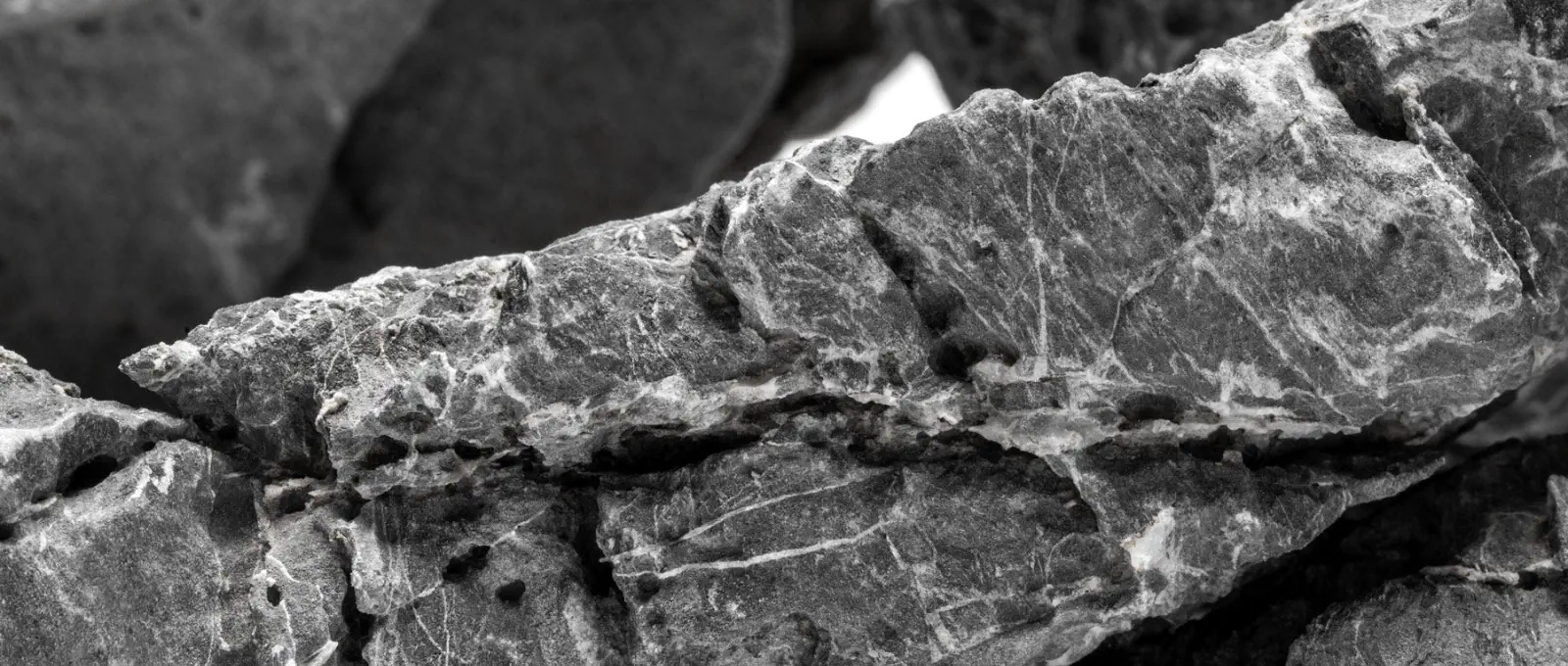
The definitive Iwagumi rock: sharp-edged, blue-grey, and veined with white calcite lines that give it a dramatic mountainous character. Its craggy texture catches light and shadow beautifully, which is why it dominates competition layouts. Being calcareous, it slowly dissolves and will push up pH, GH and KH — a real consideration when pairing it with soft-water carpet plants and shrimp.
Strengths
- Unmatched texture and drama — the "mountain range" look in miniature
- White veining draws the eye and helps establish a shared grain direction
- Breaks cleanly with a chisel, so large pieces can be split into matched sets
Watch Out For
- Buffers water harder and more alkaline over time — test GH/KH regularly
- Use RO or rainwater top-ups, or heavier water changes, to hold parameters steady
- Imported stone is priced per kilogram, and an Iwagumi needs a lot of kilograms
Ohko (Dragon) Stone
Pitted ochre clay-stone with a scale-like surface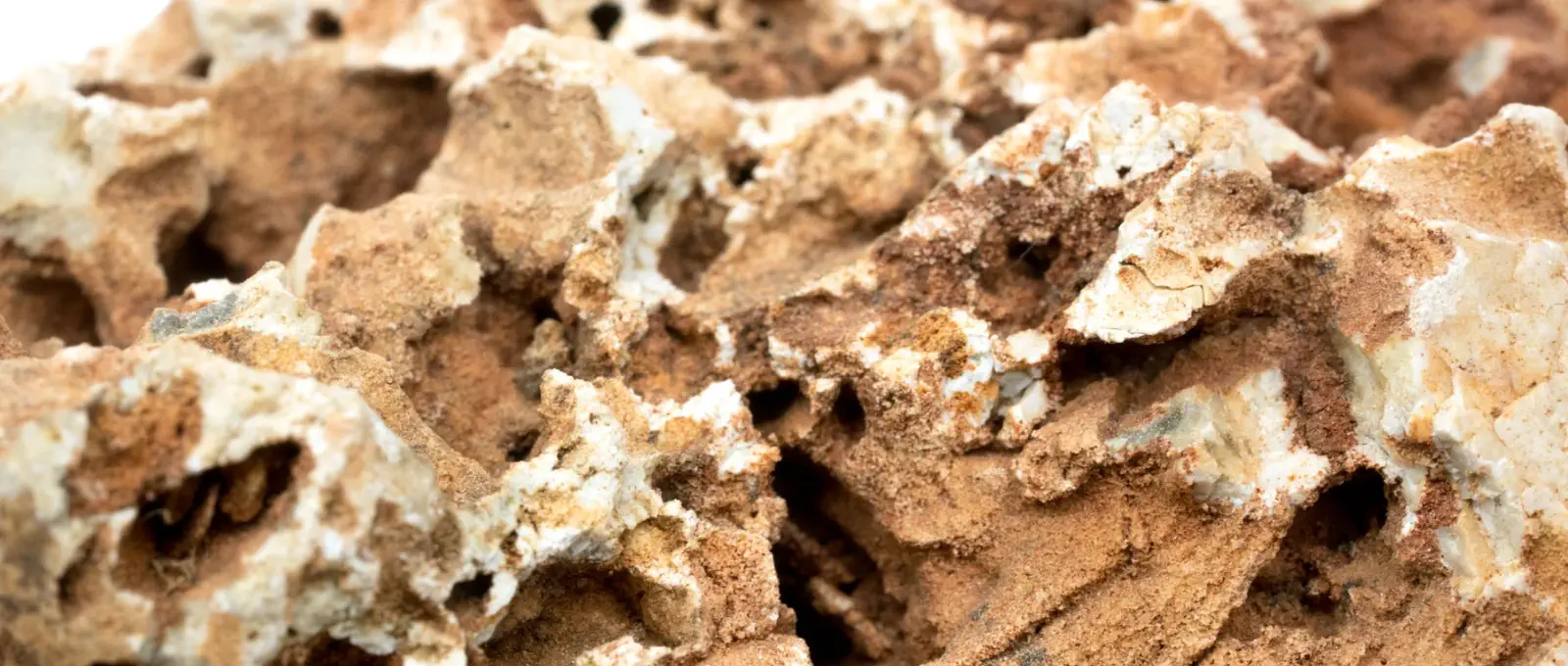
A warm, earthy-toned clay stone covered in deep pits and hollows that resemble dragon scales. Unlike Seiryu it is essentially inert, so it won't alter your water chemistry — making it the safer choice for soft-water carpets, shrimp tanks, and anyone who doesn't want to fight rising hardness. Its lighter weight per volume also stretches a stone budget further.
Strengths
- Inert — no effect on pH or hardness, ideal for demanding carpets and shrimp
- Warm colour contrasts vividly against a fresh green carpet
- Soft enough to shape; hollows fill with substrate and moss naturally over time
Watch Out For
- Brittle — pieces can crack during aquascaping, so handle and transport gently
- Crevices arrive packed with clay; scrub and soak thoroughly before use
- Rounder character suits gentler hillscapes better than sharp alpine peaks
Manten & Ryuoh Stone
ADA-popularised mountain stones for high-drama layouts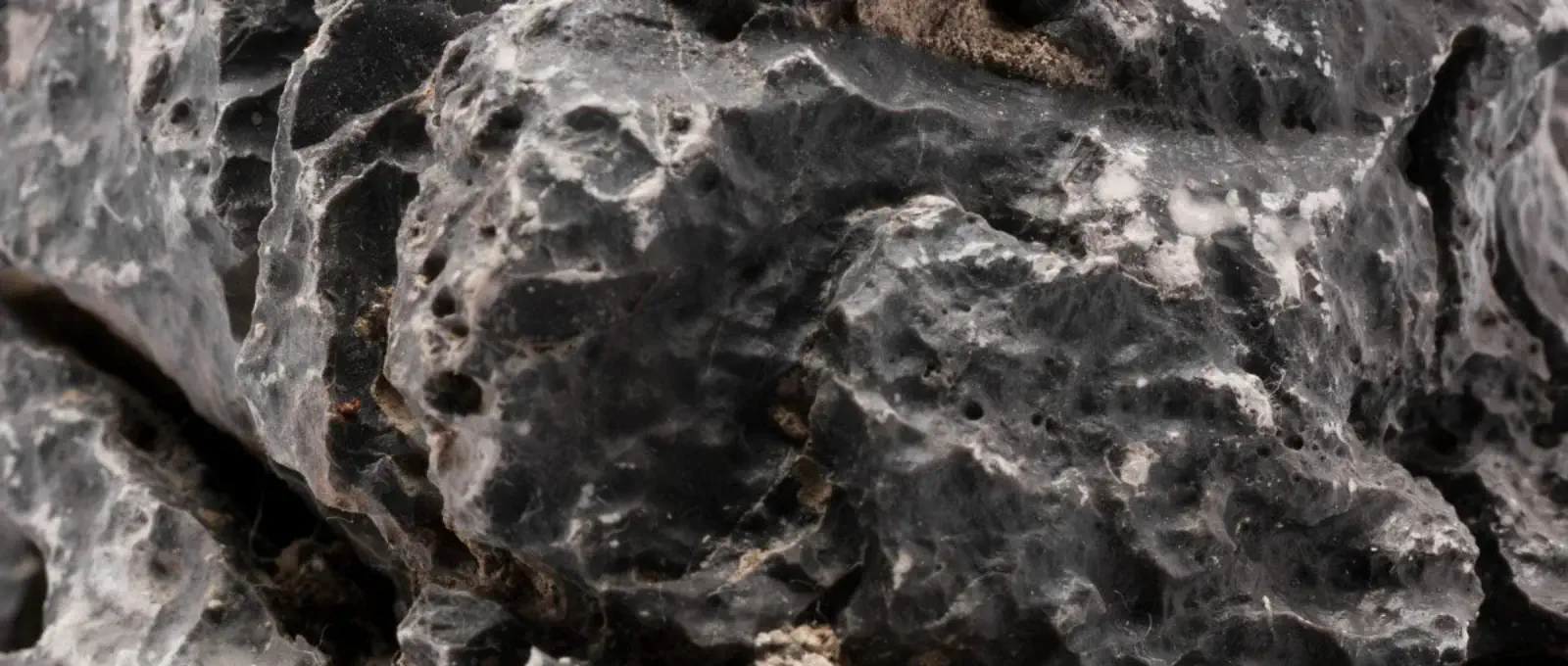
Two stones closely associated with ADA-style competition layouts. Manten is a rugged brown-grey mountain stone, largely inert, with a weathered, ancient character. Ryuoh ("dragon king") is closely related to Seiryu — similar blue-grey tones and white veining, similarly calcareous — but typically with bolder, more angular striations. Both reward careful selection of a matched set with consistent grain.
Strengths
- Manten offers Seiryu-level drama without the water chemistry side effects
- Ryuoh's strong veining makes establishing a shared flow direction easy
- Both photograph superbly — a real advantage for contest entries
Watch Out For
- Ryuoh raises hardness like Seiryu — manage it the same way
- Limited and pricey in South Africa; expect to order ahead or buy at auctions
- Mixed batches vary in colour — buy your full set from one batch if possible
Local South African Alternatives
Budget-friendly stone sourced closer to home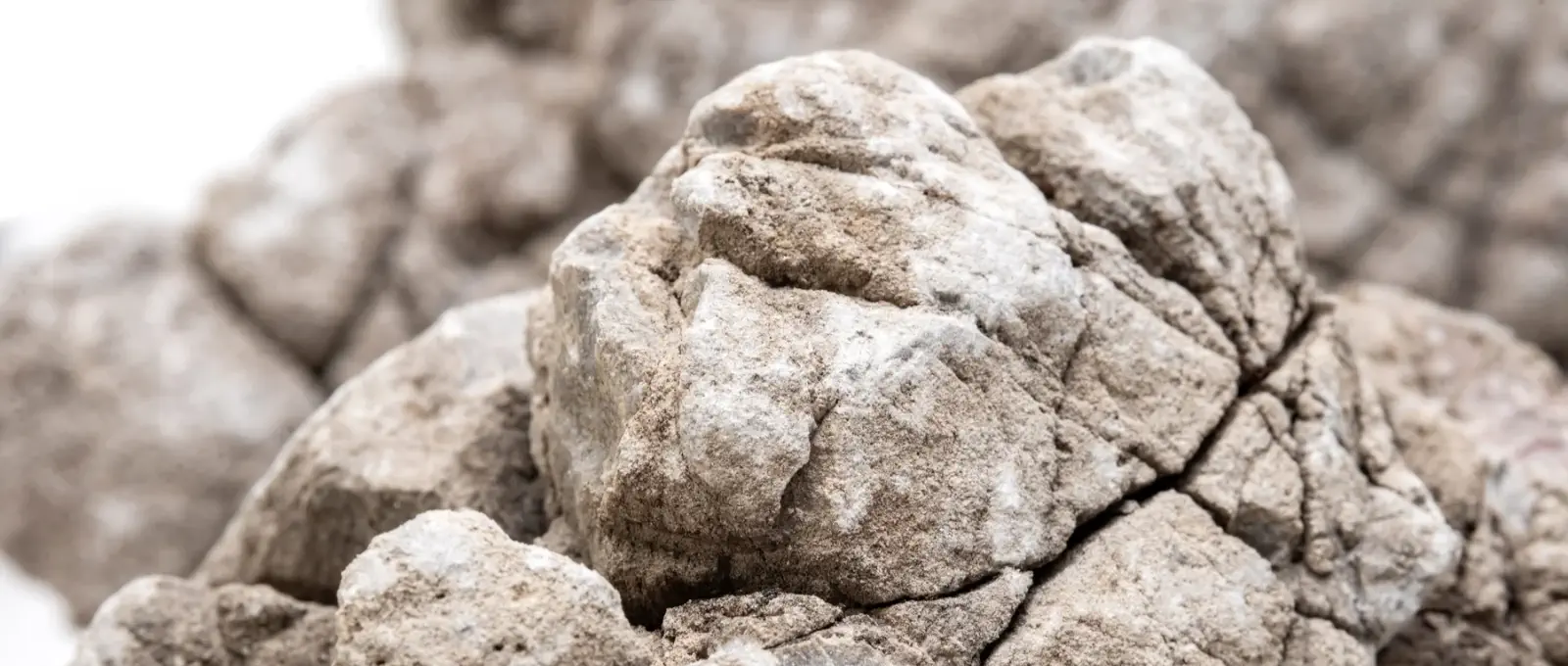
Imported aquascaping stone is sold by the kilogram and shipped halfway around the world, so many South African aquascapers build excellent Iwagumi layouts from local rock instead. Weathered dolerite, quartzite, and slate-type stones from landscaping suppliers can all work — the key is choosing pieces with consistent colour and a strong shared texture, then confirming they're aquarium-safe before they go anywhere near your tank.
Sourcing Tips
- Landscaping yards sell rock by weight at a fraction of aquascaping-shop prices
- Pick through the pile yourself — you need one hero stone plus a matching family
- Club auctions and member trades are a great source of pre-tested stone
Safety Checks
- Vinegar test: fizzing indicates calcareous rock that will raise pH and hardness
- Avoid rock with metallic streaks, rust staining, or an oily sheen
- Scrub, rinse, and ideally soak-test new stone for a week while monitoring parameters
Low-Tech vs High-Tech
The classic competition Iwagumi is a high-tech tank: pressurised CO2 at roughly 25–30 mg/l, strong lighting, nutrient-rich aquasoil, and daily fertilisation. This combination is what allows demanding carpets like Dwarf Baby Tears to grow dense, low, and fast — carpeting a 60 cm tank in six to eight weeks rather than six months. The trade-off is cost, complexity, and an unforgiving balance: with that much light and fertiliser in an open, sparsely planted layout, any slip in CO2 or maintenance is an open invitation to algae.
A low-tech Iwagumi is entirely achievable — it just demands different choices. Skip CO2 injection, run moderate lighting for 6–7 hours, and choose tolerant carpeting species: Dwarf Sagittaria, Marsilea, or Cryptocoryne parva in place of Baby Tears. Growth is far slower and the carpet will be a little taller and looser, but the tank is cheaper to run, more stable, and much kinder to a first-time stone-scaper. Many aquascapers deliberately start low-tech to learn stone placement before investing in gas.
A popular middle road is DIY or budget CO2 — citric-acid/bicarb generators or small disposable systems — paired with a mid-demand carpet like Monte Carlo. This delivers perhaps 80% of the high-tech result at a fraction of the cost, and it's the route many ECAAC members take for their first serious carpeted layout.
At a Glance
Carpet Plants for Iwagumi
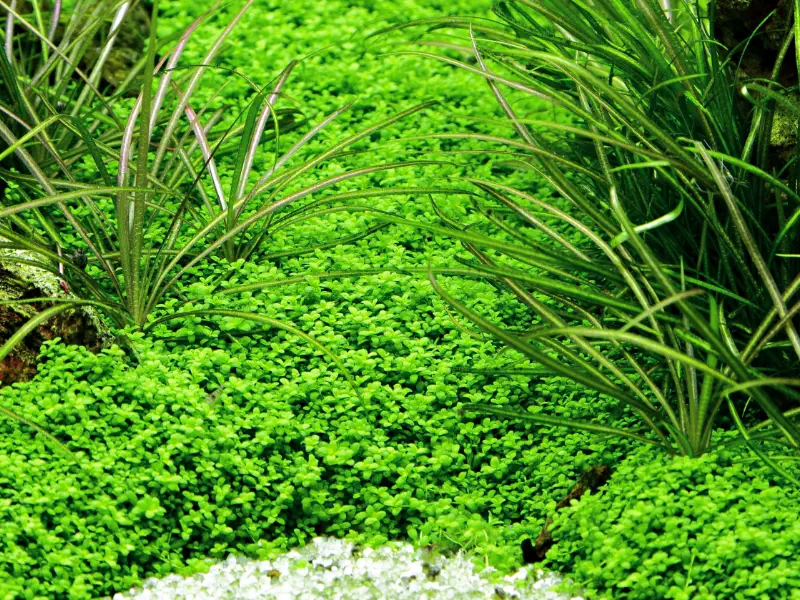
Dwarf Baby Tears
Hemianthus callitrichoides "Cuba"The definitive Iwagumi carpet — tiny round leaves forming a dense, lawn-like mat that "pearls" with oxygen bubbles under strong light. Demands pressurised CO2, high light, and nutrient-rich soil; without them it slowly melts away.
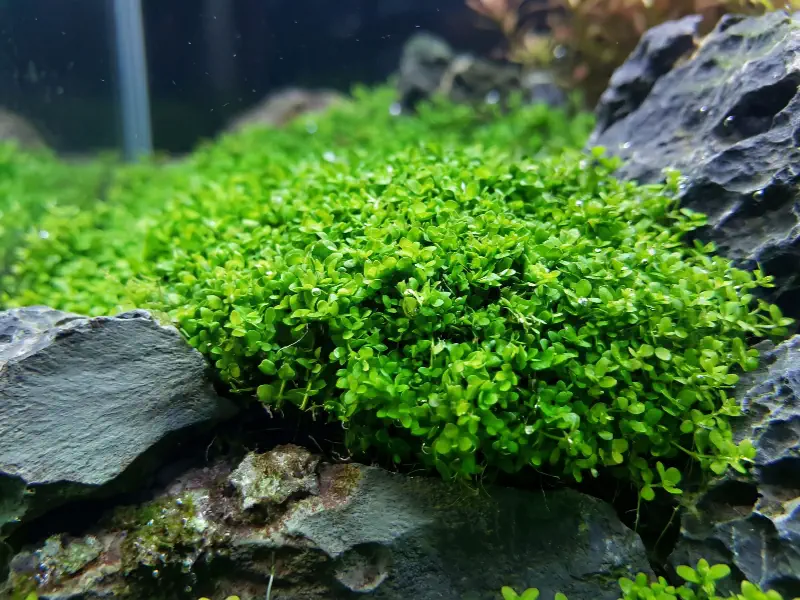
Monte Carlo
Micranthemum tweedieiSlightly larger-leaved than Baby Tears but dramatically easier — it tolerates moderate light and rewards even modest CO2 with a fast, dense carpet. The best "first carpet" choice for most aquascapers, and widely traded between club members.
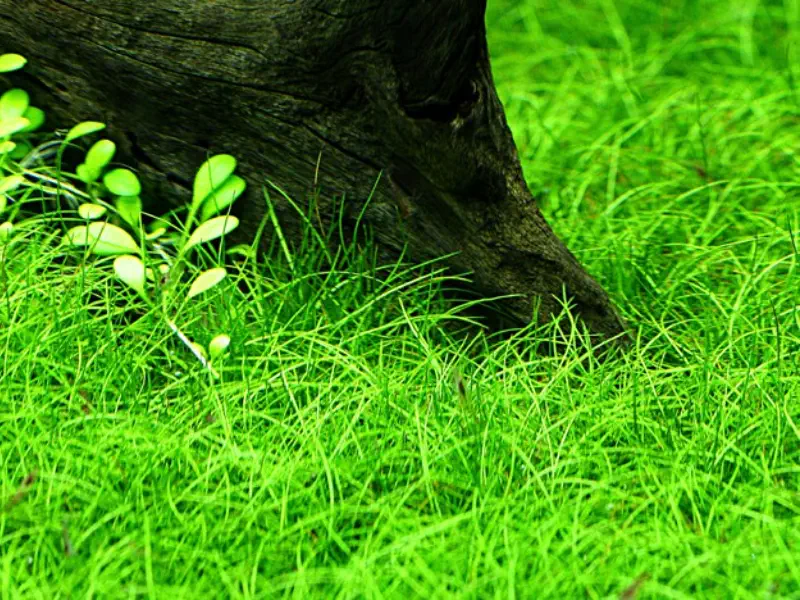
Dwarf Hairgrass
Eleocharis parvula / acicularisFine grass-like blades that sway in the current, giving an Iwagumi a windswept meadow character. Grows in most setups, though it stays lower and denser with CO2. Trim regularly to encourage lateral runners.
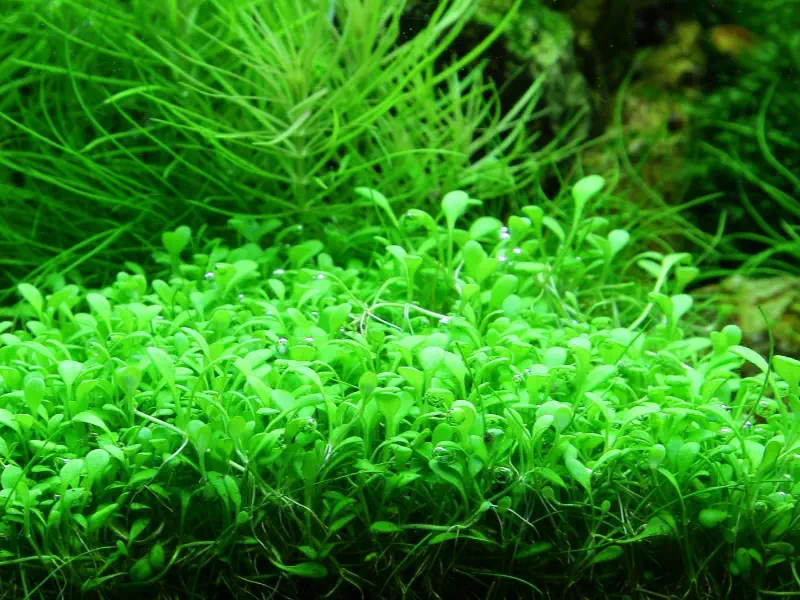
Glossostigma
Glossostigma elatinoidesOne of Amano's signature foreground plants — small paired leaves that spread rapidly under strong light and CO2. Kept short it forms a lush low carpet; under weak light it grows upward and leggy instead.
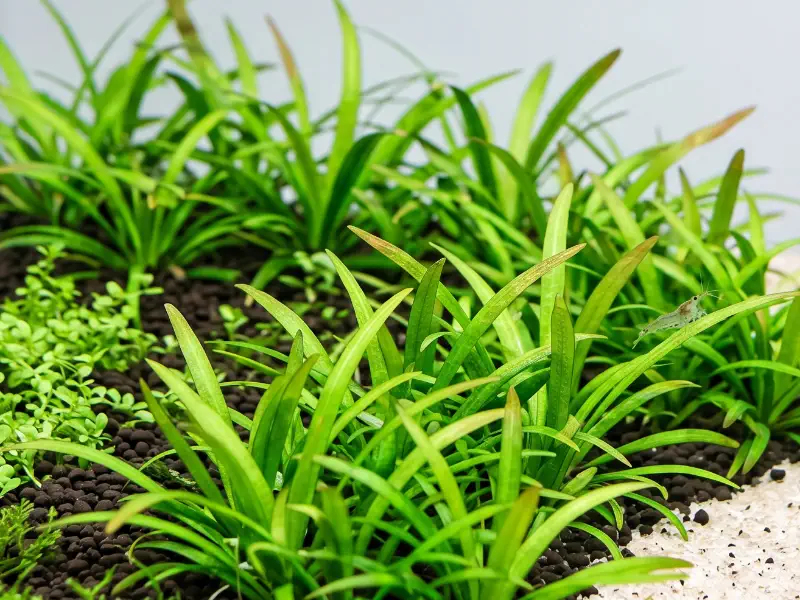
Dwarf Sagittaria
Sagittaria subulataA taller, grassier carpet that thrives without CO2, spreading steadily by runners. Not as manicured as the high-tech options, but tough, affordable, and reliable — the backbone of many successful low-tech Iwagumi layouts.
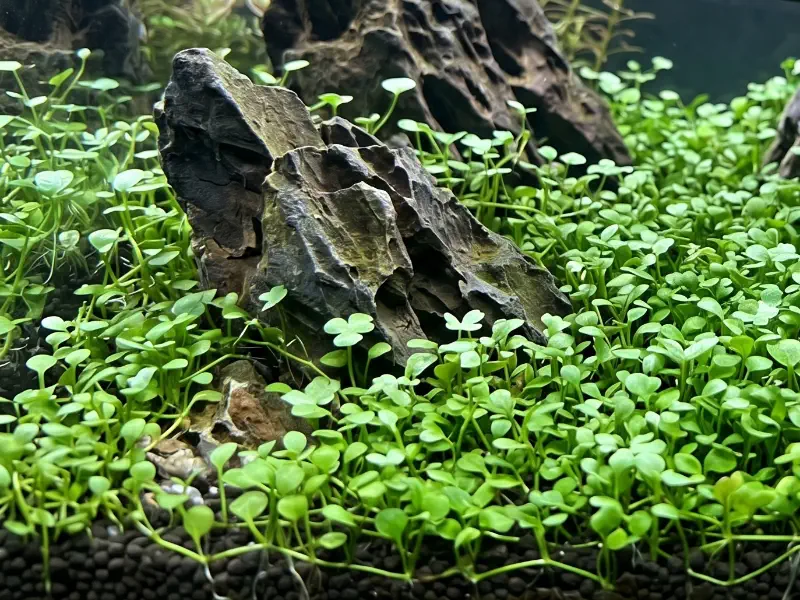
Marsilea
Marsilea hirsuta / crenataA clover-like fern relative that forms a low, dark-green carpet extremely slowly — but with almost no demands. Perfect for the patient low-tech aquascaper who wants a truly flat carpet without gas.
Keeping an Iwagumi Beautiful
Algae Is the Enemy
An open, brightly lit layout with few plants is algae's dream home. Plant the carpet densely from day one, keep CO2 and light in balance, run shorter photoperiods during grow-in, and recruit a cleanup crew — Amano shrimp and Otocinclus are the traditional Iwagumi workforce.
Trim Little, Trim Often
Carpets stay low and dense only with regular mowing — every one to two weeks once established. Let a carpet grow too tall and the lower layer yellows, detaches from the substrate, and can float free in sheets. Weekly 30–50% water changes keep the whole system stable.
Choose Fish That Serve the Scene
Iwagumi convention calls for a single schooling species — a shoal of Harlequin Rasboras, Rummynose or Ember Tetras moving as one reinforces the sense of scale, while a mixed community breaks it. Stock lightly: low plant mass means low nutrient uptake.
Iwagumi in South Africa
Iwagumi has a devoted following among South African competitive aquascapers precisely because it rewards skill over spending: a striking stone layout depends more on the aquascaper's eye than on rare plants or exotic livestock. That said, the classic imported stones — Seiryu, Ryuoh, Ohko — carry real import and shipping costs here, sold by the kilogram, which is why local landscaping-yard rock, careful vinegar-testing, and stone traded through club auctions play such a big role in local builds.
CO2 is the other cost frontier. Pressurised systems and refills are available from specialist local suppliers, but South Africa also has a strong DIY CO2 culture — citric-acid and bicarb generators built from soda bottles are a well-trodden path to a first carpeted layout, before committing to a regulator and cylinder.
ECAAC's Aquascaping Awards Program and Horticulture Awards Program both give Iwagumi builders a structured path: from a first low-tech hairgrass layout through to competition-grade carpets, with feedback from members who have built and entered tanks in international contests like the IAPLC. Bring your dry hardscape photos to a club meeting — stone placement critique is one of the most valuable things a fellow aquascaper can offer.
Ready to Set Your First Stones?
Whether it's a three-stone Sanzon in a 45 cm cube or a competition-grade Seiryu mountainscape, ECAAC members have been there. Come to a meeting, bring photos of your hardscape, and get honest feedback before you flood the tank.