
Southeast Asian Biotope
From stained peat swamp forests to oxygen-rich mountain streams, Southeast Asia holds two of the most distinct freshwater habitats in the hobby. Home to Betta, countless Rasbora species, and the extraordinary hillstream loaches — this guide covers both worlds.
Two Habitats, One Region
Southeast Asia — spanning Thailand, Malaysia, Indonesia, Borneo, and Vietnam — contains two dramatically different freshwater habitats that both feature heavily in the aquarium hobby. Peat swamp forests are slow, tannin-stained, oxygen-poor blackwater habitats similar in chemistry to the Amazon, home to Betta, licorice gourami, and many small Rasbora species.
In sharp contrast, hillstream habitats are fast-flowing, highly oxygenated, cool mountain streams over rock and gravel — home to the extraordinary hillstream loaches that have evolved flattened, sucker-like bodies to cling to rock in strong current.
These two habitats require almost opposite tank setups, which is why this guide is presented as two distinct builds rather than one combined biotope — use the toggle below to explore each.
Choose a Habitat
Peat Swamp Forest
Slow, dark, tannin-stained water over a bed of decomposing leaves and peat, shaded by dense forest canopy. Oxygen levels are naturally low, which is why many resident fish — Betta especially — evolved a labyrinth organ allowing them to breathe atmospheric air at the surface.
Found throughout lowland Borneo, Sumatra, and peninsular Malaysia, these swamps are increasingly threatened by palm oil plantation drainage, making captive breeding of swamp species an important conservation activity within the hobby.
Hillstream
Cool, fast-flowing, highly oxygenated water tumbling over smooth rock and gravel in mountain foothills. Very different from the still swamp habitat — residents here are built for current, not for stillness, with flattened bodies and sucker-mouths adapted to cling to rock rather than swim freely against the flow.
This habitat requires powerful circulation, high oxygenation, and cooler-than-typical tropical temperatures — closer to a subtropical setup than a standard community tank, and a genuinely different technical challenge from most freshwater builds.
Did You Know
Bubble Nest Builders
Wild Betta build floating bubble nests from saliva-coated air bubbles at the water surface, anchored to floating vegetation — a behaviour still visible in home aquariums today.
Hillstream Loaches Climb Glass
Their sucker-mouth adaptation lets hillstream loaches grip smooth aquarium glass and even climb the walls against strong filter outflow, mimicking their natural rock-clinging behaviour.
Peat Swamps Are Vanishing
An estimated 50%+ of Southeast Asian peat swamp forest has been lost to agricultural drainage in the last few decades — several Betta species are now considered threatened in the wild.
Air-Breathing Is Common
Beyond Betta, gouramis, and many local catfish species in swamp habitats have evolved labyrinth or accessory breathing organs — a direct adaptation to chronically low-oxygen blackwater.
Rasbora Diversity Rivals the Amazon
Southeast Asia hosts well over 100 described Rasbora and Boraras species — one of the most diverse small-fish genera in the freshwater hobby, rivalling Amazonian tetra diversity.
Not True Loaches
Hillstream loaches (Balitoridae) aren't closely related to typical loaches (Cobitidae) — their sucker-disc body plan evolved independently as a striking case of convergent evolution for stream life.
Species Spotlight
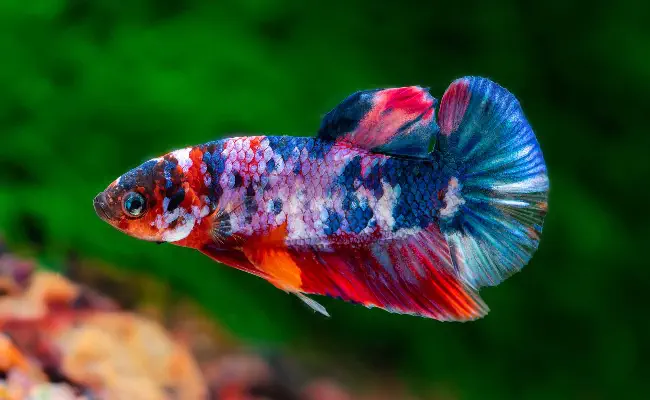
Siamese Fighting Fish
Betta splendensThe most iconic swamp species — a labyrinth-breathing air-gulper adapted to low-oxygen, still, tannin-stained water.
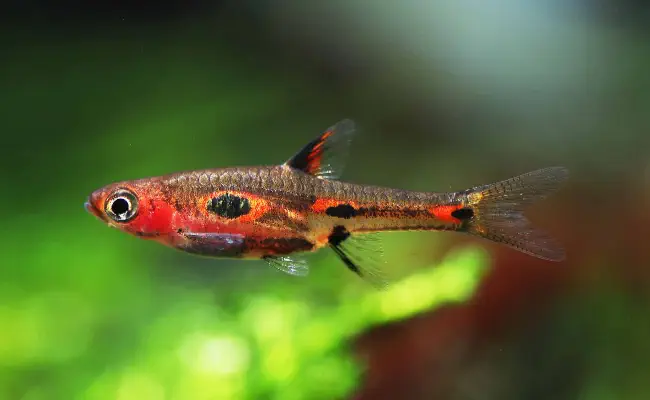
Chili Rasbora
Boraras brigittaeOne of the smallest aquarium fish available, a vivid red nano species that thrives in soft, acidic, tannin-stained water.
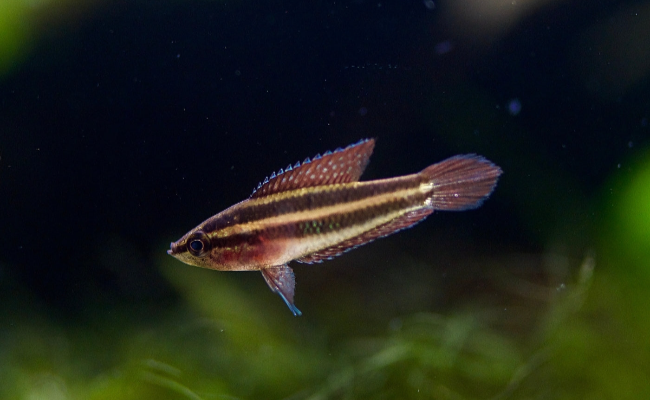
Licorice Gourami
Parosphromenus spp.A tiny, secretive, softwater specialist gourami — demanding but stunning, a favourite among dedicated blackwater keepers.
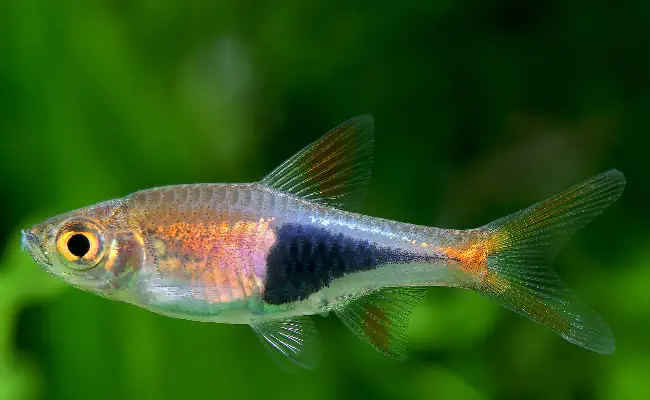
Harlequin Rasbora
Trigonostigma heteromorphaA hardy, widely available swamp forest species, tolerant of a broader range than most true blackwater specialists.
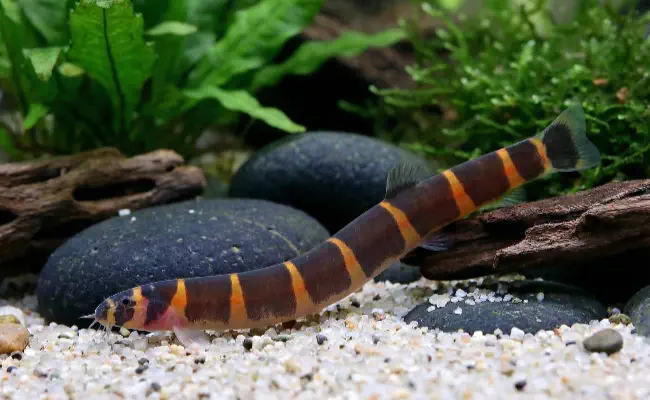
Kuhli Loach
Pangio kuhliiAn eel-like bottom dweller that thrives among leaf litter and soft substrate, active mostly at night.
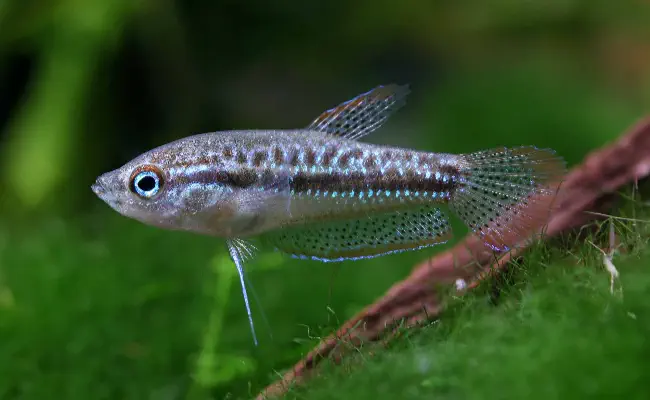
Sparkling Gourami
Trichopsis pumilaA tiny labyrinth fish known for an audible croaking sound made during courtship — a genuine curiosity of the swamp forest hobby.
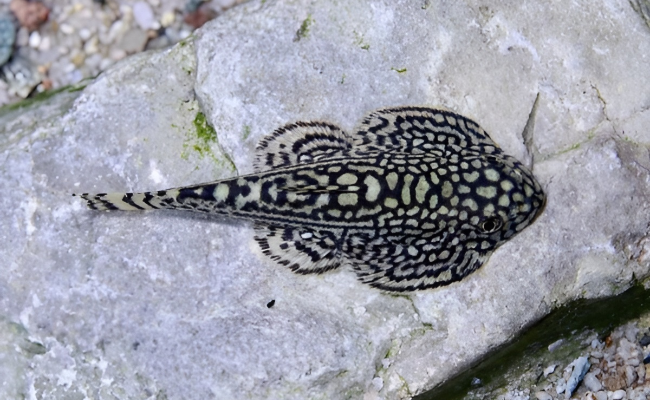
Reticulated Hillstream Loach
Sewellia lineolataA flattened, sucker-bodied loach that grips rock in strong flow — needs high oxygenation and cooler water than typical tropicals.
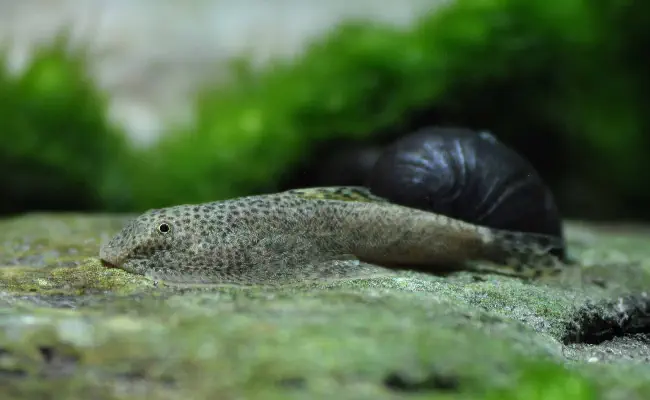
Chinese Hillstream Loach
Beaufortia kweichowensisDistinctive wing-like pectoral fins spread flat against rock surfaces — a striking, if demanding, community oddball.
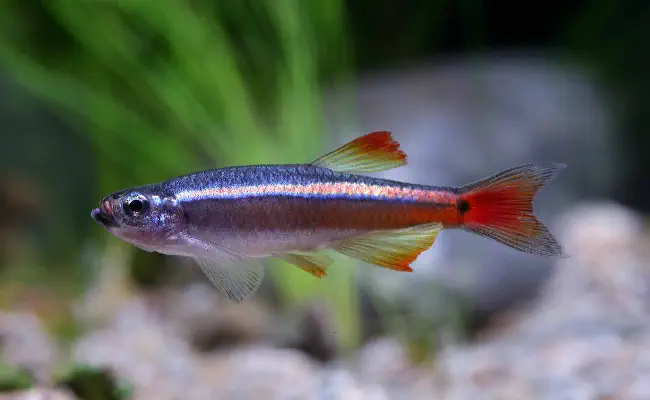
White Cloud Mountain Minnow
Tanichthys albonubesA cool-water, hardy schooling fish well suited to unheated hillstream setups — one of the most beginner-friendly hillstream species.
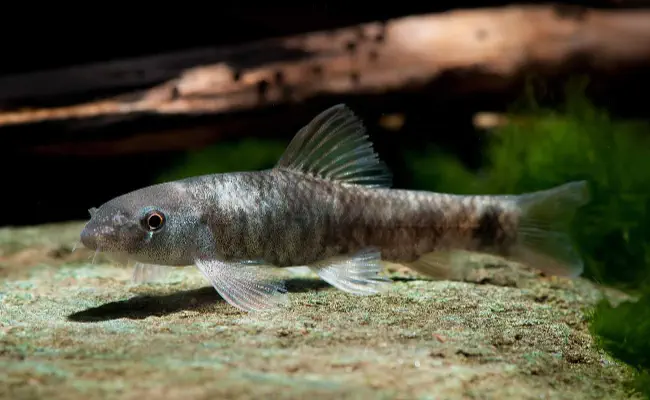
Stone Lapping Minnow
Garra spp.Algae-grazing minnows with a sucker-like mouth adapted for clinging to rocks in current while feeding on biofilm.
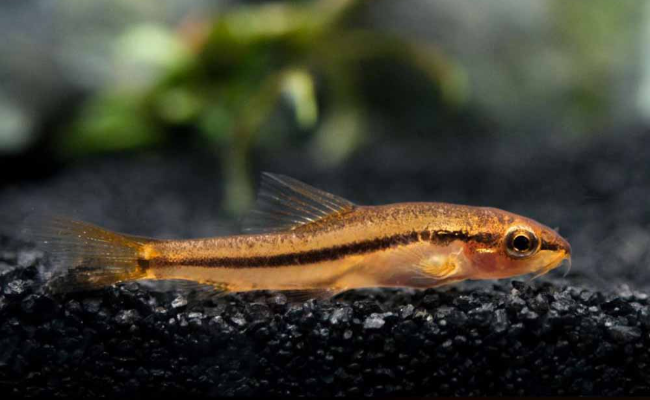
Rosy Loach
Petruichthys sp.A small, peaceful schooling loach found in fast, clear hillstream water — less demanding than true Sewellia species.
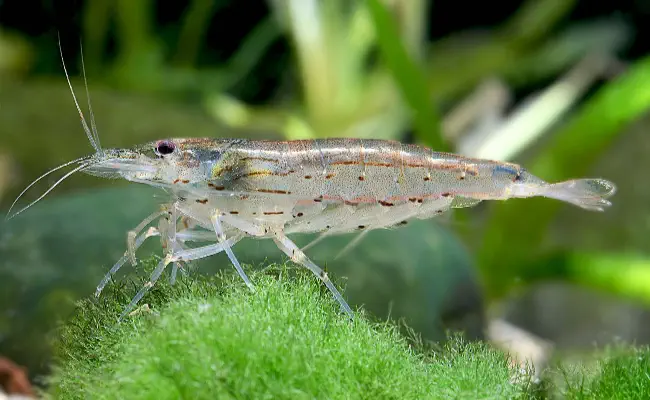
Amano Shrimp
Caridina multidentataNaturally found in fast-flowing streams across the region, well suited to the high-oxygen hillstream setup and useful algae grazers.
Recreating It at Home
Peat Swamp Setup
- Leaf litter substrate (Catappa/almond leaves) and driftwood release tannins and lower pH naturally
- Very gentle filtration or none at all for a true swamp feel — sponge filter on lowest flow works well
- Floating plants (Salvinia, frogbit) diffuse light and provide surface cover, mimicking dense canopy shade
- Keep the tank covered — Betta and other labyrinth fish need access to warm, humid air above the surface
Hillstream Setup
- Smooth river rock and gravel substrate — avoid sharp decor that could injure sucker-bodied fish
- Strong powerhead or wavemaker creating substantial unidirectional current across the tank floor
- High surface agitation and oxygenation — an air stone alongside strong filtration outflow is often necessary
- Keep temperature on the cooler side (20–24°C) — a chiller may be needed in warm South African summers
Southeast Asian Fish in South Africa
Betta splendens is one of the most widely available fish in the South African pet trade, though most sold locally are bred for fin type and colour rather than swamp-authentic care — a proper peat swamp setup with tannins and low flow produces noticeably better colour and health than the bare "betta cup" conditions often seen in stores.
Hillstream loaches are less commonly stocked in SA and often need to be sourced through specialist importers or club connections — worth checking with ECAAC members before committing to a hillstream build, since not all local stores understand their specific high-oxygen, cool-water needs.
South African summer heat is a genuine challenge for hillstream setups — without a chiller, ambient room temperature alone can push water above the 24°C ceiling these fish need, so plan cooling before committing to this build.
Curious About Either Habitat?
Whether you're drawn to a moody peat swamp Betta tank or the technical challenge of a hillstream build, ECAAC members have experience with both and can help you plan the right setup.