
African Killifish
Living jewels of ephemeral pools and forest streams — killifish pack some of the most intense colour in all of fresh water into tiny, short-lived bodies. Many lay drought-proof eggs that outlast the dry season buried in the mud, making them one of the most extraordinary groups a breeder can keep.
Origin
Killifish aren't a single genus but a huge, loosely related group of small egg-laying toothcarps — well over a thousand species — scattered across the Americas, Africa, southern Europe and Asia. The hobby's heart, though, lies in sub-Saharan Africa, home to some of the most spectacular species and the family keepers most often mean by "killifish."
Their defining trick is how they cope with water that vanishes. Many killifish live in ephemeral pools — puddles, seasonal savanna pans and rain-filled forest depressions that dry out completely for months each year. So-called annual species race through their whole life cycle in a single wet season and leave behind drought-resistant eggs buried in the mud, while non-annual species live in more permanent forest streams and can persist for several years.
African killifish overlap strongly with our West African river and blackwater habitats — the same soft, tannin-stained, leaf-littered water suits them perfectly — which is why a killifish species tank pairs so naturally with those biotope guides.
Water Parameters
Did You Know
Eggs That Survive Drought
The killifish superpower: annual species lay eggs that enter diapause, a suspended-animation state that lets them survive months buried in dry mud, hatching only when the next rains flood the pool.
The Shortest-Lived Vertebrate
The African turquoise killifish (Nothobranchius furzeri) lives just three to seven months — the shortest lifespan of any vertebrate bred in captivity — and is now a leading scientific model for the biology of ageing.
Fish Sent by Post
Because their eggs survive out of water, killifish are traded worldwide as damp eggs in the ordinary mail. Keepers incubate them, then "wet" them to trigger a synchronised hatch — an egg-swapping network unlike anything else in the hobby.
Not "Killer" Fish
The name has nothing to do with killing — it comes from the old Dutch kil, meaning a small creek or ditch, exactly the kind of shallow water these fish call home.
Fish With Built-In Headlights
West African "lampeye" killifish like Aplocheilychthys carry a small, mirror-like reflective patch above each eye, thought to help these surface-dwelling shoalers track each other and spot prey in dim, overhung forest streams.
Living Jewels
Drop for drop, killifish are among the most intensely coloured freshwater fish alive — electric blues, metallic greens and fiery reds — a dazzling payoff for water that looks, at a glance, like a muddy puddle.
Species Spotlight
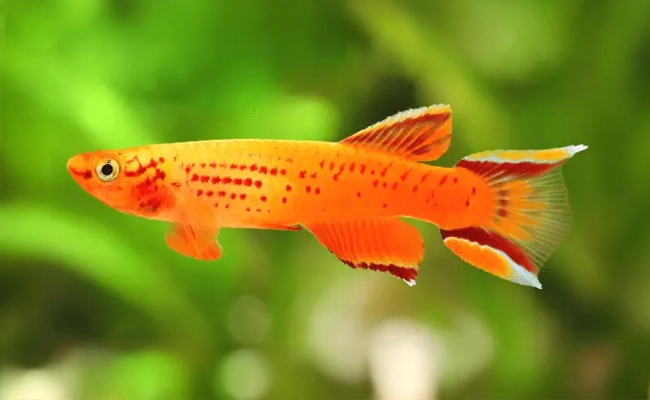
Cape Lopez Lyretail
Aphyosemion australeA classic beginner’s killi from the rainforest streams of Gabon — warm orange with red speckling and a lyre-shaped tail. Non-annual, long-lived by killi standards, and happy to spawn on a mop.
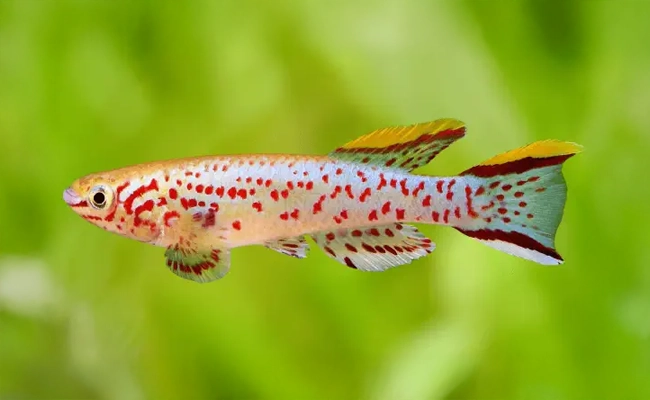
Steel-Blue Lyretail
Fundulopanchax gardneriOne of the hardiest, most forgiving killifish going — electric blue and yellow, easy to breed, and an ideal first species. From the streams and pools of Nigeria and Cameroon.
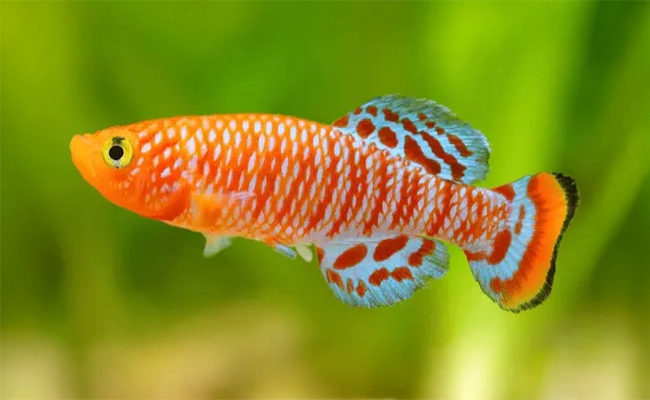
Bluefin Notho
Nothobranchius rachoviiOften called the most beautiful freshwater fish in the world — a blaze of orange-red and turquoise from the seasonal pans of Mozambique. An annual species with drought-proof eggs.
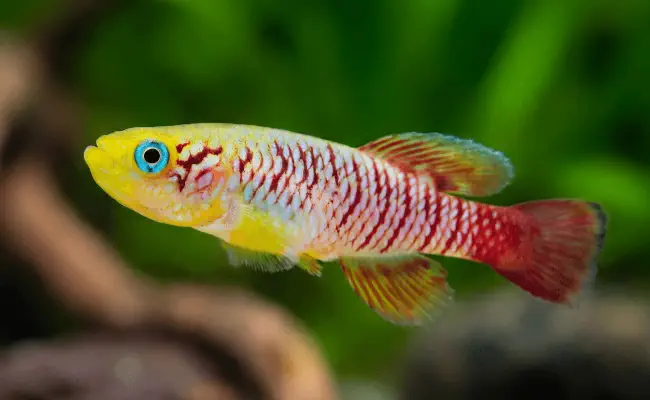
Redtail Northo
Nothobranchius guentheriThe famous short-lived research fish from Mozambique and Zimbabwe. Brilliantly coloured, explosively fast-growing and annual — a whole life cycle compressed into a few months.
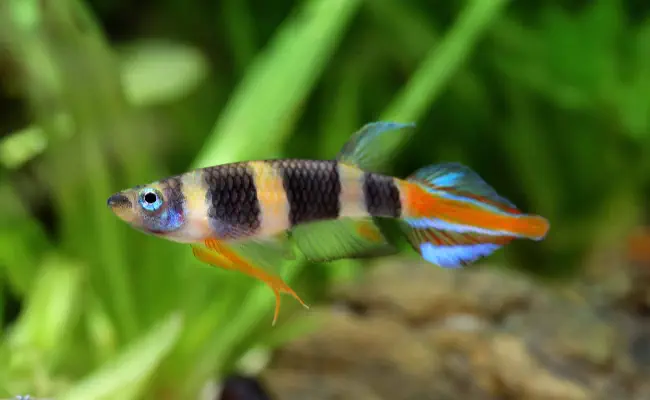
Clown Killifish
Epiplatys annulatusA tiny surface-dwelling nano-fish barely 3 cm long, banded in cream and black with a candy-striped “rocket” tail. Peaceful and perfect for a small, planted West African setup.
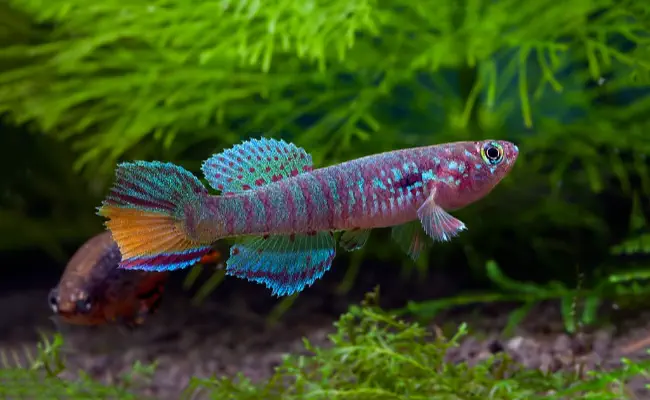
Blue Gularis
Fundulopanchax sjoestedtiA spectacular, chunky killi reaching 12 cm, splashed with blue, green and red. A West African bottom-spawner that bridges the annual and non-annual strategies.
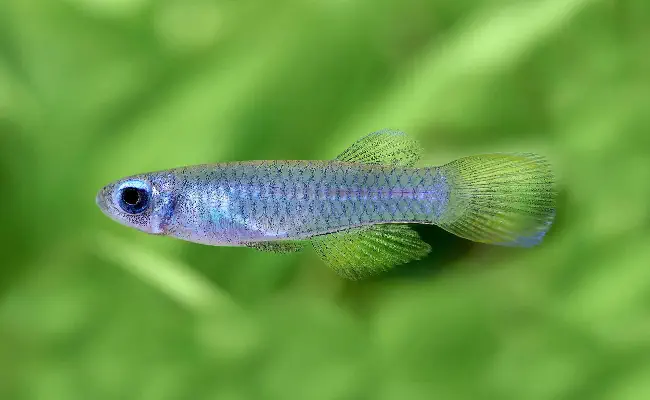
Norman's Lampeye
Aplocheilychthys normanniA slender, peaceful shoaling killi from Central and West African forest streams, marked by the shimmering "lamp-eye" spot shared by the genus. Best kept in a group rather than as a pair, unlike most killifish.
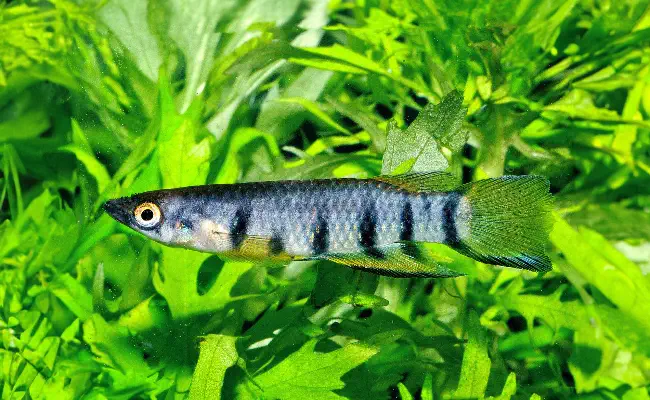
Redchin Panchax
Epiplatys dageti dagetiA striking West African surface-dweller from Ivory Coast and Liberia, olive-gold with a fiery orange-red throat patch on mature males. Peaceful, easy to breed on a mop, and a good pairing with lampeyes.
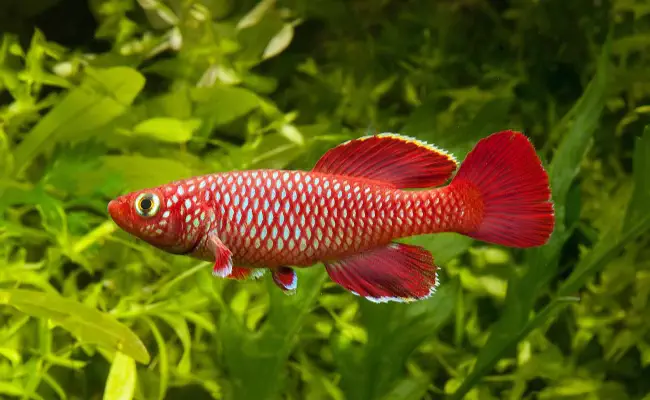
Rosy Killifish
Nothobranchius korthausaeA compact, glowing annual from the coastal forest pools near Dar es Salaam, Tanzania — a rosy red-orange body with sky-blue fin edging and a bold black-and-red tail band. Easy to breed and a popular first annual species.
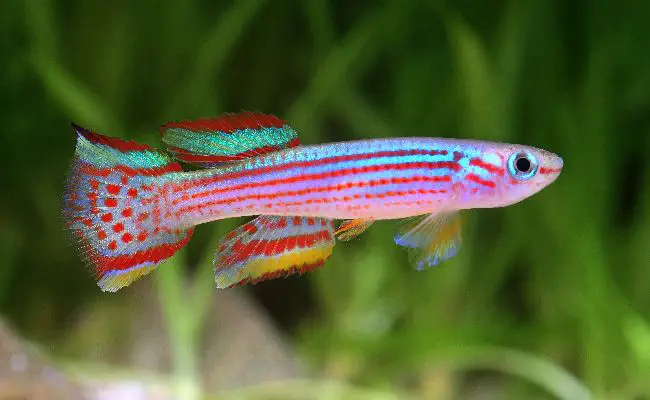
Red-Striped Killifish
Aphyosemion striatumA brilliant non-annual from the forest streams of Gabon — vivid blue-green flanks marked with several unbroken horizontal red stripes and red-spotted fins. Peaceful, long-lived, and an easy, rewarding mop-spawner for beginners.
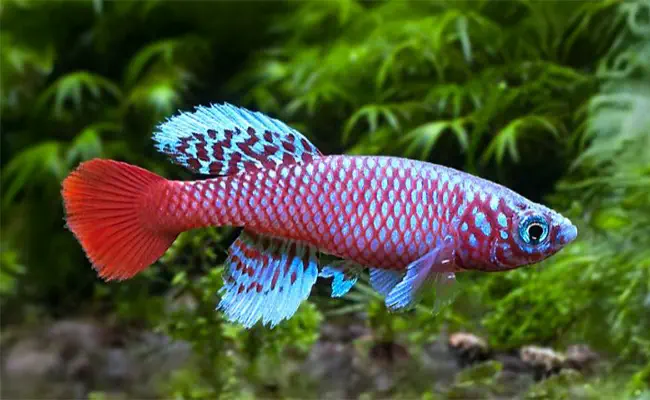
Kilombero Notho
Nothobranchius kilomberoensisA large, vivid annual from the seasonal floodplains of the Kilombero River in Tanzania, males glowing electric blue with a dense red scale pattern. An annual species with drought-proof eggs, best suited to keepers with some Nothobranchius experience.
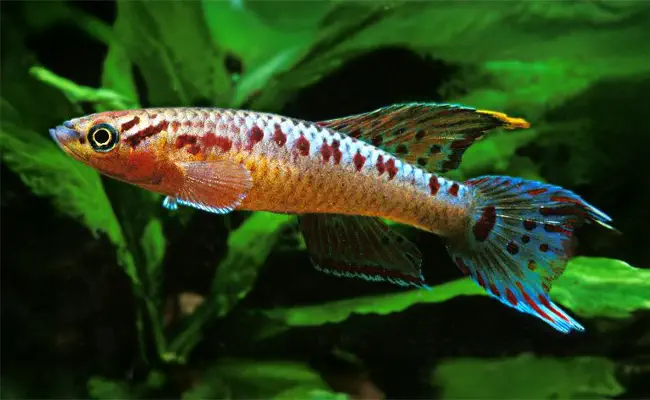
Two-Striped Killifish
Aphyosemion bivittatumA non-annual from the forest streams of Nigeria and Cameroon, its slender body crossed by two dark horizontal bands and flushed with yellow, orange and violet in mature males. A hardy, easy-to-breed mop-spawner ideal for beginners.
Spawning & Life Cycle
Two Life Histories
Killifish split into two broad strategies. Annual species live in pools that dry out completely, so they mature in weeks, spawn intensively, and die as the water disappears — leaving eggs behind to carry the next generation. Non-annual species live in permanent forest streams, grow more slowly, and can live for a few years. How you breed a killi depends entirely on which camp it falls into.
Diapause: Eggs That Wait for Rain
Annual killifish bury their eggs in the soft bottom, where they enter diapause — a developmental pause that can last weeks or months while the mud dries out. The embryos simply wait, fully formed, until water returns. Wetting the dried peat triggers a near-instant, synchronised hatch, mimicking the first storm of the rainy season.
Peat & Mops: How Hobbyists Breed Them
Keepers exploit both strategies. Annuals are given a dish of soft peat or coir to dive into; the peat is then lifted, gently dried and stored damp for the species' incubation period before being re-wetted to hatch. Non-annuals are given a wool spawning mop or fine-leaved plants, from which eggs are picked daily and incubated in water. Either way, the eggs — not the adults — are how killifish travel the world.
Recreating It at Home
Tank & Setup
- Small tanks are the norm — a single pair or trio in a 10–20 litre species tank is ideal; killifish are usually kept one species at a time
- A tight-fitting lid is non-negotiable — many killifish are determined jumpers and will find the smallest gap
- Dim lighting, a dark or bare bottom, and dense Java moss or a wool spawning mop show off colour and give eggs somewhere to go
- Botanicals and leaf litter release the tannins that stain the water and suit forest species — see our biotope guides for the look
Water & Everyday Care
- Soft, slightly acidic, tannin-tinted water suits most species; RO blended with tap, or peat filtration, helps for fussier rainforest killis
- Keep it cool — killifish generally dislike heat, and many forest and savanna species do best without a heater for much of the year in a mild South African climate
- Very gentle or no flow — a small sponge filter is perfect for these fish of still puddles and quiet streams
- Feed live and frozen foods (daphnia, bloodworm, brine shrimp); killifish are keen micro-predators that colour up best on live food
Killifish in South Africa
Killifish are a specialist, breeder-driven corner of the South African hobby — you'll rarely find them on general shop shelves. Instead they move through clubs, dedicated breeders and egg swaps, which makes a society like ECAAC one of the best routes into keeping them.
That egg-in-the-post trait is a gift for local keepers: even when importing live fish is difficult, species can be obtained as damp eggs through hobbyist networks — just be sure to follow the relevant import and permit rules before ordering from abroad.
Hardy species like Fundulopanchax gardneri and Aphyosemion australe make excellent starting points for local keepers, tolerant of a range of water conditions and easy to breed on a spawning mop. This guide pairs naturally with our West African and Blackwater biotope guides.
Ready to Keep Killifish?
ECAAC members breed and swap killifish eggs across many African species, and are always happy to advise on species selection, water softening and spawning setups.