
Lake Malawi Aquariums
One of the great African rift lakes, and home to the most explosive cichlid diversity on Earth. Bright colours, fierce territoriality, and rock-strewn shorelines make Lake Malawi one of the most rewarding — and most requested — biotopes in the South African hobby.
The Lake
Lake Malawi is the third-largest lake in Africa and one of the oldest lakes on Earth, formed by the East African Rift over two to five million years ago. It borders Malawi, Mozambique, and Tanzania, and holds more freshwater fish species than any other lake in the world — the vast majority of them cichlids found nowhere else.
Explosive speciation is the story of Malawi. Isolated rocky outcrops and sandy bays across the lake acted like islands, allowing closely related cichlid populations to evolve into hundreds of distinct species in relative isolation — a textbook example of adaptive radiation that continues to fascinate biologists and aquarists alike.
Two broad cichlid groups dominate the aquarium hobby: mbuna ("rock-dwellers" in the local Tonga language), small, algae-grazing, intensely territorial cichlids that live among the rocky shoreline; and haplochromines ("haps"), typically larger, more open-water and sand-dwelling cichlids with a more relaxed temperament.
Water Parameters
Habitat Zones
Rocky Shoreline
Home to mbuna — dense piles of granite boulders riddled with caves and crevices. Each fish defends a tiny territory fiercely.
Sandy Intermediate Zone
Where rock meets sand — many haps forage here, sifting sand for invertebrates, with looser social structures than mbuna.
Open Water
Larger haplochromines and utaka cruise open water in loose shoals, feeding on plankton far from the rocky safety of shore.
Did You Know
Mouthbrooding Mothers
Nearly all Malawi cichlids are maternal mouthbrooders — females carry fertilised eggs and then free-swimming fry in their mouths for 3–4 weeks, forgoing food the entire time.
Over 850 Species
Estimates put Lake Malawi's cichlid diversity at 700–1,000+ species — more than all of Europe's freshwater fish species combined, in a single African lake.
Rock or Die
Mbuna are so tied to their rocky habitat that populations separated by even a short stretch of open sand rarely interbreed — sand is effectively an ocean to a mbuna.
Ancient and Stable
At 2–5 million years old and up to 700m deep, Malawi's water chemistry has remained remarkably stable for millennia — part of why its cichlids evolved such specialised behaviours.
Algae Farmers
Many mbuna don't just graze algae — they actively cultivate and defend "gardens" of algae growing on their territory rock, chasing off rivals and grazers alike.
A Conservation Icon
Lake Malawi National Park was one of the first freshwater sites declared a UNESCO World Heritage Site, specifically to protect its unmatched cichlid diversity.
Species Spotlight
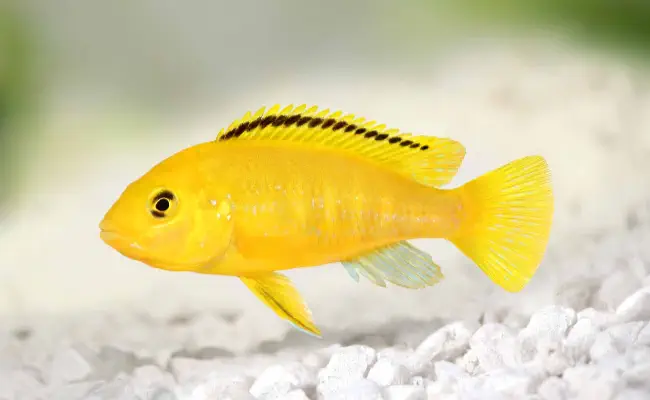
Yellow Lab
Labidochromis caeruleusBright yellow, one of the most peaceful mbuna and an excellent beginner species — still territorial, but far milder than most.
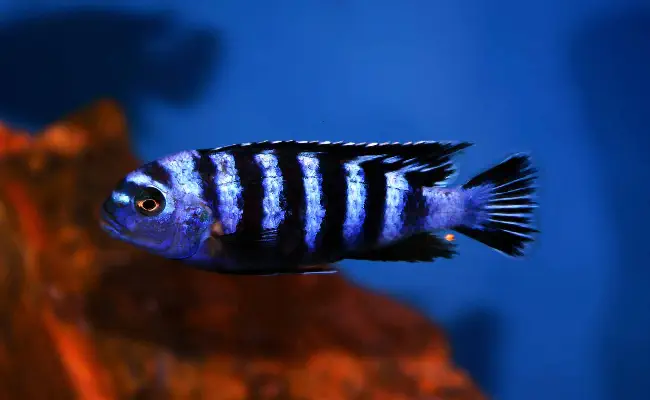
Demasoni
Pseudotropheus demasoniSmall but famously aggressive — must be kept in large groups (12+) to disperse aggression across many targets rather than a few.
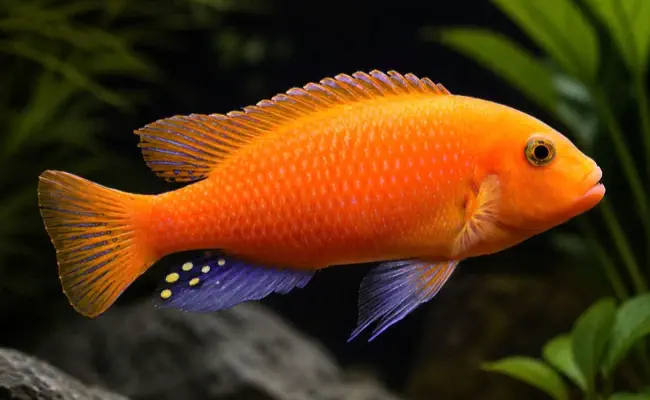
Red Zebra
Maylandia estheraeColour-variable mbuna (orange, blue, red morphs) that's hardy and widely available, a classic starting point for a mbuna tank.
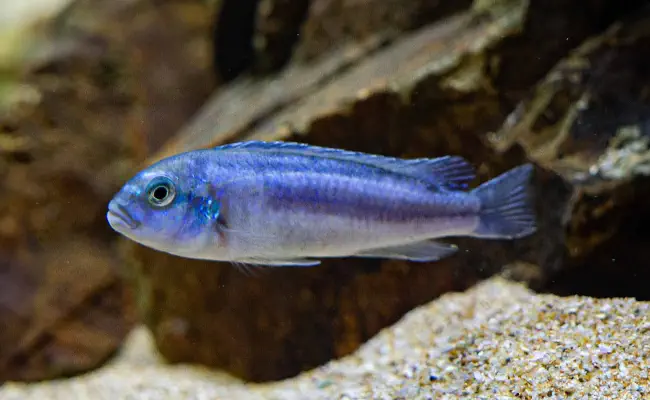
Electric Blue Johanni
Melanochromis johanniStriking electric blue males with black-and-white striped females — highly territorial and best with one male per tank.
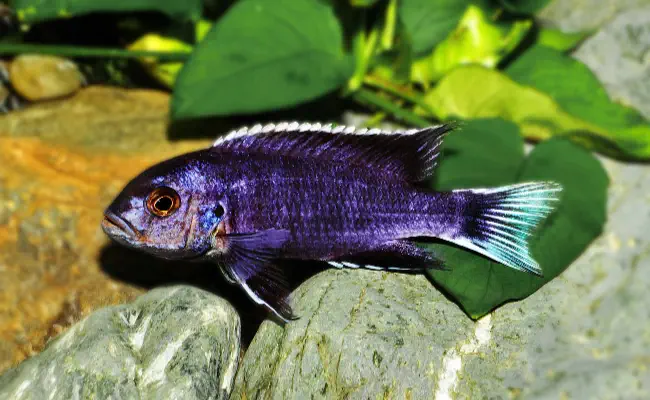
Acei
Pseudotropheus aceiAn unusually peaceful, more open-water mbuna that grazes on aufwuchs from plants rather than only rock — good mixed-tank option.
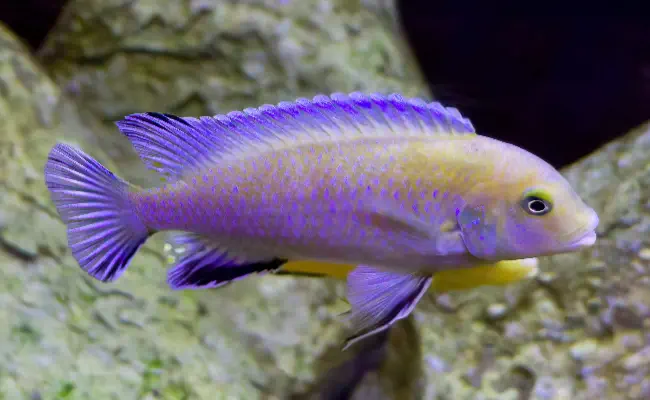
Bumblebee
Pseudotropheus crabroBold black-and-yellow banding, mimics a stinging insect — aggressive and best suited to experienced Malawi keepers.
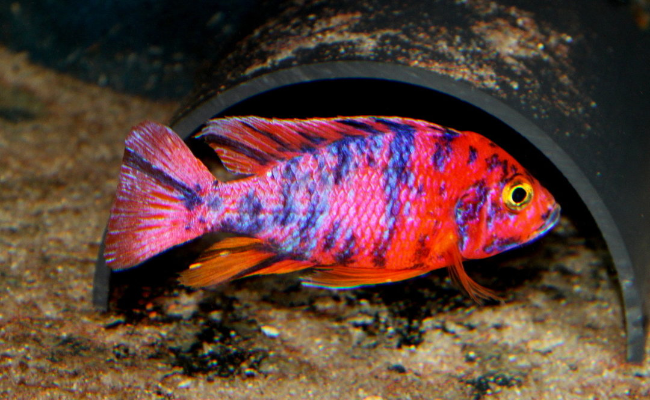
Peacock Cichlid
Aulonocara spp.Among the most colourful haps, with iridescent blues, oranges, and reds. Sand-sifters by nature, and generally calmer than mbuna.
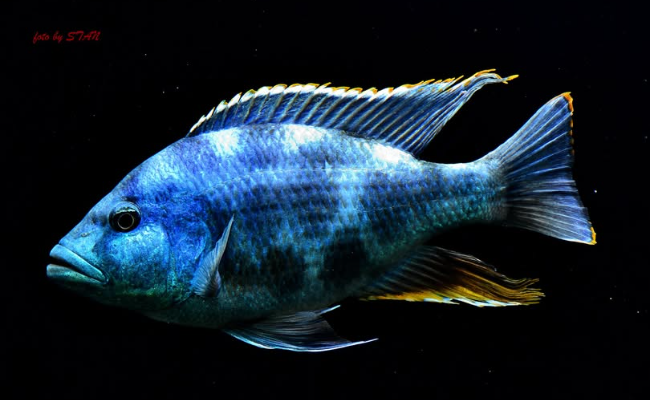
Livingstonii
Nimbochromis livingstoniiA striking predatory hap with a mottled "leopard" pattern, famous for playing dead on the sand to ambush unsuspecting prey fish.
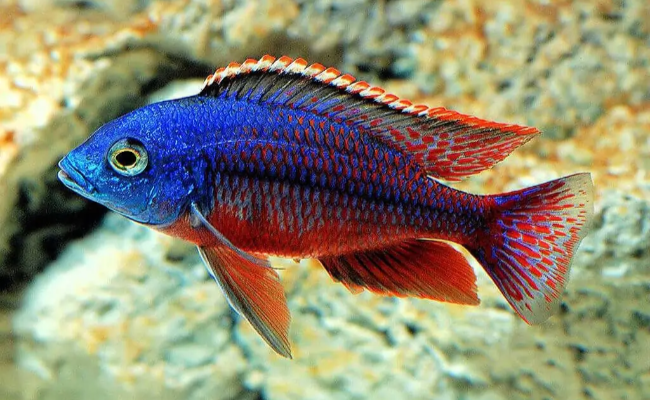
Red Empress
Protomelas taeniolatusA large, spectacularly coloured hap prized for its size and vivid red-orange dorsal fin, needs a larger tank than most mbuna.
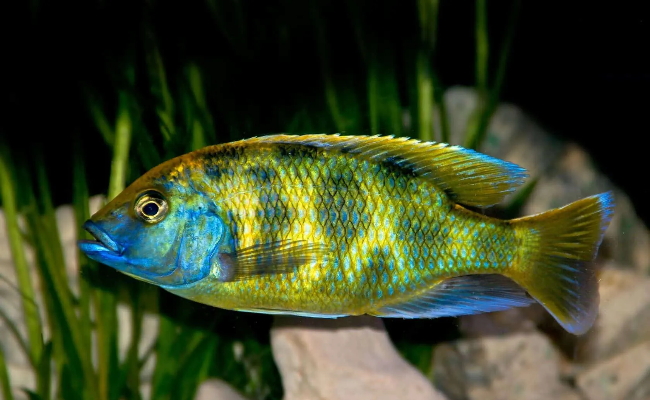
Venustus
Nimbochromis venustusA big, boldly patterned predatory hap that hunts smaller fish in the wild — needs appropriately sized tankmates in captivity.
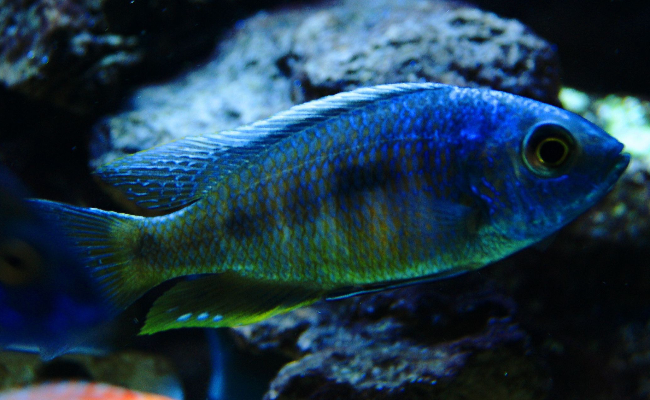
Copadichromis (Utaka)
Copadichromis spp.Open-water plankton feeders that shoal in the wild — best kept in larger groups in a spacious tank with open swimming room.
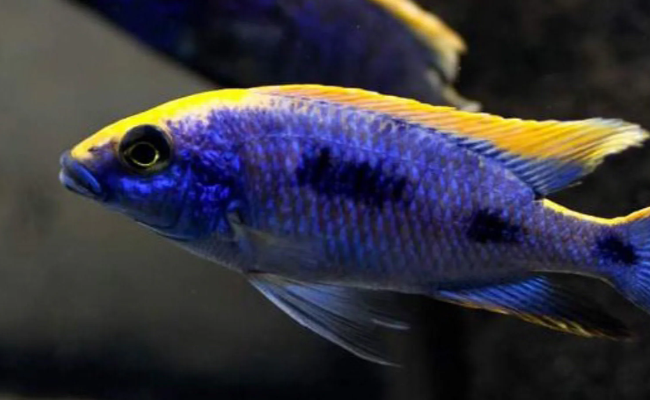
Otopharynx Lithobates
Otopharynx lithobatesA striking blue hap with excellent colour, moderate temperament, well suited to a mixed hap community tank.
Recreating It at Home
Hardscape & Substrate
- Stack dry, aquarium-safe rock (granite, ocean rock, or holey rock) into dense piles with plenty of caves — this is non-negotiable for mbuna to establish territories and reduce aggression
- Use coarse aragonite or crushed coral sand — raises and buffers pH and hardness naturally
- Skip live plants — most Malawi cichlids uproot and eat them. Anubias tied to rock is one of few exceptions that survives
- Build rock structures directly on the glass bottom, not on sand, so shifting substrate can't cause a collapse
Filtration & Stocking
- Malawi cichlids are messy, heavy feeders — oversized canister filtration is strongly recommended, not optional
- Stock densely rather than sparsely — a crowded mbuna tank actually disperses aggression better than a sparse one
- Never mix mbuna and haps species that hybridise easily — stick to one group or research compatible combinations carefully
- Minimum tank size of 300L (4ft) for a basic mbuna community; larger haps need 450L+
Malawi in South Africa
Lake Malawi cichlids are among the most popular and widely available specialty fish in the South African hobby — most established fish stores stock a rotating selection of mbuna and haps, and club auctions regularly feature locally bred specimens at better prices and health than imported stock.
SA municipal tap water in most regions is naturally suited to Malawi cichlids without heavy adjustment — see our Water Quality & SA Tap Water guide for regional hardness figures, and add crushed coral to nudge pH and GH upward if your local water runs soft.
The club's Breeding Awards Program regularly sees Malawi cichlid entries — mouthbrooding species are especially rewarding to document since the entire brooding process is visible without needing to disturb the female.
Ready to Build a Malawi Tank?
ECAAC members keep and breed a wide range of Malawi cichlids and are always happy to advise on stocking combinations, rockwork layout, and sourcing quality local stock.