
South American Dwarf Cichlids
Tiny, fiercely intelligent, and dazzlingly coloured — South American dwarf cichlids bring big cichlid personality into small, heavily planted tanks. A natural companion to blackwater biotopes, and one of the most rewarding groups for the patient aquascaper.
Origin
South American dwarf cichlids are found throughout the Amazon and Orinoco basins, inhabiting slow-moving creeks, flooded forest edges, and leaf-litter-choked backwaters across Brazil, Peru, Colombia, and neighbouring countries. Unlike their large, aggressive Central American cousins, these cichlids rarely exceed 8cm and are prized for complex pairing behaviour rather than raw size or colour alone.
The genus Apistogramma alone contains well over 100 described species, with new ones still being discovered — many restricted to a single river system or even a single tributary, making habitat-specific collection data prized among serious keepers.
These fish overlap heavily with blackwater habitat — tannin-stained, leaf-litter-lined, soft and acidic water is their natural home, which is why a dwarf cichlid tank pairs so naturally with our Blackwater Aquariums guide.
Water Parameters
Did You Know
Harem Spawners
Most Apistogramma form a harem structure in the wild — one male defends a territory containing several females, each raising her own brood in a separate cave within his range.
Colour Shifts With Mood
Many species can flash dramatically different colour patterns within seconds depending on mood — courting, threat display, and submission all have distinct colour signatures.
New Species Still Emerging
New Apistogramma species are still being formally described from remote Amazon tributaries — the genus is one of the most actively researched in the aquarium trade today.
Named for a Founder
The genus name Apistogramma honours 19th-century naturalist collections, but many species carry locality names tied to the exact river system where they were first found.
Fiercely Protective Mothers
A female guarding fry will attack fish many times her own size without hesitation — one of the most dramatic size-mismatched displays of aggression in the freshwater hobby.
Not All Are Tiny
While most dwarf cichlids max out around 5–8cm, some larger relatives like Nannacara and Crenicara push closer to 10cm — still modest compared to typical cichlids.
Species Spotlight
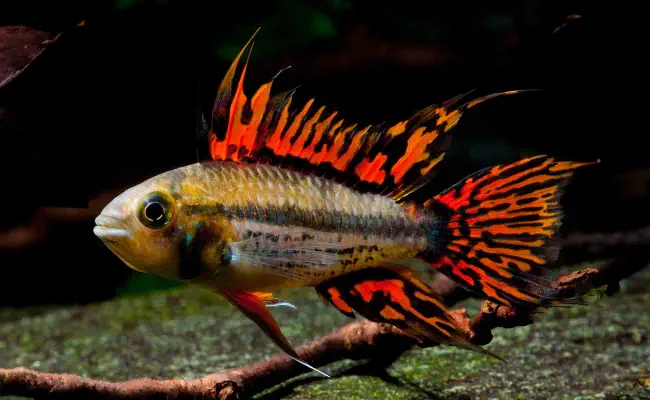
Cockatoo Cichlid
Apistogramma cacatuoidesThe most widely kept and bred Apistogramma — hardy, tolerant of a wider pH range than most, and an excellent species to start with.
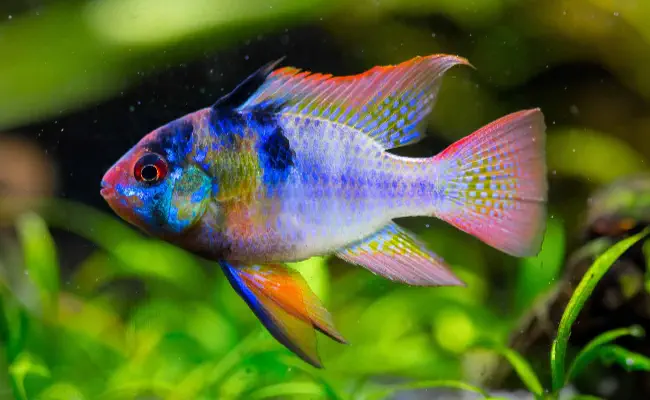
Ram Cichlid
Mikrogeophagus ramireziNot a true Apistogramma but grouped with dwarf cichlids — vividly coloured, monogamous pair-bonding, hugely popular in the SA hobby.
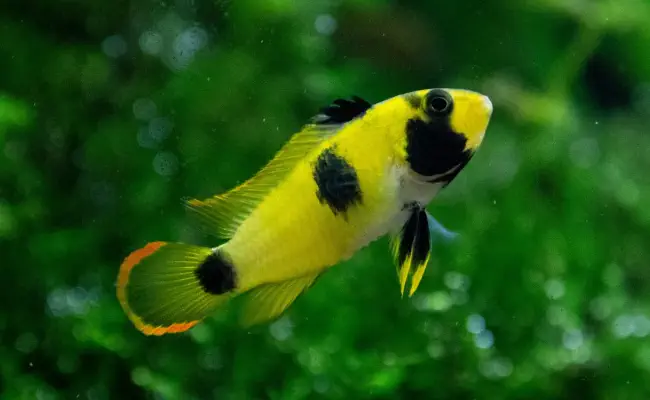
Panda Apisto
Apistogramma nijsseniDistinctive black facial markings, moderate difficulty, prized for its striking pattern and relatively calm temperament.
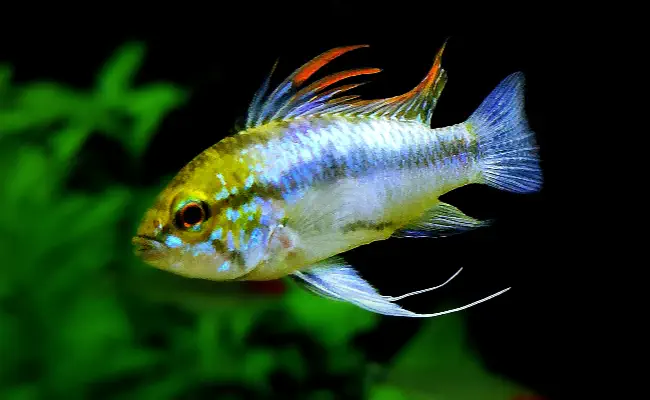
Blue Apisto
Apistogramma trifasciataSmaller and more peaceful than most, with an iridescent blue sheen — well suited to a community of peaceful tetras.
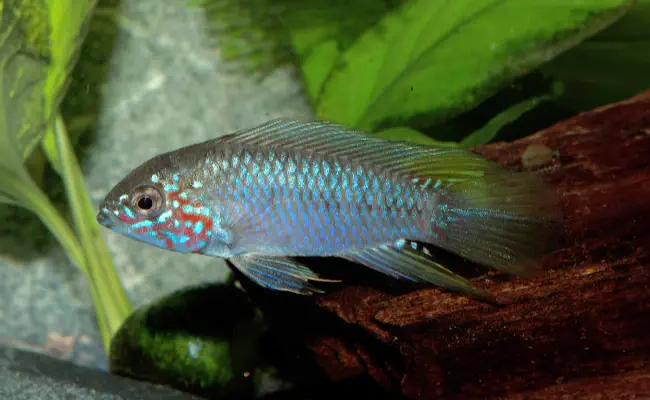
Borellii
Apistogramma borelliiHardy, colourful, and slightly more tolerant of harder water than most Apistogramma — a good bridge species for less-than-ideal water.
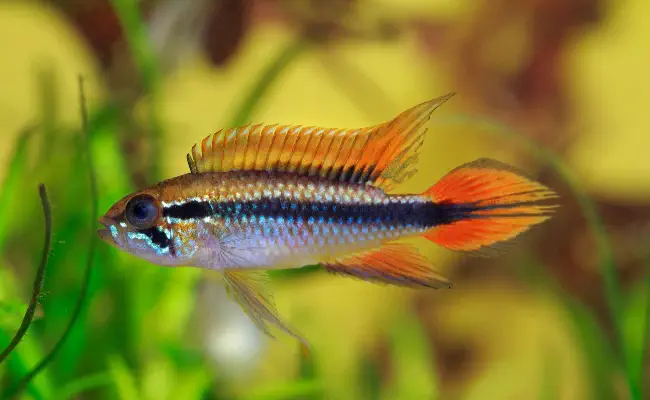
Agassiz's Dwarf Cichlid
Apistogramma agassiziiHighly variable colour forms depending on collection locality, elongated tail in males, popular among locality-specific collectors.
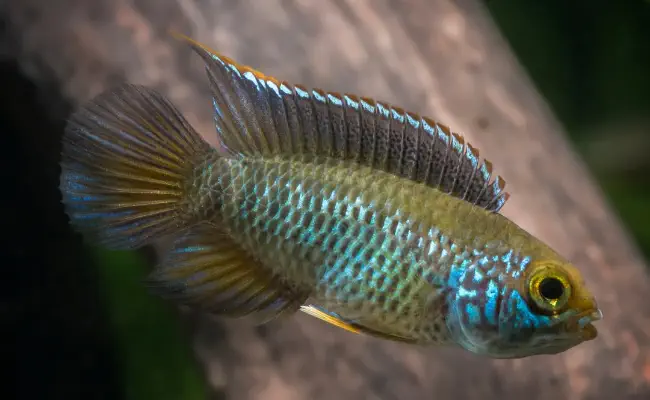
Goldeneye Dwarf Cichlid
Nannacara anomalaHardy and adaptable, tolerates a slightly wider parameter range, with striking iridescent green-gold males.
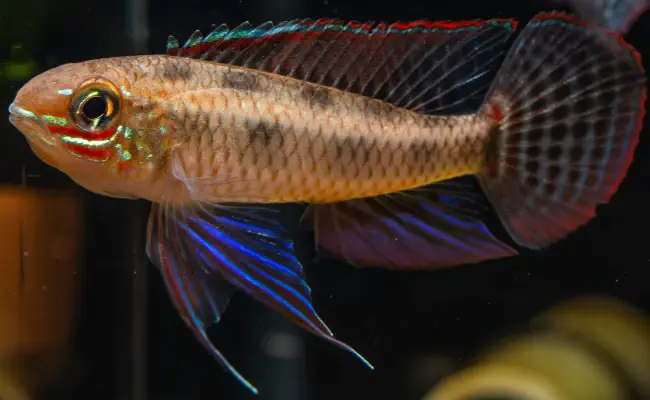
Checkerboard Cichlid
Crenicara punctulatumAn elegant, elongated dwarf cichlid with a checkerboard body pattern, slightly more demanding water quality requirements.
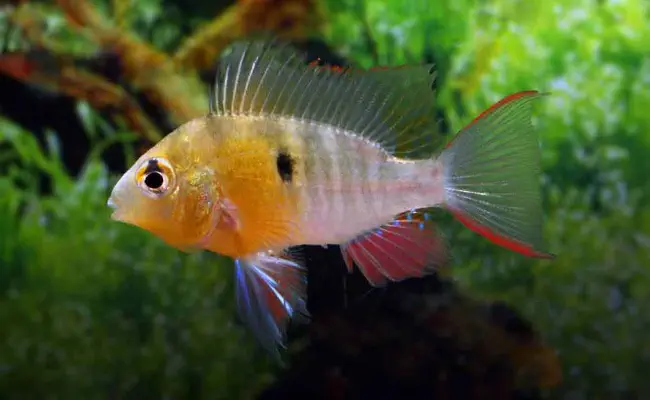
Bolivian Ram
Mikrogeophagus altispinusMore tolerant of harder, more neutral water than the standard Ram — a good compromise for SA tap water without heavy adjustment.
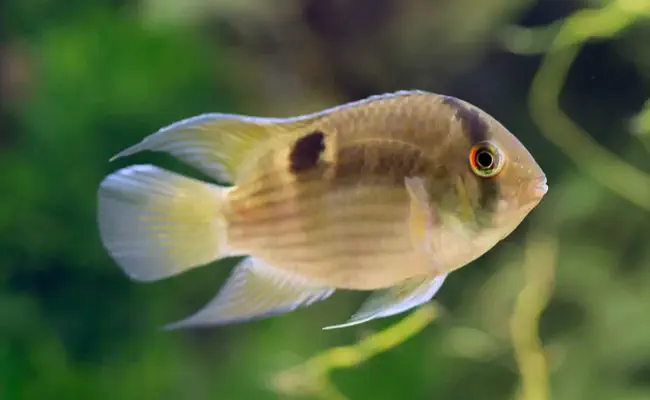
Keyhole Cichlid
Cleithracara maroniiUnusually peaceful and hardy for a cichlid, tolerates community tankmates well, named for the keyhole-shaped mark on its flank.
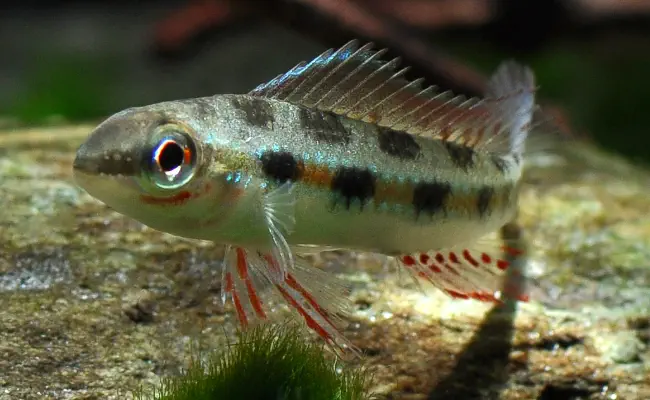
Dicrossus (Chequerboards)
Dicrossus spp.Slender-bodied, sexually dimorphic dwarf cichlids that display spectacularly during courtship — more sensitive to water quality than Apistogramma.
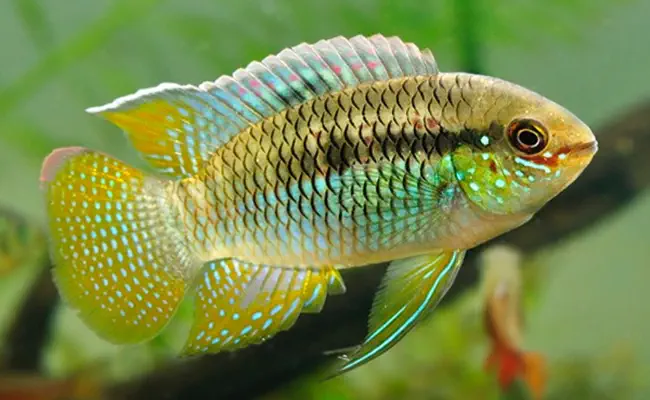
Laetacara
Laetacara spp.The "smiling cichlid" genus — rounded, peaceful, and among the most beginner-friendly South American dwarf cichlids available.
Pairing & Breeding Behaviour
The Cave System
Most dwarf cichlids are cave spawners — females lay eggs inside a small cave, coconut shell, or piece of PVC pipe, then aggressively guard the brood while the male patrols the wider territory. Providing multiple small caves per female is essential in a harem setup, spaced with sightline breaks (plants, wood) to reduce visual conflict between rival females.
One Male, Several Females
Unlike the strict monogamous pairs of many other cichlid groups, most Apistogramma naturally form a loose harem — one male with 2–4 females, each holding her own cave and territory within his range. A single male-female pair in a small tank can work but often shows more aggression than a properly spaced harem setup.
Dither Fish Matter
A few small, fast, peaceful dither fish (like Ember Tetras or Rasboras) in the upper water column reduce dwarf cichlid stress significantly — they signal to the cichlids that no danger is present, encouraging more natural, visible behaviour rather than constant hiding.
Recreating It at Home
Hardscape & Substrate
- Fine, dark sand substrate mimics the natural riverbed and shows off colour contrast beautifully
- Indian almond leaves and botanicals leach tannins, lower pH naturally, and provide microfauna for fry to graze
- Driftwood and root tangles provide both cover and additional tannin release
- Dense planting (Cryptocoryne, Java Fern, Bucephalandra) recreates flooded-forest cover and breaks sightlines between territories
Water & Filtration
- RO water blended with tap, or peat filtration, is often necessary to hit the soft, acidic range most Apistogramma need to thrive and breed
- Gentle filtration — dwarf cichlids evolved in slow, still water and dislike strong current
- A sponge filter is often preferable to a powerful HOB for both flow and fry safety in a breeding setup
- See our Water Quality guide for softening SA tap water for softwater species
Dwarf Cichlids in South Africa
South African municipal water tends toward moderate-to-hard, which is softer than ideal for most true Apistogramma but works reasonably well for more tolerant species like Bolivian Rams, Nannacara, and Laetacara without heavy adjustment — a good entry point before investing in RO equipment.
Locally bred Apistogramma and Rams appear regularly at ECAAC auctions, often at a fraction of imported prices and already acclimated to South African water conditions — always a better starting point than wild-caught or freshly imported stock for a beginner.
This guide pairs naturally with our Blackwater Aquariums guide — the same tannin-stained, leaf-litter approach that suits Amazon tetras suits dwarf cichlids equally well, making a combined biotope tank a popular club project.
Ready to Keep Dwarf Cichlids?
ECAAC members breed a wide range of Apistogramma and related species and are always happy to advise on species selection, water softening, and cave setup for your tank.